Can just one person go to marriage counseling?
Maybe you’ve brought up therapy before, and your partner wasn’t ready. Maybe they’re unsure, hesitant, or flat-out not interested. Or maybe you’re the one who feels like something needs to shift, but you’re not even sure how to name it yet.
This question often comes from a place of care, not control. You’re not trying to blame your partner or make them change. You’re trying to understand what’s happening in the relationship, why certain patterns keep repeating, and what you can do differently when things feel stuck, tense, or distant.
Marriage counseling for one is a chance to hit pause, step back, and really notice the emotional patterns shaping your connections. It’s where you can explore how you communicate, uncover why certain conflicts trigger you, identify what you’ve been craving but not voicing, and notice the ways you might be shrinking yourself just to keep things smooth. In other words, it’s a space to understand your part in the story without judgment, and start shaping it with clarity and care.
In this blog, we’ll explore when individual relationship counseling makes sense rather than couples therapy in Portland, OR, how it can impact a marriage or long-term partnership even if your partner isn’t involved yet, and how this kind of work can help you feel more grounded, clear, and connected, both to yourself and to the relationship you care about.

What is individual relationship therapy?
This work often draws from mindfulness-based therapy, attachment-focused therapy, and Emotionally Focused Therapy (EFT). Mindfulness helps you slow things down enough to notice what’s happening inside before reacting automatically. EFT and attachment-focused approaches help make sense of why certain moments feel so charged, especially during conflict or emotional distance.
Through this lens, you may begin to recognize the emotional and physical signals your body gives you, tightness in your chest, the urge to withdraw, frustration, or a sense of urgency to fix or smooth things over. These responses aren’t random. They’re often shaped by earlier relational experiences, including childhood dynamics that taught you how to seek connection, protect yourself, or cope when closeness felt uncertain.
Rather than asking, “What’s wrong with my partner?” individual relationship therapy gently shifts the focus to questions like:
What gets activated in me when I don’t feel secure?
How do I respond when I’m afraid of being misunderstood or disconnected?
What patterns did I learn early on that still show up in my relationships today?
Using an attachment-informed and emotionally focused approach, therapy helps you explore these questions without judgment. Over time, you may notice familiar patterns, shutting down to avoid conflict, becoming overly accommodating, or feeling responsible for the emotional tone of the relationship.
Together, therapy helps you understand where these patterns came from and how to respond in ways that feel more grounded, intentional, and emotionally aligned with who you are now.
Can you do relationship counseling alone?
While relationship counseling can be most effective when both partners are present, there’s still a lot that can be accomplished through individual relational counseling.
When you come to relationship counseling alone, the focus is on how you experience the relationship. Therapy becomes a place to explore your emotional responses with curiosity rather than self-criticism. You might start noticing how certain conversations trigger anxiety, how distance feels harder than you expect, or how you move toward or away from your partner when things feel uncertain.
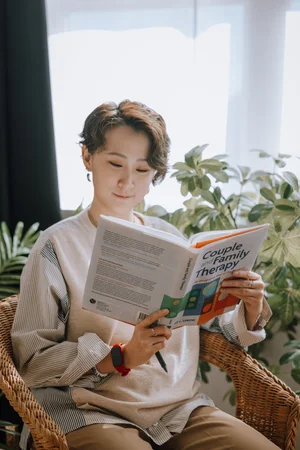
Using mindfulness-focused and attachment-informed therapy, May helps clients slow down their internal reactions, those moments where your body tightens, your thoughts race, or you shut down without fully understanding why. These patterns often developed early on as ways to stay safe or maintain connection. Therapy helps you recognize them in real time, so they no longer run the relationship from behind the scenes.

What is the best therapy for relationship issues?
There isn’t one single “best” therapy for relationship issues, because relationships don’t struggle in just one way. Some couples feel stuck in the same argument loop. Others feel emotionally disconnected, numb, or unsure how they got so far apart. The most effective therapy is often the one that meets where the relationship is actually hurting, not just what’s happening on the surface.
That’s why many relationship therapists draw from multiple modalities rather than a one-size-fits-all approach.
Emotionally Focused Therapy (EFT) is one of the most well-researched approaches for relationship concerns. It focuses on emotional safety and attachment, helping people understand the deeper fears and needs underneath conflict. Instead of asking, “Who’s right?” EFT asks, “What is this argument really about emotionally?”
Mindfulness-based therapy helps individuals and couples slow things down. Rather than reacting automatically, shutting down, snapping back, or withdrawing, mindfulness creates space to notice what’s happening internally in real time. This can be especially helpful for people who feel emotionally overwhelmed or, on the other end, emotionally numb in their relationships.
Attachment-focused therapy looks at how early experiences shape the way we connect as adults. If closeness feels scary, conflict feels threatening, or independence feels safer than vulnerability, these patterns often make sense when viewed through an attachment lens.
Experiential therapy adds another layer by helping people engage with their emotions and interactions in real time, often through exercises, role-playing, or guided interactions. This hands-on approach can help clients “practice” new ways of connecting, expressing feelings, and repairing patterns, creating emotional insights that talking alone can’t always reach. It’s particularly useful for breaking old cycles and helping both individuals and couples feel the shifts they’re aiming for, not just intellectually but viscerally.
Can I go to relationship counseling on my own?
Absolutely, you don’t need both partners in the room to start making meaningful changes. It is best when both partners are present when working on a relationship.
Individual relationship counseling is about giving yourself the space to slow down, notice patterns, and respond with awareness rather than autopilot.
For example, you might notice that you consistently withdraw during conflict, or that you over-accommodate your partner to avoid tension. These patterns often make sense based on your past experiences, but when they repeat, they can quietly shape the emotional rhythm of your relationship. Individual sessions let you explore these habits safely, with curiosity and guidance.
Through mindfulness-focused and attachment-informed therapy, you learn to recognize triggers in real time, those moments when your body tenses, your thoughts spiral, or you feel disconnected, and practice responding in ways that reflect your values and needs. Over time, this not only improves how you show up for yourself, it can shift the dynamic with your partner, even if they’re not in therapy yet.
Closing Thoughts from a Marriage and Family Therapist in Portland, OR
Questions like “How to stop feeling emotionally numb” and experiencing distancing in relationships can be explored with a therapist in a safe, confidential environment where you don’t have to have everything figured out. Individual relationship counseling offers space to slow down, notice what’s happening beneath the surface, and understand why numbness may have become a way of coping rather than something to push through or ignore.
At Spark Relational Counseling, individual relational therapy supports people who want to feel more emotionally present with themselves and with others. Whether numbness shows up in dating, long-term relationships, family dynamics, or simply in your inner world, therapy can help you reconnect at a pace that feels grounded, respectful, and sustainable.

Four Steps to a Stronger, Lasting Marriage Through Individual Relationship Therapy
1) Reach Out to a Skilled Couples Therapist
Fill out our brief contact form, and one of our therapists will reach out within 24–48 hours (except holidays). In the meantime, you can explore FAQs and jot down any questions you’d like to ask during your first conversation.
2) Connect with a Therapist and Schedule Your Online Session
You’ll receive a call from one of our expert relationship therapists for a free 15-minute consultation. This is a chance to see if we’re the right fit. Once you’re ready, you can schedule your first online couples counseling session.
3) Share a Bit About Your Relationship
We’ll send you and your partner a secure intake form to provide some background on your relationship. This helps your therapist understand your unique situation, so your first session can be as effective and tailored to your needs as possible.
4) Attend Your First Online Couples Counseling Session
Your first session is mostly an assessment, but you’ll also start learning practical communication tools right away. Many couples feel a sense of relief after taking this step, knowing they’re moving toward a stronger, more connected relationship with guidance from a supportive therapist.
Other Services We Offer for Couples and Individuals
At Spark Relational Counseling, we provide a supportive, experiential approach to therapy that helps couples work through challenges and fosters individual growth. We combine evidence-based practices with experiential methods that encourage you to slow down, process difficult feelings, and build corrective emotional experiences.
If you’re curious about what a therapy session actually looks like, take a moment to explore our guide to what to expect in a relationship therapy session. It walks you through the process, helps you prepare for your first meeting, and gives insight into how therapy can help you slow down, notice patterns, and practice tools that improve connection.
Our services are available online across Oregon, Washington, and Illinois, specializing in:
Affair Recovery Therapy: Guidance and support for couples navigating the pain of infidelity, helping rebuild trust, process emotions, and determine the healthiest path forward together.
Premarital counseling: Helping engaged couples build a solid foundation before marriage by exploring expectations, values, and shared goals.
Multicultural counseling: Support that honors your cultural background, values, and unique experiences, including guidance for interracial couples, LGBTQ+ couples, and those navigating diverse cultural expectations.
Therapy for Women Navigating High Stress & Dating: Support for women balancing demanding careers, life transitions, and the complexities of dating, helping you set boundaries, process emotions, and build healthy relationships with yourself and others.
Therapy for Burnout for Busy Professionals & Entrepreneurs: Overwhelmed by work, life, and constant demands? Learn strategies to restore balance, set boundaries, and reconnect with what matters most.