
How Mindfulness Can Extinguish Your Burnout
Understanding Burnout: More Than Just Feeling Tired

Mindfulness for burnout symptoms is one of the most evidence-backed approaches available today for recovering from chronic work-related exhaustion. Here is a quick overview of how it works:
| Burnout Symptom | How Mindfulness Helps |
|---|---|
| Emotional exhaustion | Lowers cortisol and activates the parasympathetic nervous system |
| Cynicism and detachment | Loving-kindness and non-judging practices rebuild sense of meaning |
| Reduced performance | Mindfulness restores prefrontal cortex function and cognitive control |
| Physical symptoms | Body scans and breathwork ease tension, poor sleep, and GI distress |
| Loss of boundaries | Present-moment awareness helps you recognize emotional thresholds before overload |
It is July 2026, and burnout is no longer a fringe concern. According to a survey of US employees, 52% report feeling burned out — and two-thirds say it has gotten worse in recent years. You may recognize the feeling: Sunday evenings carry a quiet dread. Simple tasks take twice as long as they should. You go through the motions at work, at home, even in your closest relationships, wondering where your energy went.
That is not weakness. That is your nervous system signaling that something needs to change.
Mindfulness will not fix a toxic workplace or erase an impossible workload on its own. But it is one of the most well-researched tools available for resetting how your brain and body respond to chronic stress — and the evidence is compelling. A systematic review of 49 randomized controlled trials found that 67% of mindfulness programs produced significant reductions in burnout, with emotional exhaustion responding most strongly.
I'm May Han, a Licensed Marriage and Family Therapist at Spark Relational Counseling, and I specialize in using mindfulness and emotionally focused approaches to help high-achieving adults break free from the exhausting cycles that burnout creates. In my work with individuals and couples, mindfulness for burnout symptoms is not a luxury add-on — it is often the turning point where real recovery begins.
To effectively address burnout, we must first understand what it actually is. Burnout is not simply the feeling of needing a long weekend or a good night’s sleep. A vacation cannot cure it, because burnout is a qualitatively different physiological and psychological state.
The World Health Organization (WHO) officially conceptualizes burnout in the ICD-11 as an occupational syndrome resulting from chronic workplace stress that has not been successfully managed. It is structured around three core dimensions originally defined by psychologist Christina Maslach:
- Emotional Exhaustion: A profound sense of energy depletion, physical fatigue, and feeling completely drained of emotional resources.
- Depersonalization (Cynicism): An emotional distancing from one's work, characterized by cynicism, frustration, and a numb, detached attitude toward colleagues, clients, or patients.
- Reduced Personal Accomplishment: A growing sense of inefficacy, self-doubt, and the feeling that no matter how hard you work, your efforts do not make a difference.
While everyday stress can leave you feeling keyed up or anxious, it usually subsides once a major project is completed or a boundary is established. Burnout, however, acts like a slow, hidden leak in a bathroom pipe. It drips quietly behind the drywall for months before the ceiling suddenly collapses. By the time you realize you are struggling, the chronic depletion has already taken root.
Recognizing these shifts early is vital. If simple tasks suddenly feel monumental, or if you find yourself emotionally retreating from the people you care about, your body is waving a yellow flag. Understanding these patterns is the first step toward reclaiming your agency. For a deeper look into these early warning signs, you can explore our guide on Recognizing Early Burnout Signs.
The Physiology of Exhaustion: How Burnout Alters the Brain
Burnout is not a failure of willpower or a lack of resilience; it is a physical reality that leaves structural signatures in the brain. Chronic exposure to high stress triggers a constant flood of cortisol and adrenaline, throwing the hypothalamic-pituitary-adrenal (HPA) axis out of balance. Over time, this sustained hormonal storm alters key neural networks:
- Prefrontal Cortex Thinning: The area of the brain responsible for executive functioning, cognitive control, working memory, and emotional regulation begins to thin. This explains why making simple decisions can feel agonizing when you are burned out.
- Amygdala Hyperreactivity: The brain's threat detector, the amygdala, becomes enlarged and hyper-reactive. You find yourself in a persistent state of high alert, interpreting minor inconveniences as major threats.
- Hippocampal Volume Reduction: The hippocampus, which is essential for memory consolidation and contextualizing emotional experiences, actually loses volume under the weight of chronic cortisol elevation.
When your nervous system remains trapped in a sympathetic "fight-or-flight" response, your vagus nerve — the primary highway of the parasympathetic "rest-and-digest" system — becomes underactive. This physiological imbalance is why burnout is so often accompanied by physical ailments like tension headaches, chronic insomnia, and gastrointestinal distress.
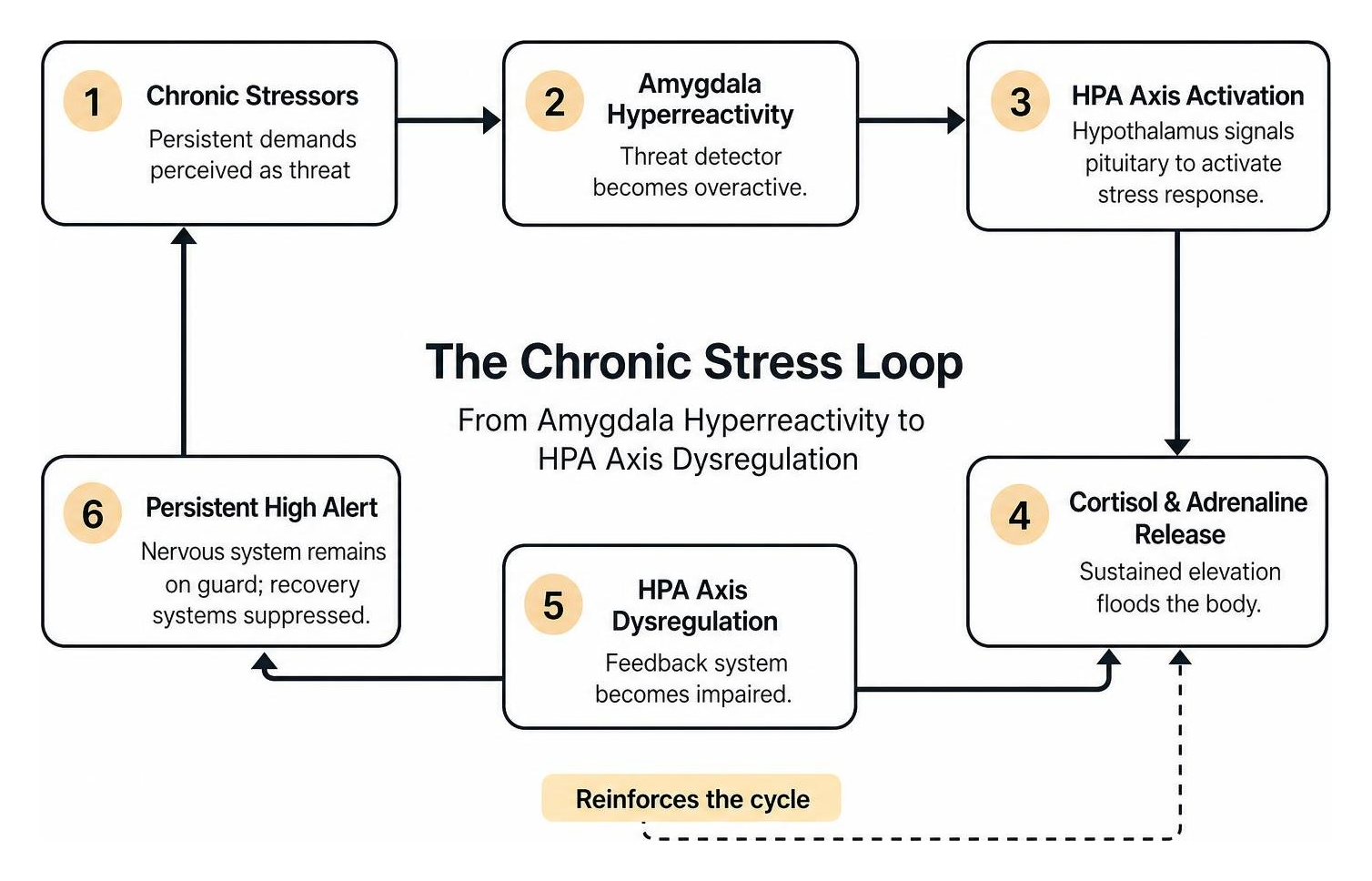
Fortunately, the brain possesses neuroplasticity, meaning it can heal. Rigorous Scientific research on standardized mindfulness programs and burnout demonstrates that structured interventions like Mindfulness-Based Stress Reduction (MBSR) can reverse these structural changes. By cultivating a consistent mindfulness practice, you can rebuild gray matter in the prefrontal cortex, calm the hyperactive amygdala, and stimulate the vagus nerve to restore autonomic balance.
To help you monitor how these physiological stressors manifest in your daily life, we have developed a resource on How to Track Burnout Symptoms to help you map your recovery journey.
Harnessing Mindfulness for Burnout Symptoms
At its core, mindfulness is the practice of paying attention to the present moment on purpose, with curiosity and without judgment. When we are burned out, our minds are rarely in the present. Instead, we are caught in a negative brain autopilot — either ruminating on past demands or anticipating future exhaustion.

Mindfulness helps us step off this autopilot. By practicing present-moment awareness, we learn to observe our thoughts and bodily sensations as temporary waves rather than getting swept away by the current. This shift in perspective alters our cognitive appraisal of external stressors. A high-pressure email or a demanding deadline is no longer an immediate threat to our survival; it is simply an event occurring in the present moment that we can choose how to respond to.
In our clinical practice, we place a heavy emphasis on somatic tracking — learning to tune into the physical sensations of stress before they escalate. Your body knows you are reaching an emotional threshold long before your analytical mind registers it. You might notice a subtle tightening in your chest, a shallow pattern in your breath, or a sudden clenching of your jaw.
By noticing these somatic cues without judgment, you can establish healthy boundaries. Instead of automatically saying "yes" to another task out of habit, you can pause, breathe, and honor your nervous system's capacity.
Empirical evidence supports this approach. A landmark study published in Research on mindfulness and job burnout highlights how mindfulness directly moderates perceived stress and job burnout by enhancing neural self-regulation. When you learn to tolerate and stay present with your internal landscape, you can prevent the emotional numbness that so often characterizes advanced burnout. If you are already experiencing that heavy, flat sensation of detachment, our guide on How to Stop Feeling Emotionally Numb offers compassionate steps toward thawing your emotional landscape.
Practical Mindfulness Exercises to Restore Your Nervous System
To cultivate lasting recovery, it is helpful to balance both formal and informal mindfulness practices. Formal practices are dedicated times you set aside to train your attention, while informal practices involve bringing mindful awareness to your existing daily routines.
| Practice Type | Exercise | Nervous System Benefit | How to Integrate It |
|---|---|---|---|
| Formal | Somatic Body Scan (15 mins) | Rebuilds prefrontal-amygdala connectivity; releases stored physical tension | Practice lying down in a quiet space before sleep or upon waking |
| Formal | Loving-Kindness Meditation (10 mins) | Combats compassion fatigue; builds emotional resilience and warmth | Dedicate a quiet morning window twice a week to this practice |
| Informal | "Ocean Breath" (2 mins) | Stimulates the vagus nerve to trigger immediate parasympathetic recovery | Use during transitions between meetings or when opening your computer |
| Informal | The 3-Minute Check-In | Interrupts negative brain autopilots; identifies emotional thresholds | Set a gentle alarm three times a day to pause and scan your state |
Mindful Breathing and Somatic Tracking as Mindfulness for Burnout Symptoms
When our nervous system is overtaxed, our breathing naturally becomes shallow and rapid, reinforcing the fight-or-flight loop. We can intentionally use the breath to send a safety signal back to the brain.
One of the most effective tools for this is the Ocean Breath (Ujjayi). By partially closing the back of the throat on your exhalations, you create a soft, ocean-like sound (reminiscent of Darth Vader). This resistance naturally lengthens the exhale, which directly stimulates the vagus nerve and down-regulates the sympathetic nervous system.
Combine this breathwork with a progressive somatic body scan. Lie comfortably on your back, close your eyes, and slowly move your attention from your toes to the crown of your head. As you focus on each muscle group, notice any warmth, tightness, tingling, or numbness.
In experiential therapies like Accelerated Experiential Dynamic Psychotherapy (AEDP) and Brainspotting, we do not try to force these sensations to change. Instead, we practice staying with them, welcoming them, and allowing the physical energy of the stress to process through the body. This somatic experiencing allows stored trauma and exhaustion to safely release from your tissues.
Cultivating Self-Compassion and Loving-Kindness as Mindfulness for Burnout Symptoms
For high-achieving professionals, burnout is frequently fueled by a harsh inner critic. We tell ourselves that we should be able to handle more, that taking a break is a sign of weakness, or that our exhaustion is a personal failure. This self-judgment keeps the threat defense system active, compounding our fatigue.
This is where the "non-judging" facet of mindfulness becomes a powerful tool. Research on mindfulness-based, acceptance-oriented interventions reveals that learning to stop judging our own internal states is the single most critical predictor of long-term burnout recovery.
To counter compassion fatigue — which is especially common among healthcare workers, educators, and therapists — we can practice Loving-Kindness Meditation (LKM). LKM involves silently repeating structured phrases of goodwill toward ourselves and others:
- May I be safe.
- May I be healthy.
- May I live with ease.
By starting with ourselves, we refill our own emotional cup. This experiential shift is central to Emotionally Focused Therapy (EFT), where we work to transform primary emotional states from the inside out. For a comprehensive exploration of how these self-compassion practices build long-term resilience, you can read the detailed analysis on Mindfulness for Burnout: Prevention, Recovery, and Building Resilience | Simply Psychology.
When Burnout Spills Over: Relational Strain and Healing
We do not experience burnout in a vacuum. When we are emotionally depleted, we have very little left to offer our partners, spouses, or family members. Burnout frequently spills over into our relationships, manifesting as irritability, emotional withdrawal, or a lack of presence. You might find yourself sitting next to your partner on the couch, yet feeling miles away — physically present but emotionally unavailable.
In couples dynamics, this depletion can trigger a distressing feedback loop. When one partner retreats due to burnout, the other may feel rejected or anxious, leading to pursuing behaviors that the burned-out partner experiences as demanding. This is a classic negative cycle that we work to de-escalate using Emotionally Focused Therapy (EFT).
The antidote to this relational strain is co-regulation. Just as an individual can use mindfulness to soothe their own nervous system, couples can learn to create a shared space of psychological safety. By practicing mindful presence together, you can step out of reactive defensive postures and communicate your underlying vulnerability.
Instead of snapping at your partner or silently retreating, you learn to say: "I am feeling incredibly depleted right now, and I need a moment to quiet my nervous system so I can be fully present with you." This vulnerability fosters connection rather than distance. To explore how to navigate these dynamics and rebuild intimacy, consider reading about our approach to Couples Therapy Burnout Recovery.
Frequently Asked Questions about Mindfulness and Burnout
How quickly can mindfulness practices produce noticeable improvements in burnout symptoms?
While a deep, structural rewiring of the brain's neural pathways typically takes consistent practice over time — such as a standardized 8-week MBSR program or reaching a cumulative 16-hour threshold of training — you can experience immediate, short-term relief in your nervous system in as little as 10 minutes.
A brief, focused breathing exercise or a somatic check-in can instantly lower your heart rate and shift your body out of a sympathetic fight-or-flight state. Furthermore, longitudinal diary studies tracking professionals over 21 days show that daily mindfulness tracking leads to progressive, compounding improvements in perceived psychological safety and emotional exhaustion within just three weeks.
What are the common barriers to practicing mindfulness, and how can they be overcome?
The most common barrier is the belief that you do not have enough time. When you are already overwhelmed, adding "meditation" to your to-do list can feel like another chore. To overcome this, reframe mindfulness not as an hour-long silent retreat, but as a series of micro-practices. A 2-minute "Reflective Pause" between tasks or a mindful breath while waiting for your coffee to brew is highly effective.
Another barrier is perfectionism — the feeling that you are "bad" at mindfulness because your mind keeps wandering. The goal of mindfulness is not to clear your mind of all thoughts; it is simply to notice when your mind has wandered and gently bring it back.
For perfectionists, we often recommend a "no-fixing" exercise: intentionally leave a minor imperfection alone (like a crooked picture frame or a small stack of papers) and practice observing the internal urge to fix it, allowing yourself to release control in a safe, small way.
What role can therapy or professional support play in using mindfulness to combat burnout?
While self-directed apps and books are excellent starting points, professional therapy provides a structured, safe container for deep emotional processing. In clinical settings, we utilize experiential therapies like AEDP, EFT, and Brainspotting to help you access and process the deep-seated emotional patterns that drive burnout — such as chronic people-pleasing, perfectionism, or the suppression of your own needs.
A therapist acts as a supportive guide, helping you recognize your emotional thresholds, process stored somatic tension, and safely navigate the vulnerability of healing. If you are ready to move beyond self-help and partner with a professional on your recovery, you can explore our comprehensive resource on The Best Therapy for Burnout.
Conclusion
Burnout is a profound physical and emotional crisis, but it is also an invitation to pause, listen to your nervous system, and establish a new way of relating to yourself and your loved ones. By integrating mindfulness for burnout symptoms into your daily life, you can begin to quiet your brain's negative autopilots, soothe your physical body, and restore your sense of professional and personal meaning.
At Spark Relational Counseling, May Han and our dedicated team of therapists work together with individuals and couples across Oregon, Washington, and Illinois to cultivate lasting recovery. Whether you are seeking virtual individual therapy to restore your personal well-being or couples counseling to heal relational strain, we are here to support you.
We offer virtual sessions tailored to your life, serving clients in Portland, Seattle, Chicago, Bellevue, Sammamish, Lake Oswego, and beyond. You do not have to carry the weight of depletion alone. To take the next step toward reclaiming your peace and vitality, explore our guide on individual therapy for relationship issues or reach out to us today to schedule a consultation.
