Elevating Your Bond with Relationship Therapy in Portland Oregon
Why Relationship Therapy in Portland, Oregon Matters Right Now

Relationship therapy in Portland, Oregon is one of the most searched mental health resources in the Pacific Northwest - and for good reason. If you are wondering whether it is the right step for you, here is a quick look at what it offers:
| What You're Experiencing | How Relationship Therapy Helps |
|---|---|
| Repeating arguments | Identifies the cycle driving conflict, not just the surface topic |
| Emotional distance | Rebuilds secure attachment and felt connection |
| Betrayal or trust rupture | Creates structured space for repair and honest dialogue |
| Intimacy drift | Uncovers unmet needs and restores closeness |
| One partner reluctant to attend | Individual sessions can serve as a bridge into couples work |
Most couples do not arrive at a therapist's office after a single bad week. The drift tends to be gradual - small moments of missing each other, conversations that quietly close off, and a growing sense that you are living parallel lives rather than a shared one. Research on Emotionally Focused Therapy suggests that many couples experience meaningful improvement when working with a well-trained therapist, and those gains often hold over time.
Portland's therapy landscape is rich, diverse, and clinically sophisticated. Whether you are in a traditional partnership, a same-sex relationship, a polyamorous structure, or navigating a major life transition, there are skilled practitioners here trained to meet you where you are.
At Spark Relational Counseling, May Han is a Licensed Marriage and Family Therapist who specializes in relationship therapy in Portland, Oregon using mindfulness-informed and Emotionally Focused approaches to help couples and individuals move out of stuck patterns and into genuine connection. In the sections ahead, I will walk you through everything you need to know to find the right support for your relationship.
The Evolution of Relationship Therapy Portland Oregon
Relationship therapy has changed a lot over the years. It is no longer seen as a last-ditch effort for couples on the brink. Today, it is a thoughtful, structured form of care for people who want to understand their patterns, communicate more clearly, and build a more secure bond.

One of the biggest shifts is this: effective couples work is not just individual therapy with two people in the room. In strong relationship therapy, the relationship itself becomes the focus. We look at the dance between you - the protest, the shutdown, the pursuing, the retreating, the missed cue, the repair attempt that never quite lands. That is often where the real work lives.
In Portland and across Oregon, couples commonly seek support for:
- communication breakdowns
- constant conflict or tense silence
- betrayal and trust injuries
- intimacy changes
- parenting stress
- life transitions
- premarital questions
- uncertainty about whether to stay, separate, or rebuild
If you want a broader look at how these patterns show up locally, here is more information about relationship issues in Portland. For a general overview of how couples counseling is understood in the broader mental health field, you can also explore couples therapy.
Finding the Right Relationship Therapy Portland Oregon for Your Needs
The right therapist is not just the first person with an opening next Thursday at 3:00. Fit matters.
When looking for relationship therapy Portland Oregon, we recommend focusing on:
- training in couples-specific modalities, especially EFT
- experience with your presenting concerns, such as trust repair, parenting, or intimacy
- an affirming stance toward your identities and relationship structure
- a style that feels both warm and clinically grounded
- availability for virtual care if logistics are part of the stress
At Spark Relational Counseling, May Han and our team use a mindfulness-based relational lens to help clients notice emotional thresholds before they become blowups. That matters because many couples do not need better debate skills. They need a way to slow the nervous system down enough to actually hear each other.
If one partner is not ready for couples work, individual therapy can still be a meaningful starting point. Here is more info about individual therapy for relationship issues.
Common Relational Triggers in the Pacific Northwest
Portland couples are not arguing because they are uniquely flawed. Usually, they are navigating very normal stressors with very human nervous systems.
Common triggers we see include:
- financial pressure and cost-of-living stress
- new parenthood or blended family transitions
- caregiving for aging family members
- mismatched desire for intimacy or affection
- career changes, burnout, or relocation
- neurodiverse communication differences
- old hurts that keep getting reopened
Often the presenting issue sounds small. The real issue is not the dishes, the text response time, or who forgot to buy oat milk again. Those topics matter, but they usually sit on top of deeper fears like:
- "Do I matter to you?"
- "Am I alone in this relationship?"
- "Can I trust you with my vulnerability?"
- "Are we still a team?"
If that sounds familiar, more info about marriage counseling in Portland may help you understand the bigger picture.
The Science of Secure Attachment: EFT and AEDP

Emotionally Focused Therapy, or EFT, is one of the most researched and effective approaches for couples counseling. It is grounded in attachment science, which means it pays close attention to the human need for emotional safety, responsiveness, and connection.
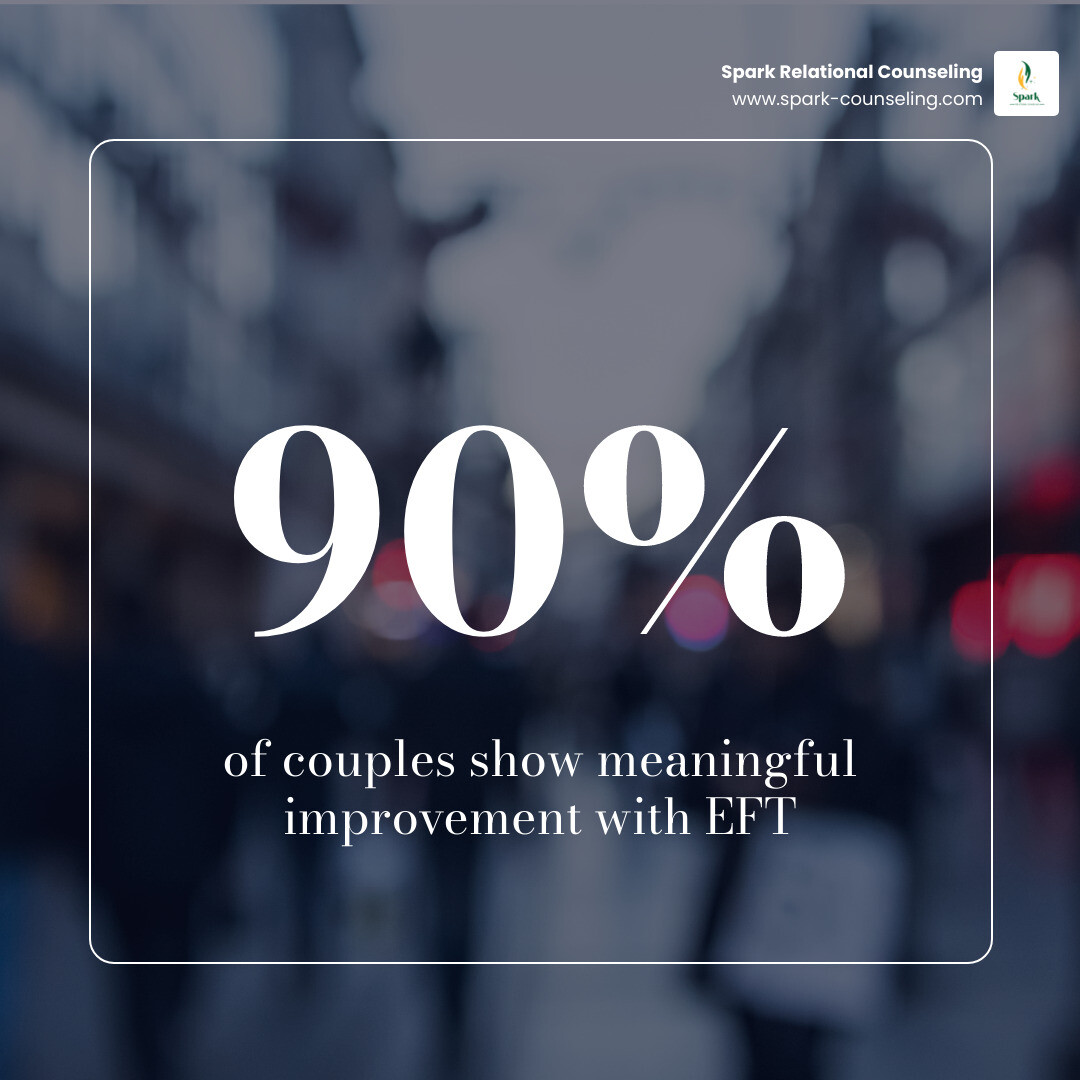
Research consistently shows strong outcomes. Studies often report EFT helps about 70 to 75 percent of distressed couples move into recovery, and many couples working with a well-trained EFT therapist show meaningful improvement over time.
At Spark Relational Counseling, May Han and our team often pair EFT principles with AEDP, experiential therapy, mindfulness, and brainspotting-informed work when appropriate. In plain English:
- EFT helps you identify the negative cycle and reach each other more safely
- AEDP helps transform hard emotional moments into experiences of healing and connection
- experiential therapy helps you work in the live moment, not only talk about it from a safe distance
- mindfulness helps you notice when your emotional threshold is rising
- brainspotting can support deeper processing when trauma, overwhelm, or old relational pain is shaping the present
This is where our unique approach comes in. We talk often about negative brain autopilots: those fast, protective reactions that kick in before you even realize they are driving. Maybe you go sharp and critical. Maybe you go quiet and disappear emotionally. Maybe you become the world's least convincing "I'm fine" person. Therapy helps you catch those autopilots sooner and choose a different move.
Relationship therapy is effective not because a therapist acts like a referee with nicer lamps. It works because it helps couples:
- increase emotional awareness
- improve empathy
- communicate with less blame
- repair ruptures more effectively
- build intimacy and trust
- reduce relationship distress over time
Navigating the Therapeutic Journey: What to Expect

Starting therapy can feel vulnerable. That is normal. The first session is not a performance review, and no one gets graded on how evolved they sound.
In your first appointment, we typically explore:
- what brings you in now
- how the relationship feels to each of you
- the patterns you get stuck in
- the strengths you already have
- your goals for therapy
- relevant history, including major transitions or betrayals
Many couples expect the therapist to decide who is right. We do not work that way. In effective relationship therapy, the goal is to understand the pattern, not crown a winner. Usually the enemy is the cycle, not your partner.
For a fuller breakdown, here is more info about what to expect in a session.
Over the course of therapy, you can expect a process that often includes:
Assessment and mapping the cycle
We identify the repeating pattern underneath your conflicts.Slowing things down
We help you recognize emotional flooding, shutdown, and protective reactions.Building manageable boundaries
This means learning what each of you can tolerate, express, and repair without going past your emotional threshold.Practicing new conversations
You learn how to share softer emotions and deeper needs in ways your partner can actually hear.Strengthening repair
The goal is not zero conflict. It is better recovery, faster reconnection, and more trust in the bond.
A simple vignette: one partner says, "You never help." The other hears, "You are failing." Then comes defensiveness, withdrawal, and a long evening of dramatic cabinet closing. In therapy, we slow that moment down. Often beneath "You never help" is something more tender, like "I feel alone and overwhelmed, and I want to know you are with me." That shift can change everything.
Inclusivity and Accessibility in Modern Counseling

Portland has long been a place where many people seek care that respects identity, orientation, and the shape of the relationship itself. Good relationship therapy should not force every partnership into the same mold.
At Spark Relational Counseling, we believe therapy should be affirming, not flattening. That includes work with:
- LGBTQ+ couples and partners
- polyamorous and ethically non-monogamous relationships
- non-traditional partnerships
- kink-aware relational work
- people exploring identity, boundaries, or commitment structure
For these clients, finding the right therapist matters even more. You should not have to spend your session explaining the legitimacy of your relationship before you can work on it.
A strong therapist will help you clarify agreements, expectations, attachment needs, and communication patterns without assuming one "correct" model of love. That is especially important for polyamorous or open relationships, where conflict may center around boundaries, time allocation, jealousy, rupture repair, or differing visions of commitment.
The Benefits of Virtual Relationship Therapy Portland Oregon
Virtual therapy is now a standard, effective option for many couples across Oregon. For some people, telehealth makes therapy possible at all.
Benefits include:
- easier scheduling for busy professionals and parents
- access from Portland, Tualatin, Lake Oswego, Happy Valley, West Linn, Eugene, and other Oregon locations we serve
- continuity when one or both partners travel
- comfort of meeting from your own space
- reduced commute stress, which frankly gives the relationship one less thing to argue about
At Spark Counseling, we offer secure virtual counseling across Oregon, as well as Washington and Illinois where applicable to our practice. If you are exploring options, here is more info about marriage counseling services.
Telehealth relationship therapy generally works through a HIPAA-compliant video platform. You receive a private link, join from separate or shared locations, and meet much as you would in person. The therapist still guides structure, emotional pacing, and safety. In some cases, separate screens can even help reduce escalation because each partner has a little more physical space to regulate.
Understanding Costs and Insurance Logistics
Money matters, and it is fair to ask about it directly.
In Portland, couples therapy rates often vary by clinician training, session length, and specialization. Public directories commonly show price tiers ranging from under $90 to over $130 per session, while some specialized relationship therapists charge more for 60-minute couples sessions. In practice, many couples counseling services in this market fall somewhere in the moderate-to-premium range.
Insurance coverage for couples therapy is often limited. Why? Because insurers typically reimburse for treatment tied to an individual mental health diagnosis, while relationship distress by itself may not qualify the same way. As a result, many couples therapy practices are private pay or out-of-network.
When evaluating cost, consider:
- session frequency
- whether superbills are available for out-of-network reimbursement
- whether shorter-term focused work is possible
- the practical cost of continued distress, disconnection, or crisis management
The return on investment is not just emotional. Better communication, lower stress, and improved stability can affect parenting, work, sleep, and overall health.
Frequently Asked Questions about Relationship Therapy
When is the right time to start couples counseling?
Earlier than most couples think.
You do not need to wait for a major rupture. Therapy can help when you notice:
- the same argument keeps returning
- you feel more like roommates than partners
- affection or intimacy has faded
- resentment is building
- one or both of you feels lonely in the relationship
- a life transition is putting pressure on the bond
Couples who come in earlier often have more flexibility and less entrenched hurt to work through. Therapy is not just for crisis. It is also for strengthening an already meaningful relationship.
How can I encourage my partner to participate in therapy?
Start with invitation, not indictment.
That means saying things like:
- "I want us to feel closer again."
- "I am not looking for someone to blame us. I want help understanding our pattern."
- "This matters to me, and I want to work on it with you."
- "Would you be open to trying a few sessions rather than deciding forever right now?"
What usually does not help is: "A therapist can explain why you are the problem." Strange as it sounds, that pitch has a very low conversion rate.
If your partner is hesitant, emphasize that relationship therapy is structured, practical, and not about taking sides. You can also start with individual work as a bridge. At Spark Relational Counseling, we often help one partner build clarity, emotional regulation, and better language for asking for connection before couples work begins.
Is relationship therapy effective for non-monogamous couples?
Yes, when the therapist is affirming and competent with non-monogamous structures.
The work may include:
- clarifying agreements and expectations
- navigating jealousy without shame
- repairing breaches of trust
- managing time, logistics, and emotional bandwidth
- identifying attachment triggers across a larger relational system
The principles of secure attachment, emotional honesty, and good repair still apply. The difference is that therapy should respect the structure you have chosen rather than treating it as the problem.
Conclusion
If you have been searching for relationship therapy Portland Oregon, the most important thing to know is this: you do not have to wait until everything feels broken to get support. Thoughtful, evidence-based therapy can help you understand your pattern, lower reactivity, and rebuild the kind of connection that feels steady, honest, and alive.
At Spark Relational Counseling, May Han and our team bring together EFT, AEDP, experiential work, brainspotting-informed care, and mindfulness-based relational therapy to help couples and individuals move out of survival mode and into lasting peace. We work warmly, collaboratively, and with deep respect for the courage it takes to show up for your relationship.
If you are ready for the next step, you can Book a Session or explore our main service page here: Transform Your Connection with Marriage Counseling in Portland, OR.
Sometimes the first sign of hope is not that the problem is gone. It is that you are finally facing it together.