
What to Do When There Is No Emotional Connection with Your Husband

Experiencing no emotional connection with your husband does not automatically mean your marriage is over. In most cases, feeling numb, distant, or like simple roommates points to emotional burnout, unspoken resentment, or a self-protective shutdown. When daily logistics replace shared vulnerability, your nervous system often detaches to avoid further stress.
To address this emotional disconnection effectively, take these initial steps:
- Identify the root cause: Distinguish between chronic relational disconnection and personal exhaustion, stress, or high-functioning burnout.
- Communicate without blame: Express your internal experience with simple "I" statements (such as, "I feel distant lately, and I want to feel close to you again").
- Create low-pressure touchpoints: Reintroduce brief, screen-free moments and small physical gestures without forcing heavy conversations.
- Engage relational support: Explore Emotionally Focused Therapy (EFT) to uncover stuck communication loops and restore safety.
I am May Han, a Licensed Marriage and Family Therapist at Spark Relational Counseling, where I specialize in helping partners understand why they experience no emotional connection with husband and how to break destructive communication cycles. From my background at Northwestern University, I integrate mindfulness and Emotionally Focused Therapy to help individuals and couples move out of autopilot and build authentic intimacy.
11 Toxic Signs There Is No Emotional Connection with Your Husband
Marital distance rarely happens overnight. It creeps in through tiny, unaddressed micro-moments of disconnection until one morning you look across the kitchen table and realize you are sharing life with an acquaintance. To better recognize what is happening beneath the surface, we must explore what does emotional disconnection look like in day-to-day interactions.
Here are 11 toxic signs that your marriage is operating without an emotional bond:
- Roommate Syndrome: You function smoothly as co-managers of a household, coordinating carpools and bills, but you never connect as romantic or intimate partners.
- Superficial Communication: Conversations stay strictly within safe, logistical territory. Neither of you shares fears, dreams, or inner vulnerabilities.
- Pervasive Emotional Stonewalling: When conflict or emotional topics arise, one or both of you shuts down, leaves the room, or retreats behind an icy wall of silence.
- Lack of Empathy: When you share a struggle or a hard day, your husband offers indifference, minimization, or annoyance rather than attunement and care.
- Living Parallel Lives: You maintain separate schedules, separate social circles, and separate interests to the point where your paths only cross out of domestic necessity.
- Dreading Shared Time: Spending an evening alone together feels exhausting or heavy, leading you to actively seek distractions, work late, or invite others to buffer the silence.
- Zero Romantic or Physical Spark: Physical touch disappears entirely, or sex becomes an infrequent, mechanical duty devoid of warmth, eye contact, and tenderness.
- Contempt and Eye-Rolling: Disagreements no longer involve healthy frustration; instead, they feature biting sarcasm, mockery, and subtle disdain.
- Secret Keeping and Private Compartmentalization: You no longer share your genuine highs and lows with him, turning instead to friends, journals, or online spaces to feel seen.
- Emotional Energy Invested Elsewhere: You feel far more animated, joyful, and authentic when interacting with coworkers or friends than when you are with your spouse.
- Profound Marital Numbness: You stop fighting altogether. The relationship is characterized by a flat, hollow absence of feeling, which is often far more telling than anger.
Recognizing When There Is No Emotional Connection with Husband vs. Normal Stress
It is completely natural for relationships to experience natural ebbs and flows. Stressful life transitions—such as raising toddlers, navigating a demanding career change, or caring for aging parents—can temporarily sap relational energy.
However, there is a distinct difference between seasonal fatigue and chronic emotional detachment. In our practice, we often examine distancing in relationships to determine whether a couple is simply depleted or fundamentally disengaged.
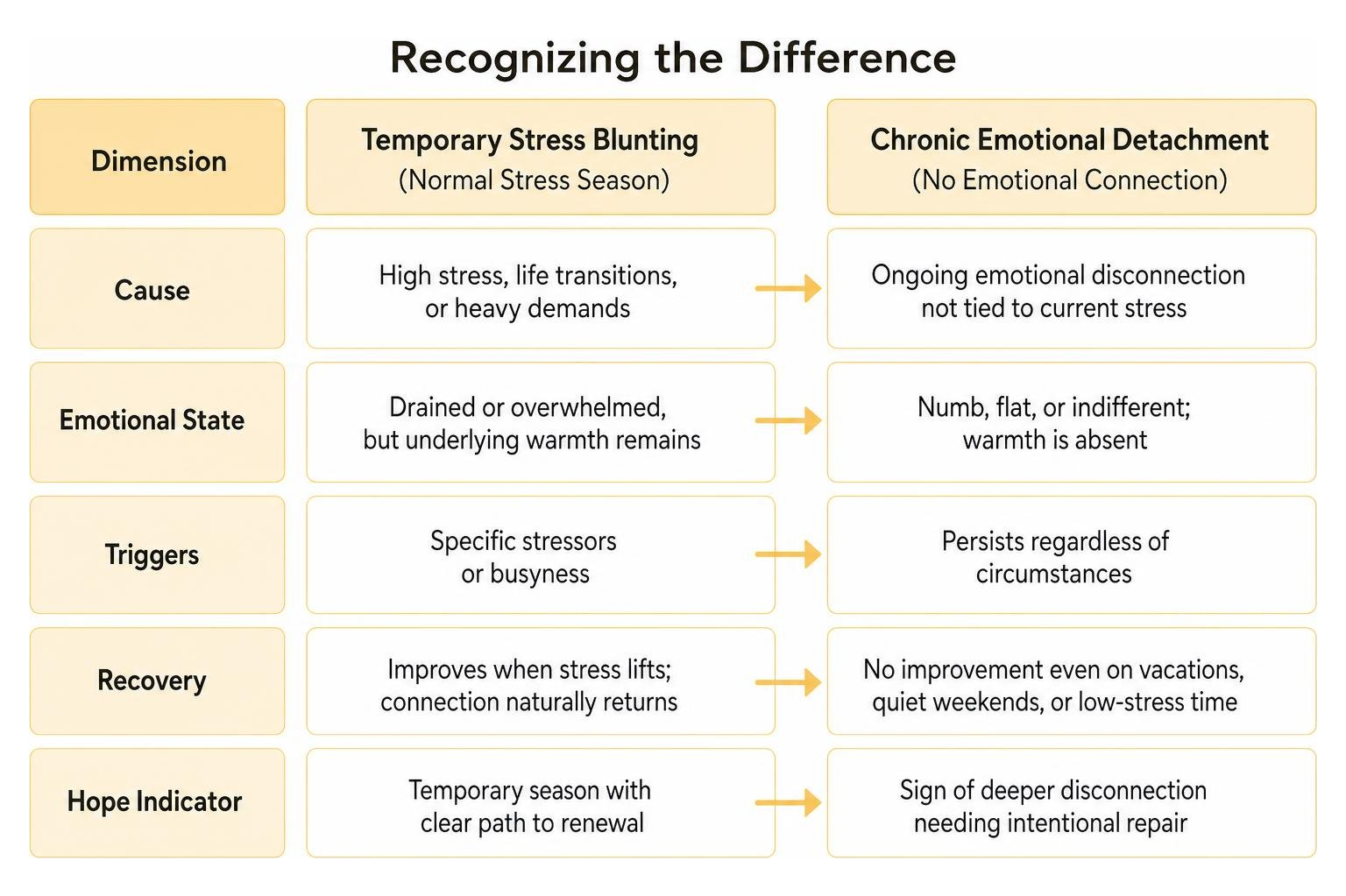
During temporary stress seasons, an underlying warmth remains accessible once the pressure lifts. In chronic disconnection, the emotional blunting persists even on vacations, quiet weekends, and low-stress evenings.
The Toll of Emotional Numbness and Roommate Syndrome
Living in an emotionally barren marriage takes an invisible, cumulative toll on your mental and physical health. Many women report that feeling nothing for their spouse triggers intense guilt and quiet despair. You may care deeply about your husband as a human being, yet dread sitting on the couch together at the end of the day.

When partners stop reaching for each other, emotional exhaustion sets in. You find yourself navigating chronic loneliness within your own home. This state of constant isolation inside a partnership frequently leaves your nervous system stuck in a low-grade state of chronic protection, making genuine rest and joy nearly impossible to access.
Root Causes: Why Emotional and Physical Intimacy Fades
Emotional intimacy does not simply evaporate into thin air; it is eroded over time by specific relational patterns and nervous system responses. If you have wondered, "Why do I feel so disconnected in my marriage?" the answer often lies in accumulated micro-ruptures that were never mindfully repaired.
A primary driver of this detachment is unaddressed grievance. When small hurts, dismissed feelings, or unequal emotional labor are swept under the rug, the brain develops a self-protective barrier. As highlighted in a poignant personal essay on fading love and emotional numbness, emotional numbness is rarely a sudden loss of love; it is often a nervous system shutdown triggered by prolonged exhaustion and silent resentment.
Furthermore, for highly sensitive persons (HSPs) or individuals with neurodivergent nervous systems, sensory and emotional overstimulation can cause an instinctual pull backward. When everyday life feels overwhelming, a partner's sharp tone or minor dismissiveness can register as an emotional threat, triggering protective withdrawal.
| Relational State | Primary Experience | Internal Mechanism | Typical Outcome |
|---|---|---|---|
| Active Anger | High emotional charge, frustration, active fighting | The nervous system is mobilizing energy to demand change or repair a broken bond | Conflict occurs, but emotional investment and passion are still clearly present |
| Emotional Shutdown | Flatness, apathy, zero desire to engage or argue | The nervous system enters dorsal vagal collapse to protect against repeated injury | Roommate syndrome, quiet isolation, and profound marital detachment |
Understanding What Emotional Connection Means in Long-Term Partnership
To understand what has been lost, we need a clear framework for what emotional connection means in a long-term union. True relational connection is not about constant butterflies or dramatic romantic gestures. It is built on three essential pillars:
- Psychological Safety: The unwavering knowledge that you can express your true thoughts, vulnerabilities, and insecurities without fear of ridicule, dismissiveness, or retaliation.
- Mutual Responsiveness: When you reach out with an emotional bid—whether a soft glance, a sigh, or a request to talk—your partner turns toward you with genuine presence.
- Vulnerable Attunement: Cultivating a foundational friendship where both partners feel deeply known, seen, and valued for who they are beneath their daily roles.
Common Pitfalls and Mistakes When Trying to Fix the Gap
When spouses recognize the chasm between them, panic often sets in. Unfortunately, standard instinctual reactions frequently make the disconnect worse:
- Adopting an Aggressive Pursuer Role: Launching into critiques, analyzing his shortcomings, or demanding emotional intimacy can trigger a defensive withdrawer response, pushing him further away.
- Forcing Premature Romance: Scheduling high-stakes romantic getaways or trying to force physical intimacy before emotional safety is restored usually increases awkwardness and tension.
- Seeking Outside Emotional Replacements: Turning to digital validation, close emotional friendships, or secret flirtations drains what little energy remains for your marriage.
- Neglecting Your Personal Nervous System: Waiting for your spouse to change before attending to your own emotional vitality, hobbies, and sense of purpose.
How to Communicate and Rebuild Intimacy in Your Marriage
Rebuilding emotional connection requires stepping off relational autopilot and creating conditions where vulnerability feels safe again. This begins not with sweeping demands, but with soft, mindful micro-connections.

When opening a conversation about disconnection, trade accusatory phrasing for non-defensive honesty. Instead of saying, "You never pay attention to me and our marriage is empty," try grounding your nervous system and stating:
"I've noticed how distant we've both felt lately with everything on our plates. I miss our closeness, and I want to find our way back to each other. Can we spend twenty minutes tonight just checking in without our phones?"
Steps to Take When You Feel No Emotional Connection with Husband
If you both desire to bridge the gap, implement these steady, experiential practices:
- Establish Screen-Free Micro-Moments: Dedicate the first 10 minutes after coming home, or 15 minutes before sleep, to sit together with no digital interruptions, practicing mindful presence.
- Share Your Internal Narratives: Use the gentle framing, "The story I am telling myself right now is..." to express insecurities without assigning malice to his behavior.
- Reintroduce Low-Pressure Physical Touch: Hold hands during a walk, sit close on the sofa, or offer a gentle hand on the shoulder without an expectation of sexual intimacy.
- Plan Low-Demand Shared Activities: Engage in joint activities that do not require intense eye contact or heavy conversation—such as cooking a new meal together, hiking, or listening to an audio essay.
- Notice and Name the Good: Intentionally challenge your brain's negative confirmation bias by verbally acknowledging small acts of consideration your husband demonstrates.
The Role of Personal Reflection and Nervous System Self-Care
Before you can genuinely connect with someone else, you must reconnect with yourself. Chronic emotional blunting in marriage is frequently intertwined with personal burnout or quiet, high-functioning depression. When you spend years suppressing your needs to keep the peace, you become numb to your own desires.
Take time to regulate your nervous system through mindfulness practices, somatic grounding, creative outlets, and personal friendships. Reclaim your identity outside the roles of wife, mother, or household administrator. When your own emotional cup is replenished, you can assess your marital dynamic from a place of grounded clarity rather than depletion.
Navigating the Decision: Stay, Repair, or Walk Away
When emotional emptiness persists, living in chronic ambivalence can be paralyzing. Staying purely out of guilt, financial security, or fear of societal judgment carries a steep psychological price.
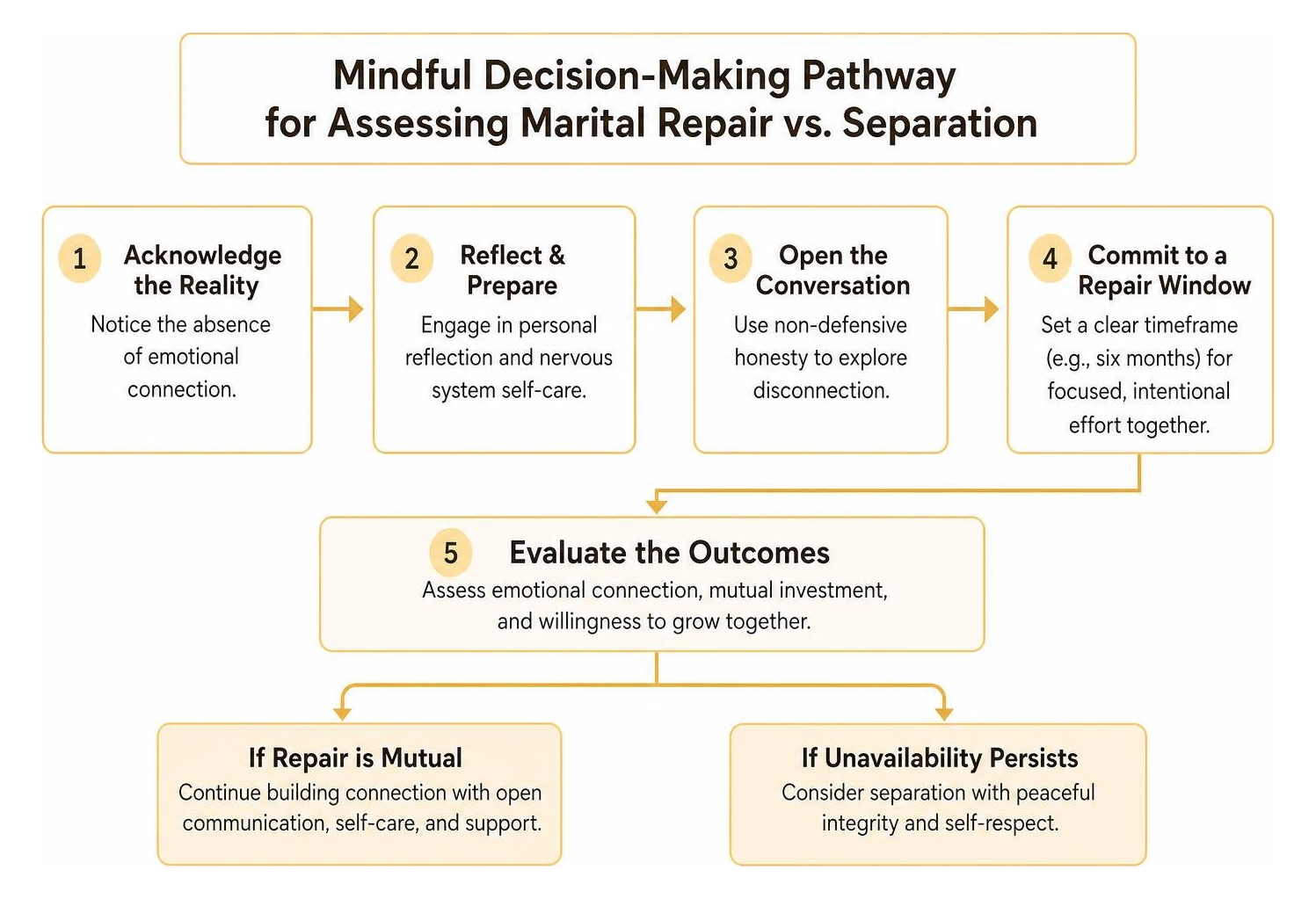
Consider establishing a clear, internal repair window—such as six months of focused, intentional effort. During this time, commit fully to open communication, nervous system self-care, and professional relational support. If, after giving genuine effort, you find that emotional unavailability is chronic and mutual investment is absent, you can make decisions regarding separation with peaceful integrity.
When to Seek Professional Marriage Counseling
Breaking deeply entrenched relational cycles often requires an experienced, attuned guide. If attempts to talk lead to circular arguments, or if you feel stuck in an enduring freeze response, professional support is vital.

At Spark Relational Counseling, May Han and our clinical team believe in somatic and attachment-based interventions that move beyond surface-level communication tricks. We work with couples across Oregon, Washington, and Illinois—including communities in Portland, Seattle, and Chicago—utilizing Emotionally Focused Therapy (EFT), Accelerated Experiential Dynamic Psychotherapy (AEDP), Experiential therapy, and Brainspotting.
These depth-oriented modalities help unearth the root vulnerabilities beneath defensive withdrawal, allowing couples to dismantle negative brain autopilots and reconstruct true emotional safety. If you are exploring your options, our dedicated Marriage Counseling services provide the structure needed to heal.
When considering therapy, couples often weigh the use of insurance. While in-network benefits can offer immediate cost savings, it is essential to understand the structural constraints of insurance. Insurance providers mandate a formal mental health diagnosis on your permanent medical record, which can compromise your privacy and create unforeseen complications for future life choices, including disability coverage, private life insurance policies, adoption processes, and certain security-clearance employment paths. Private-pay relational therapy preserves your absolute confidentiality and keeps the focus entirely on your unique relational growth.
Frequently Asked Questions About Emotional Disconnection
What does it mean when you care about your husband but feel nothing romantically?
This dynamic typically indicates that your foundational companionate bond is intact, but romantic and emotional attunement has degraded. It is common to experience deep fondness and goodwill for your spouse as a person while simultaneously feeling zero romantic spark. This shift often occurs when vulnerability and novelty are replaced by routine, emotional exhaustion, or unresolved resentments.
Can a marriage survive when emotional and physical intimacy are completely gone?
Yes, a marriage can survive and even flourish again, provided both partners are genuinely committed to doing the internal and relational work. Intimacy can be rebuilt by identifying destructive interaction cycles, restoring psychological safety, and steadily engaging in experiential modalities like Emotionally Focused Therapy (EFT). However, recovery requires mutual effort; one partner cannot carry the relational repair alone.
How do you talk to your husband about feeling disconnected without starting a fight?
To prevent defensiveness, approach the conversation from a place of personal vulnerability rather than critique. Choose a calm, neutral time when neither of you is exhausted or rushed. Anchor your communication in your own emotions by using "I" statements: describe your yearning for closeness rather than his failures as a partner, and invite him into collaborative problem-solving.
Conclusion
Feeling like there is no emotional connection with your husband is a painful, disorienting experience, but you do not have to navigate this quiet wilderness alone. Whether this disconnection marks a temporary season of burnout or a profound turning point in your marital journey, you deserve clarity, warmth, and meaningful connection.
At Spark Relational Counseling, May Han and our team provide specialized virtual individual and couples counseling across Oregon, Washington, and Illinois. Through mindfulness-based relational therapy, AEDP, and experiential approaches, our therapists help you disarm protective autopilot patterns and rediscover deep, grounded connection.
To explore our comprehensive therapeutic philosophy and begin your healing journey, read our Emotional Connection Therapy: Complete Guide or reach out to our team today to take your next step toward authentic relational peace.