
Finding Your Calm with the Best Therapy for Stress and Anxiety

When searching for the best therapy for stress and anxiety, it helps to understand that psychological support is not a one-size-fits-all solution. Clinical trials and systematic reviews demonstrate that several structured psychotherapies yield significant symptom reduction, helping individuals move away from chronic overdrive and back into emotional balance.
Understanding how different modalities operate empowers you to select an approach tailored to your emotional nervous system. Modern experiential and relational methods—such as Emotionally Focused Therapy (EFT), Accelerated Experiential Dynamic Psychotherapy (AEDP), Experiential Therapy, and Brainspotting—look deeper at how stress and anxiety reside within the body and relational patterns.
| Therapy Modality | Primary Focus | Core Mechanism | Best Suited For |
|---|---|---|---|
| Emotionally Focused Therapy (EFT) | Relational attachment & emotional processing | De-escalating negative cycles, restoring emotional safety | Relational anxiety, stress from conflict, emotional overwhelm |
| AEDP & Experiential Therapy | In-depth somatic & emotional processing | Processing difficult emotions with a therapist's active presence | Deep-seated anxiety, past trauma, emotional blockages |
| Brainspotting | Neurological & subcortical processing | Locating eye positions linked to felt emotional tension | Somatic stress, physical anxiety symptoms, performance anxiety |
| Acceptance & Mindfulness Modalities | Present-moment awareness & non-judgment | Observing thoughts without over-identifying with them | Chronic worry, racing thoughts, generalized tension |
Emotionally Focused Therapy (EFT): A Relational Foundation for Relief
While traditional clinical guides like the StatPearls Clinical Overview outline standard interventions for anxiety, many individuals find that simply analyzing logical thoughts isn't enough when anxiety feels deeply physical or rooted in emotional disconnection.
This is where relational and experiential modalities like Emotionally Focused Therapy (EFT) excel. Rather than focusing solely on intellectual thought re-framing, EFT helps you tune into the emotional triggers beneath anxious responses. When your nervous system senses isolation or relational conflict, it naturally sends alarm signals through the body. By learning to recognize these underlying emotional thresholds, you can communicate your true needs, set healthy boundaries, and calm the brain's subconscious warning systems. For a comprehensive overview of clinical options, explore our Anxiety Disorders Treatment: Complete Guide.
Exposure Therapy for Facing Avoidance and Fear
Avoidance is anxiety’s favorite self-defense mechanism. When something causes distress—whether it is public speaking, physical symptoms, or difficult social encounters—the brain naturally seeks safety by backing away. While avoidance brings temporary relief, it reinforces fear over time.
Exposure techniques facilitate extinction learning by gently guiding individuals to face feared triggers without relying on safety behaviors or total escape. When combined with experiential therapies, exposure becomes a warm, supportive process of building physiological tolerance. Instead of forcing yourself through overwhelm, experiential processing teaches your nervous system that you are safe in the present moment, allowing panic and fear responses to dissolve naturally.
Acceptance, Somatic Regulation, and Mindfulness-Based Approaches
Mindfulness and somatic therapies integrate present-moment awareness, non-judgment, and emotional acceptance. According to a comprehensive JAMA Network Meta-Analysis on GAD Psychotherapies, acceptance- and mindfulness-based approaches achieve rapid acute reductions in anxiety symptoms, providing strong short-term and long-term relief.
Mindfulness allows us to step out of reactive mental loops. By noticing physical sensations—a tight chest, shallow breathing, or a racing pulse—without judging them as dangerous, we create space between the sensation and our reaction. Mindfulness helps us notice when we are approaching an emotional boundary, giving us the clarity needed to step back, take a breath, and set healthy boundaries before burnout takes hold.
Tailoring Therapy Across Anxiety Disorders: GAD, Social Anxiety, and Panic
Anxiety manifests in many ways. A person experiencing persistent worry about daily responsibilities requires a different therapeutic approach than someone facing sudden panic attacks or intense social apprehension.
At Spark Relational Counseling, led by May Han, we recognize that tailored care is essential for lasting relief. Whether you seek individual support or relational guidance, exploring dedicated Anxiety Treatment Services allows us to pinpoint the exact roots of your distress.

Dissecting GAD versus Specific Anxiety Conditions
Generalized Anxiety Disorder (GAD) is characterized by chronic, persistent worry across multiple areas of life—finances, health, family, and work. Panic disorder, by contrast, brings sudden, overwhelming spikes of fear accompanied by physical symptoms like heart palpitations and shortness of breath. Social anxiety revolves around a deep fear of judgment, criticism, or embarrassment in social settings.
Transdiagnostic approaches recognize that while symptoms vary, the core driver remains similar: emotional dysregulation and subconscious alarm responses. By utilizing relational therapies like EFT alongside body-centered modalities like Brainspotting, clients learn to track where distress lives in their body and clear the emotional backlogs driving their specific symptoms.
How Long Therapy Takes and Key Success Factors
A common question for anyone starting treatment is how long it takes to see results. A Network Meta-Analysis on GAD Psychotherapies evaluating thousands of participants found that structured therapy programs typically average 8 to 16 sessions, with meaningful improvements often emerging within the first few weeks.
Key factors influencing therapeutic success include:
- Active therapeutic engagement: Practicing mindfulness and boundary-setting between sessions.
- The therapeutic alliance: Feeling genuinely safe, heard, and emotionally connected with your therapist.
- Emotional depth: Moving past surface-level symptoms to process core attachment needs and somatic tension.
- Consistency: Maintaining regular sessions to give the nervous system time to integrate new neural pathways.
Integrating Psychotherapy, Medication, and Lifestyle Modifications
Therapy is most powerful when supported by a balanced lifestyle. While therapy addresses the emotional and relational drivers of anxiety, holistic self-care provides the baseline physiological stability your body needs to heal.

Pharmacotherapy and Its Interaction with Therapy
In some cases, medication plays a helpful supporting role in anxiety treatment. Selective Serotonin Reuptake Inhibitors (SSRIs) and Serotonin-Norepinephrine Reuptake Inhibitors (SNRIs) are commonly prescribed for long-term symptom management, helping to lower baseline anxiety so that therapeutic work can take root. Short-term options like beta-blockers or sedatives may be used for acute situational distress.
Medication can cushion an overactive nervous system, but it does not teach new relational skills, emotional processing, or stress resilience on its own. Combining medical management with experiential talk therapy yields the most comprehensive, lasting outcomes.
Everyday Lifestyle Changes and Natural Stress Busters
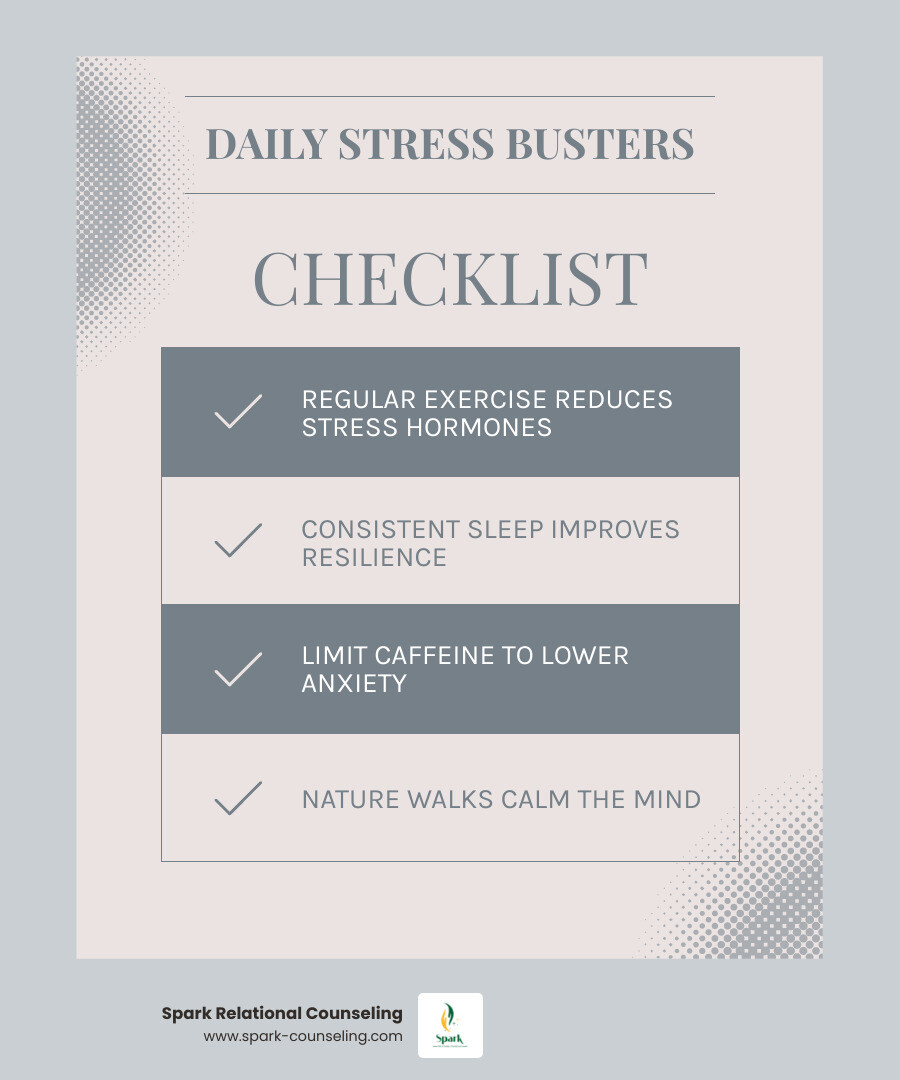
Daily lifestyle choices significantly impact your nervous system's stress threshold. Small, intentional changes can help maintain inner calm:
- Regular physical movement: Engaging in rhythmic exercise—like walking, swimming, or yoga—helps discharge stress hormones like cortisol and adrenaline.
- Restorative sleep hygiene: Keeping a consistent sleep schedule and limiting screens before bed gives the brain time to reset.
- Mindful substance intake: Reducing caffeine, nicotine, and alcohol prevents artificial spikes in heart rate and nervous system arousal.
- Somatic grounding and nature: Spending quiet time outdoors helps soothe an overstimulated mind. If you are in the Pacific Northwest, consider exploring these 5 Peaceful Spots in Seattle, WA for Mindfulness Practice and Anxiety Relief.
How to Find the Right Therapist and Prepare for Your First Session
Finding the right clinician is one of the most important steps in your mental health journey. The relationship you form with your therapist serves as the secure base from which healing occurs.
Choosing the Best Therapy for Stress and Anxiety for Your Unique Needs
When searching for a practitioner in Oregon, Washington, or Illinois, look for licensed professionals—such as Licensed Marriage and Family Therapists (LMFTs), Licensed Clinical Social Workers (LCSWs), or Licensed Mental Health Counselors (LMHCs)—who specialize in experiential, relational, and mindfulness-based approaches. You can learn more about tailored cultural and relational care in our guide on How Multicultural Counseling Can Help You Tackle Anxiety, Burnout & Stress in Seattle.
A Note on Insurance Coverage and Private Pay
While using in-network insurance benefits can reduce immediate out-of-pocket costs, it is helpful to understand the limitations that come with relying on insurance for mental healthcare:
- Mandatory psychiatric diagnoses: Insurance companies require a formal mental health diagnosis on your permanent medical record to justify coverage.
- Privacy concerns: Insurance claims pass through multiple third-party clearinghouses, meaning your personal health records are stored in large databases.
- Future life impact: A formal psychiatric diagnosis on record can sometimes impact future applications for private life insurance, adoption, disability coverage, or specialized employment security clearances.
- Treatment restrictions: Insurers often dictate the length, frequency, and type of therapy allowed, regardless of what you and your clinician decide is best.
Choosing private-pay therapy protects your personal privacy, keeps your records confidential, and gives you complete freedom to tailor treatment to your unique pace and goals.
What to Expect During Your Intake Appointment
Your initial intake appointment is an open, collaborative conversation designed to build trust and outline your goals. During this session, your therapist will:
- Review your current stress triggers and physical symptoms.
- Explore your personal history, relationships, and emotional patterns.
- Help you identify emotional thresholds so you can establish healthy boundaries.
- Collaborate with you on a personalized treatment plan focused on long-term relief.
Before starting therapy, it can also be wise to consult with a primary care provider to rule out underlying medical factors—such as thyroid imbalances or vitamin deficiencies—that can mimic anxiety.
Frequently Asked Questions About Stress and Anxiety Therapy
What is the single most effective therapy for generalized anxiety?
While classical research frequently points to cognitive approaches, real-world clinical success depends on matching the therapy to the individual. Emotionally Focused Therapy (EFT), Brainspotting, and mindfulness-based approaches are exceptionally effective for resolving the root emotional and somatic drivers of GAD.
Can therapy help relieve physical stress symptoms like muscle tension and insomnia?
Yes. Somatic and experiential therapies specifically target the autonomic nervous system. By processing unexpressed emotion and learning physical grounding techniques, your muscles release chronic tension, your heart rate settles, and restful sleep patterns naturally return.
How do I know if I need medication in addition to talk therapy?
If your anxiety symptoms are so severe that you struggle to get out of bed, perform basic tasks, or participate meaningfully in therapy sessions, a temporary prescription alongside therapy can help bring your nervous system to a manageable baseline.
Conclusion
Finding the best therapy for stress and anxiety is ultimately about restoring balance to your life and relationships. You do not have to navigate chronic overwhelm alone or rely on temporary quick fixes. By combining mindfulness, body-centered awareness, and emotionally focused relational support, you can break free from anxious cycles and build lasting calm.
At Spark Relational Counseling, May Han and our clinical team offer virtual individual and couples counseling across Oregon, Washington, and Illinois—including communities in Portland, Seattle, Chicago, Bellevue, and beyond. Our gentle, mindfulness-based relational approaches help rewrite negative autopilots, cultivate emotional safety, and empower you to live with confidence.
If you are ready to take the next step toward emotional freedom, explore our specialized care for Seattle Anxiety Therapy: A Path to Calm and Connection, discover how our individual therapy for relationship issues can foster personal healing, or learn how we support high achievers through Therapy for High-Functioning Anxiety and Depression. We also offer specialized support through our therapy for entrepreneurs program. Reach out to us today to begin your journey toward lasting peace.