
High Stakes and High Anxiety: Treatment Options for High Achievers
Driven vs. Distressed: Differentiating Healthy Ambition from Anxiety Disorders

Treating high-functioning anxiety without losing your edge requires shifting from fear-driven over-preparation to sustainable, value-aligned focus. Effective anxiety treatment for high achievers combines somatic regulation to soothe autonomic hyperarousal with experiential modalities like Emotionally Focused Therapy (EFT) and AEDP. By calming the nervous system and recalibrating effort, you preserve sharp executive functioning without running on chronic distress.
Many high-performing professionals pride themselves on having a "Type A" personality. Conscientiousness, precision, organizational rigor, and a healthy pursuit of excellence are strengths that propel careers forward. However, there is a distinct line where healthy motivation ends and an internal anxiety disorder begins.
In standard clinical settings, traditional diagnostic frameworks such as the DSM-5 look for overt functional impairment—such as missing work deadlines, chronic absenteeism, or noticeable avoidance behaviors. For high achievers, these conventional markers fail. Instead of avoiding tasks, anxious professionals experience over-functioning. They meet every deadline, take on extra projects, and deliver polished presentations, masking severe internal distress behind exceptional competence.
| Dimension | Healthy Ambition & "Type A" Drive | High-Functioning Anxiety Disorder |
|---|---|---|
| Primary Motivation | Intrinsic joy, curiosity, and value-aligned goals | Fear of failure, exposure, or catastrophic loss |
| Effort Calibration | Scalable effort adjusted to task importance | Compulsive over-preparation across all tasks |
| Response to Success | Genuine satisfaction and internal celebration | Fleeting relief followed by immediate dread of the next task |
| Ability to Rest | Downtime is restorative and enjoyable | Downtime triggers restlessness, guilt, and panic |
| Self-Perception | Stable self-worth grounded in identity | Impostor feelings; self-worth tethered strictly to recent output |
| Somatic State | Baseline calm with situational arousal | Chronic hyperarousal, muscle tension, and GI upset |
When exploring therapy for overachievers mental health, the goal is not to eliminate your ambition. Rather, it is to transition your effort from a fear-driven compulsion into a scalable, sustainable choice.
The Internal vs. External Locus of Control
A key psychological mechanism fueling anxiety in high achievers is an over-reliance on an external locus of control. When individuals receive continuous external praise throughout school and early career stages, their self-worth becomes deeply tethered to accolades, promotions, and peer approval.
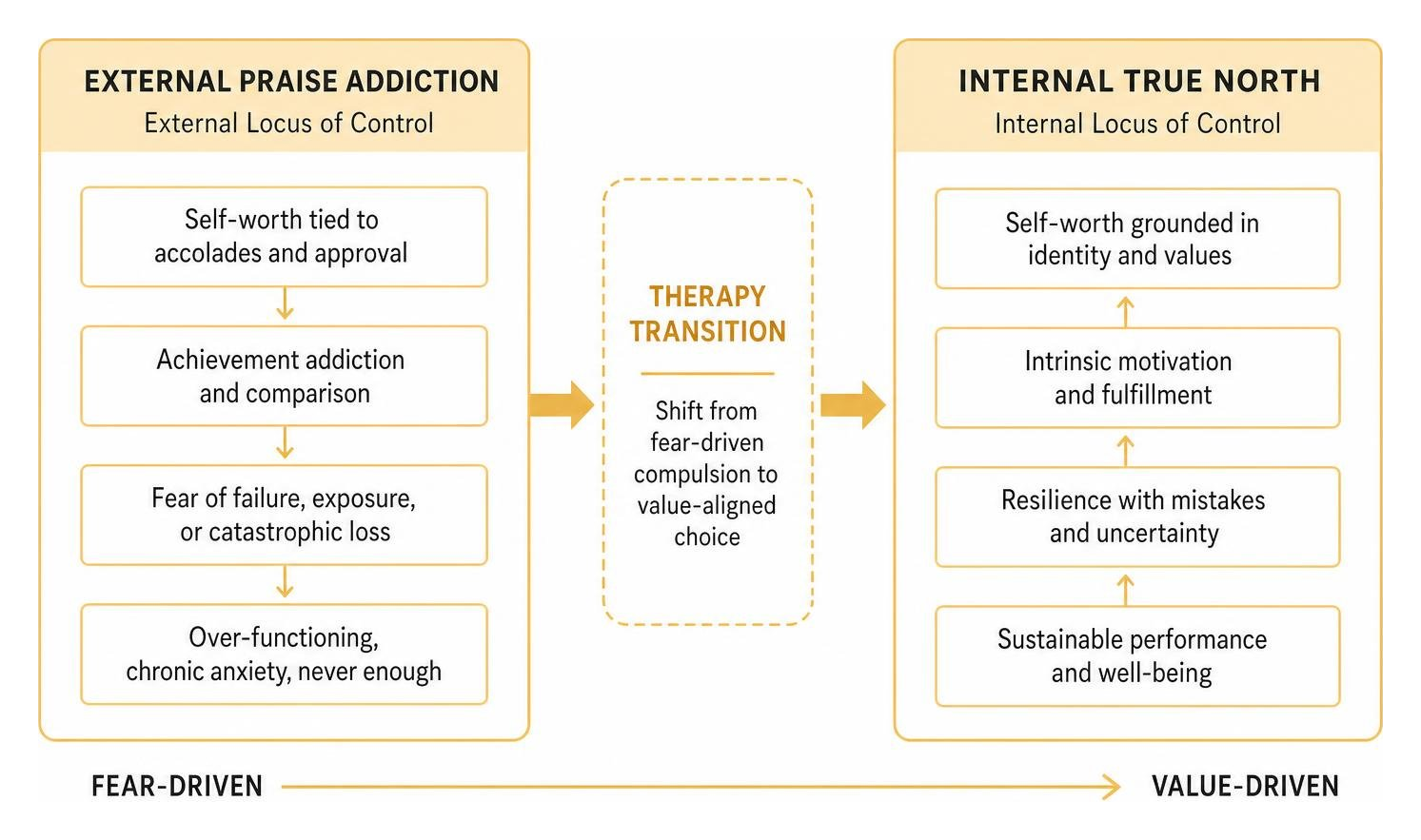
This creates an achievement addiction characterized by automatic thought loops: "If I am not producing, I am falling behind," or "If I make one mistake, my reputation is ruined." Therapy helps guide individuals back toward an internal "true north"—an intrinsic set of personal values where performance serves personal fulfillment rather than serving as a protective shield against shame.
The Hidden Cost of Over-Functioning: Somatic Toll and Delayed Care
High-functioning anxiety comes with a heavy biological price tag. While the mind attempts to out-think every potential catastrophe, the body remains trapped in an elevated fight-or-flight response.
Chronic autonomic dysregulation keeps cortisol and adrenaline elevated, leading to subtle yet debilitating somatic issues:
- Chronic tension headaches and jaw clenching: Unconscious clenching during high-stakes work or sleep (bruxism).
- Gastrointestinal distress: Unexplained stomach pain, acid reflux, or irritable bowel patterns linked directly to gut-brain axis dysregulation.
- Sleep disruption: Waking up at 2:00 a.m. with an active mind running simulations of upcoming meetings or reviewing daily conversations.
- Cardiovascular strain: Sensations of heart palpitations or chest tightness during standard daily tasks.
For many professionals, these physical warning signs precede an awareness of emotional struggle, sometimes overlapping with burnout as detailed in our high functioning depression guide.
Why High Achievers Wait Decades for Treatment
Research indicates that individuals with anxiety disorders who eventually seek clinical care wait a median of 9 to 23 years after their symptoms begin. According to data from the National Institute of Mental Health, roughly 19.1% of adults in the United States experienced an anxiety disorder in the past year, and 31.1% will experience one during their lifetime.
High achievers often represent the upper end of that 23-year delay. Because their anxiety looks like dedication, resilience, and reliability, friends, family, and employers routinely reward the exact behaviors that mask internal suffering. Over decades, this functional masking leads to profound emotional suppression and quiet social isolation.
Maladaptive Coping: Substance Use and Self-Medication
To bring their overstimulated nervous systems down at the end of the day, high performers frequently turn to chemical down-regulators.
Studies show that high-achieving adolescents from affluent socioeconomic backgrounds often drink alcohol specifically to mitigate anxiety and internal pressure, whereas peers more often consume alcohol for social exploration. Over time, using alcohol to "switch off" a racing brain establishes neural pathways that elevate the risk of adult substance dependency, compounding physical exhaustion and emotional avoidance.
The Performance Paradox: Why Calming Anxiety Sharpens Your Edge
A pervasive fear among executives, attorneys, creatives, and entrepreneurs is that seeking anxiety treatment will cause them to lose their competitive edge. The assumption is that anxiety is the primary fuel powering their success.
In reality, clinical research and the Yerkes-Dodson Law (1908) demonstrate the opposite. Human performance rises with physiological arousal only up to an optimal threshold. Past that peak point, additional arousal causes performance, working memory, and cognitive flexibility to decline rapidly.
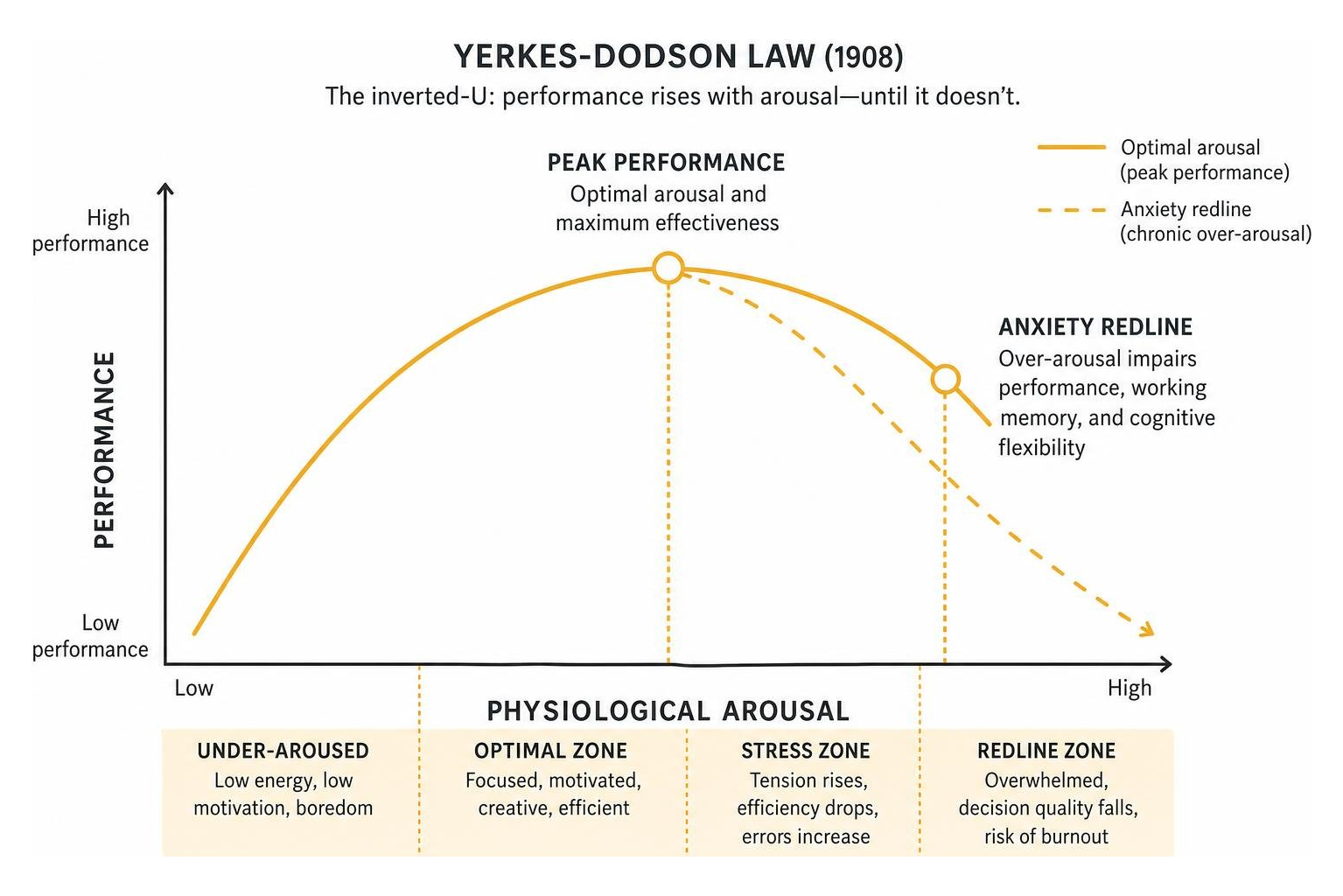
Chronic anxiety forces the nervous system to operate constantly in the redline zone past the optimal peak. It results in expensive performance—work achieved through sheer force of will, redundant checking, and severe sleep deprivation. Calming the nervous system does not dull your mind; it restores executive functioning, enhances creative problem-solving, and prevents catastrophic burnout.
For an in-depth look at symptom profiles, explore our anxiety disorders treatment complete guide.
Dismantling the Anxiety-Praise Reinforcement Loop
High-functioning anxiety is reinforced by an accidental conditioning loop:
- Anticipatory Fear: A high-stakes presentation or project creates internal panic.
- Safety Behaviors: You over-prepare, work through the night, and rehearse every variable.
- Positive Outcome: The presentation succeeds and leadership praises your work.
- False Attribution: The brain concludes, "The anxiety and 2 a.m. mental rehearsals saved us."
Mindfulness allows professionals to recognize these hyperaroused emotional thresholds. By developing mindful awareness, you learn to observe anxiety as useful data about what you care about without allowing it to dictate compulsive safety behaviors. You gain the ability to set manageable boundaries and calibrate preparation based on actual stakes rather than internal panic.
Evidence-Based Anxiety Treatment for High Achievers
Finding sustainable relief requires moving beyond generic stress management tips. An effective clinical approach combines in-depth somatic regulation with therapies designed to rework underlying emotional patterns. When considering therapy options, many clients inquire about utilizing health insurance. While in-network insurance benefits can help offset upfront fees, relying on insurance carriers requires a formal psychiatric diagnosis on your permanent medical record. This loss of privacy can have unintended long-term ramifications for future life choices, including underwriting for private life or disability insurance policies, specialized professional licensing, adoption applications, and certain high-clearance employment screenings. Direct-pay specialized therapy ensures complete confidentiality, personalized care plans, and freedom from third-party oversight.
For professionals in the Pacific Northwest seeking targeted virtual care, exploring seattle anxiety therapy a path to calm and connection offers a structured path toward nervous system balance.
Core Psychotherapy Modalities
Rather than relying purely on top-down logic, deep recovery happens when we access emotional processing and relational dynamics through advanced therapeutic frameworks:
- Emotionally Focused Therapy (EFT): High achievers often use accomplishment to secure connection or avoid relational vulnerability. EFT works by identifying primary emotional attachment fears and fostering deep emotional security with oneself and close partners.
- Accelerated Experiential Dynamic Psychotherapy (AEDP): AEDP helps individuals process difficult somatic and emotional states in the presence of a supportive clinician, undoing internal aloneness and uncovering innate resilience.
- Experiential Therapy & Brainspotting: Brainspotting utilizes visual field focal points to process neurophysiological holding patterns of stress and trauma. It accesses deep subcortical brain areas that verbal debate cannot reach, untangling somatic tension at its core.
Specialized anxiety treatment integrates these approaches to help you unhook your identity from frantic productivity.
Somatic and Mindfulness-Based Protocols
We utilize mindfulness-based relational therapy to help high performers tune into bodily sensations before cognitive panic takes over. Somatic down-regulation techniques—such as tracking autonomic nervous system states, intentional breath practices, and physiological grounding—signal safety to the nervous system. This somatic foundation allows you to enter true rest without guilt.
Cultivating Resilience in the Next Generation of High Achievers
Preventing anxiety disorders in young, ambitious individuals starts by reshaping how we define success in families, classrooms, and athletic programs.

Key protective strategies include:
- Normalizing Low-Stakes Failure: When young people are allowed to make mistakes early in low-stakes environments, they build genuine emotional resilience. Shielding them from failure reinforces perfectionistic fragility.
- Fostering Technology-Free Connection: In-person, unstructured relational connection allows adolescents to externalize stress safely. Virtual interactions often increase comparison-driven anxiety.
- Modeling Healthy Boundaries: Parents and mentors must visibly model intentional rest, emotional vulnerability, and boundaries with work devices. Children internalize how adults cope with stress far more than what adults say.
Frequently Asked Questions About High-Functioning Anxiety
Is high-functioning anxiety an official DSM-5 diagnosis?
No. High-functioning anxiety is not a discrete diagnostic category in the DSM-5. It is a clinical description that typically aligns with Generalized Anxiety Disorder (GAD). While standard diagnostic criteria emphasize visible functional deficits, individuals with high-functioning anxiety manifest severe internal symptoms while maintaining high output.
Will seeking anxiety treatment reduce my professional motivation or performance?
No. Treating high-functioning anxiety restores cognitive bandwidth. By eliminating redundant checking, panic-driven over-preparation, and mental rumination, you conserve mental energy for strategic thinking and meaningful connection, leading to sustainable high performance.
How can family members identify covert anxiety in a successful loved one?
Watch for subtle behavioral signals: sudden irritability when schedules shift, physical exhaustion, chronic headaches or digestive complaints, difficulty relaxing during vacations, and an inability to celebrate major milestones.
Conclusion
Sustainable success does not require living in a state of perpetual nervous system exhaustion. You can maintain your high standards, intellectual curiosity, and professional drive while letting go of the constant underlying panic.
At Spark Relational Counseling, founder May Han and our clinical team offer virtual individual and couples counseling using mindfulness-based relational therapy across Oregon, Washington, and Illinois—serving clients in Seattle, Portland, Chicago, and surrounding communities. We help high performers interrupt negative brain autopilots, heal relational strain, and find enduring calm.
If you are ready to shift from surviving your success to truly enjoying your life, learn more about our specialized support for high-functioning depression and anxiety. Reach out today to schedule a confidential consultation.