How to Build a Peace Loving Marriage and Secure Bonds
Why Building a Peace-Loving Marriage Is Harder Than It Looks

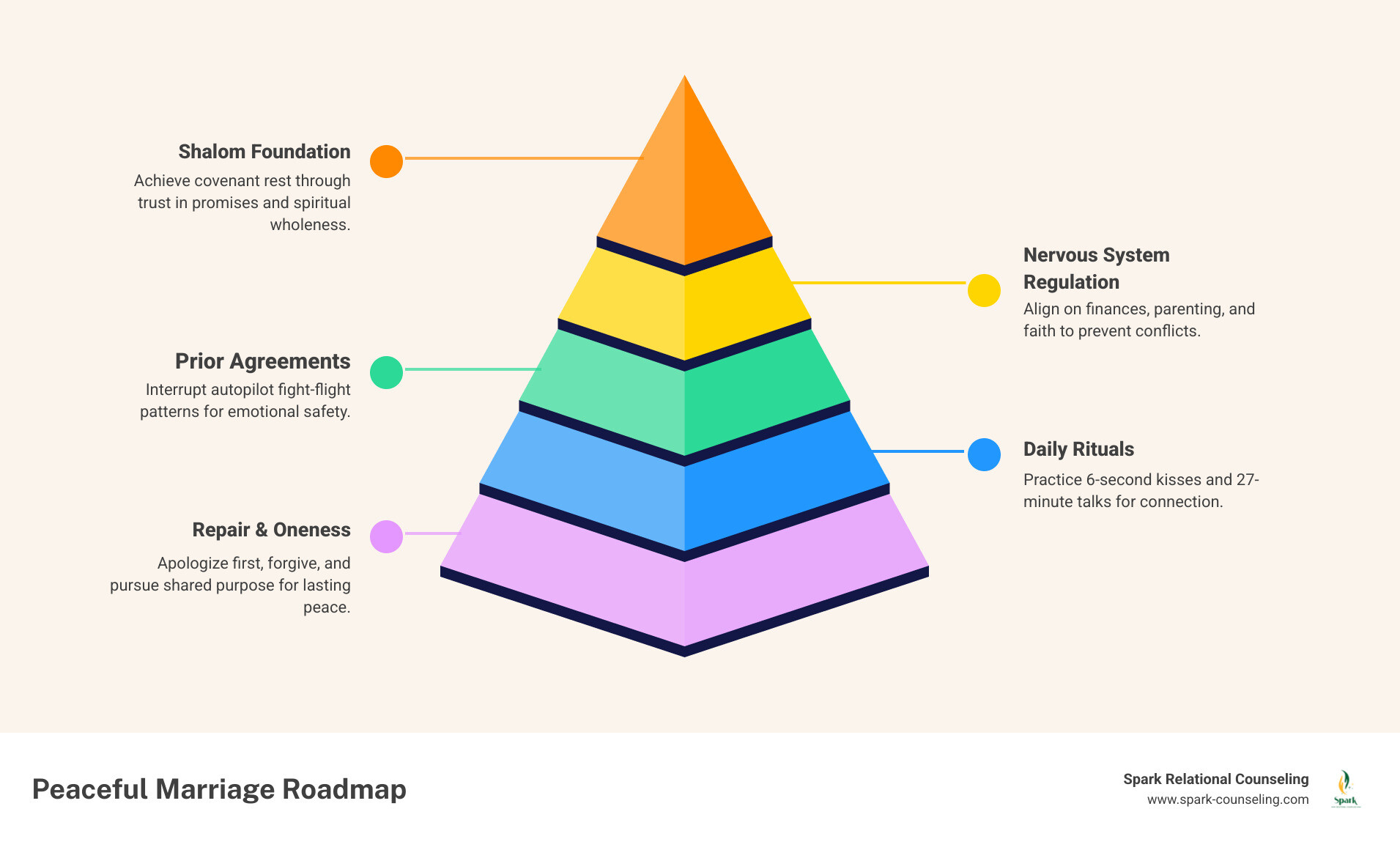
To build peace loving marriage that truly lasts, you need more than good intentions. Here's what actually works:
- Establish prior agreement on big life decisions (finances, parenting, faith)
- Build daily rituals that create connection — not just coexistence
- Regulate your nervous system before conflict escalates
- Apologize first and own your part, even when it's hard
- Pursue shared purpose so you're building something together, not just living in parallel
- Seek professional support when old patterns keep pulling you back
You're standing in the kitchen. The sun is just hitting the counter. The dishwasher hasn't been emptied — again. Your chest tightens. A sharp comment sits right on the tip of your tongue.
This is the moment. The one that happens dozens of times a week in most marriages.
Research shows the average couple spends only 27 to 37 minutes a week actually talking to each other. That's not much runway for connection — and it's more than enough space for resentment to quietly move in.
Peace in marriage isn't the absence of conflict. It's something deeper. In the Hebrew tradition, the word shalom describes a kind of wholeness — a covenant rest where trust has been built and promises have been kept. That's the kind of peace worth building. Not a fragile quiet, but a restorative calm that holds even when life gets messy.
The drama doesn't come from loving the wrong person. It usually comes from autopilot — the unconscious patterns your nervous system learned long before your relationship began. The good news? Those patterns can change.
I'm May Han, a Licensed Marriage and Family Therapist at Spark Relational Counseling, and helping couples build peace loving marriage foundations — by breaking through destructive cycles using mindfulness and emotionally focused approaches — is at the heart of my work. In this guide, I'll walk you through the practical, research-backed, and therapeutically grounded steps that actually move the needle.
The Spiritual and Psychological Foundations of Shalom
To build peace loving marriage rhythms, we must first understand what peace actually is. In many modern relationships, "peace" is simply the absence of a screaming match. But true peace—what we call shalom—is a state of completeness and safety. It is a "covenant rest" that occurs when both partners feel secure in the promises they’ve made to one another.
When we look at the ways to create peace in marriage, we see that it often begins with an internal shift. If you are constantly striving, anxious, or keeping score, your marriage will reflect that turbulence. Shalom is the "finished work" of the relationship; it’s the ability to sit down and rest because you know your partner has your back.
Understanding the Biblical Foundation of Peace
From a spiritual perspective, peace is more than a feeling; it is a fruit of the Spirit. It grows in the soil of trust. In the Old Testament, shalom referred to the rest that came from a kept covenant. In a marriage, this translates to the peace that comes from knowing your wedding vows aren't just words spoken once, but promises lived out daily.
When couples engage in premarital counseling, we often focus on these spiritual and ethical foundations. Building trust means becoming a person who keeps their word, even in the small things. When you can rest in your spouse’s love without fear of betrayal or abandonment, you have found the cornerstone of a peaceful home.
The Biology of Marital Strife
Psychologically, the "drama" we often experience is actually a biological response. Our brains are hard-wired to treat relationship conflict like a physical threat. When your spouse criticizes you, your nervous system may enter a "fight-flight-freeze" state. Your heart rate climbs, your breathing becomes shallow, and your "logical brain" shuts down.
This is why it is so difficult to stop having arguments in a relationship once they’ve started. You aren't just arguing about the dishes; your brain thinks you’re fighting for your life. At Spark Relational Counseling, May Han and her team teach couples how to recognize these "brain autopilots." By learning to regulate your nervous system through deep breathing and grounding, you can move from a state of biological threat back to emotional safety.
Four Pillars to Build Peace Loving Marriage Harmony

Lasting peace isn't an accident; it’s built on specific structural pillars. Without these, even the most passionate love can feel unstable.
Establishing Prior Agreement on Life’s Big Issues
One of the most common sources of marital strife is "unmet, unstated expectations." We often assume our partner views the world exactly as we do, only to find out years later that we have vastly different ideas about money, kids, or how to spend the holidays.
Establishing prior agreement is a vital part of marriage counseling. We encourage couples to sit down and have the "uncomfortable" conversations before they become "explosive" ones. This includes:
- Financial Unity: How will we spend, save, and give?
- Parenting Styles: What are our non-negotiables for discipline and education?
- Holiday Boundaries: Which family traditions do we keep, and which do we create for ourselves?
Cultivating Oneness and Shared Kingdom Purpose
Peace thrives when a couple is moving in the same direction. This is the concept of "oneness." It’s not about losing your individuality, but about aligning your lives so that you function as a team. This involves mutual submission—putting the needs of the relationship above your personal ego.
In cross-cultural marriages, this alignment is especially important. You are blending two different worldviews into one new "family culture." By honoring each other’s roles—whether that is the husband’s sacrificial leadership or the wife’s strength as an ezer (a "strong helper")—you create a partnership where both people feel valued and empowered.
Breaking the Autopilot Cycle with Daily Mindfulness
Most of our marital interactions happen on autopilot. We react to our spouse’s tone or facial expression before we’ve even consciously processed what they said. To build peace loving marriage habits, we have to interrupt these cycles with intentionality.
Daily Rituals to Build Peace Loving Marriage Habits
Small, repetitive actions have a massive impact on the "weather" of your home. If you want a peaceful climate, you have to plant seeds of connection every single day. Here are a few concrete examples:
- The 6-Second Kiss: Research suggests that a six-second kiss creates a physical "bridge" of connection that lowers stress hormones.
- The 20-Minute Debrief: Spend time each evening talking about your day—not the "to-do" list, but how you felt about your day.
- The High Praise Ratio: Aim for at least two compliments for every one piece of "constructive feedback."
Understanding how cultural differences affect marriage can also help you tailor these rituals. Some cultures value verbal affirmation, while others prioritize acts of service. Learn your spouse’s "love language" and speak it fluently.
The Power of Small Acts of Service
Humility is the great "strife-killer." Often, we hold onto our "annoying" habits because we feel entitled to do things our way. But peace often requires us to sacrifice our preferences for the sake of our partner’s comfort.
Whether it’s making sure the garage door is closed, stacking the dishes the way they like, or cleaning the hair out of the shower drain without being asked, these small acts communicate: "I see you, and I care about your peace." This is especially crucial during seasons of infidelity counseling, where rebuilding trust requires a radical commitment to transparency and service.
Seeking Peace Through Vulnerability and Repair
No marriage is perfectly peaceful 100% of the time. The goal isn't to never fight; it’s to learn how to repair quickly when you do. Conflict can actually be an opportunity for growth if handled with emotional presence.
The Art of the Proactive Apology
In a "drama-filled" marriage, the goal is to be right. In a peace-loving marriage, the goal is to be connected. This often means being the first to apologize—even if you feel you were only "10% at fault."
Owning your mistakes without "buts" ("I'm sorry I raised my voice, but you started it") is a hallmark of culturally sensitive individual counseling. It shows that you value the relationship more than your ego. When you let go of the need to "win" the argument, you both end up winning the peace.
Handling Conflict with Emotional Presence
When conflict arises, stay grounded. Use "I" statements to express your feelings rather than "You" statements that trigger defensiveness. For example, "I feel overwhelmed when the kitchen is messy" is much more effective than "You never help me in the kitchen."
If you feel your "autopilot" taking over—if your heart is racing or you feel like shutting down—take a helpful break. Agree to step away for 20 minutes to calm your nervous system, then return to the conversation with a softened heart. This is a key strategy for breaking the argument cycle.
Professional Paths to Lasting Tranquility
Sometimes, the patterns of strife are too deeply ingrained to fix alone. This is where professional support becomes an investment in your future. May Han and Spark Relational Counseling together provide a sanctuary for couples to dismantle negative brain autopilots and foster deep, non-judgmental trust through mindfulness-based relational therapy.
We utilize advanced therapeutic approaches like Emotionally Focused Therapy (EFT) to identify the underlying attachment needs driving your conflicts. We also use AEDP (Accelerated Experiential Dynamic Psychotherapy) and Brainspotting to help process trauma that might be stored in the body, manifesting as relationship triggers.
Seeking Professional Support to Build Peace Loving Marriage Foundations
Our virtual therapy services are available to residents in Oregon, Illinois, and Washington. Whether you are in Portland, Seattle, or Chicago, you can access high-end, specialized care from the comfort of your home. Choosing the right type of therapist for couples therapy is the first step toward a more tranquil life together.
Frequently Asked Questions about Marital Peace
How can couples build trust and keep their promises to foster peace?
Trust is built through "micro-promises." It’s the consistency of doing what you say you will do, day after day. This includes being reliable with household chores, being transparent about finances, and honoring the deep emotional vows of your wedding day. When reliability becomes the norm, peace follows.
What practical daily habits promote peace and reduce annoyance?
Focus on the "small stuff." Close the doors, stack the dishes, and pay attention to the little things that bother your spouse. Practice active listening—where you listen to understand, not just to respond. A home where both partners feel "seen" and "heard" is a home where annoyance has little room to grow.
Why is pursuing peace and avoiding strife essential for a blessed marriage?
Strife acts like an "angry undercurrent" that erodes the foundation of your home. Pursuing peace isn't just about being "nice"; it’s about protecting the atmosphere of your family. Unity brings a sense of anointing and blessing that allows both partners to flourish in their individual lives and their shared mission.
Conclusion
Building a peace-loving marriage is a journey of returning to one another, again and again, with a softened heart and a regulated spirit. By moving away from the drama of "being right" and toward the beauty of "being together," you create a home that is a true paradise. Whether you are navigating cultural differences or breaking old argument cycles, professional guidance can help you find your way back to shalom.
If you are ready to transform your relationship and move past the autopilot of conflict, reach out to May Han at Spark Relational Counseling to begin your journey toward lasting peace. You don't have to navigate the storm alone.