How Daily Habits Keep the Burnout Monster Away
Why Burnout Prevention Daily Habits Are the Quiet Foundation of a Full Life

Burnout prevention daily habits are small, consistent actions that protect your nervous system before exhaustion takes hold — not grand overhauls, but quiet rituals that keep chronic stress from quietly emptying you out.
Here are the most effective ones to start today:
| Habit | Why It Helps | Time Required |
|---|---|---|
| Protect sleep | Fewer than six hours is the single biggest burnout risk factor | Nightly routine |
| Daily movement | 5,000 steps helps keep depression and stress hormones at bay | 20–30 min |
| Mindfulness micro-practice | Strengthens prefrontal cortex and reduces emotional exhaustion | 5–10 min |
| Set a hard work stop time | Prevents cognitive overtime and nervous system dysregulation | 1 min to set |
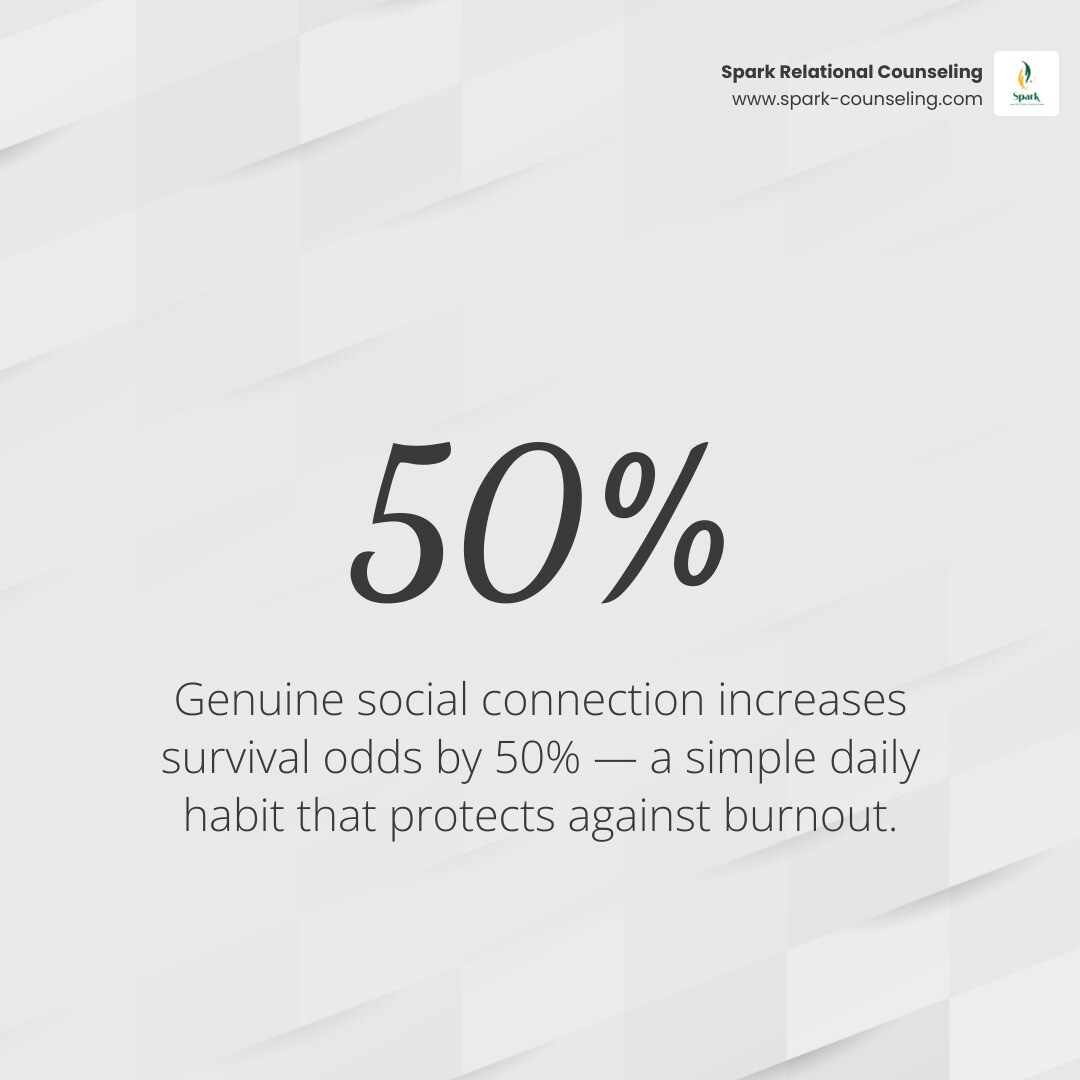
| Genuine social connection | Strong relationships increase survival odds by 50% | 5–15 min |
| Scheduled oasis moments | Micro-resets prevent cumulative stress from compounding | 5 min each |
Burnout does not arrive overnight. It builds quietly — one skipped break, one late night, one ignored boundary at a time. By the time most people recognize it, they are already running on fumes, wondering why rest no longer feels restoring and why even small tasks feel impossibly heavy.
The good news is that prevention does not require a dramatic life overhaul. Research consistently shows that small, boring, consistent daily actions build the kind of resilience that protects you through even the most demanding seasons of life and work.
I am May Han, a Licensed Marriage and Family Therapist at Spark Relational Counseling, and my work with high-achieving individuals and couples navigating burnout prevention daily habits has shown me how powerfully the right small rituals can interrupt even the most entrenched cycles of exhaustion. In the guide below, I will walk you through exactly what those habits are, why they work in the brain and body, and how to start them even when you have almost nothing left.
The Physiology of Exhaustion: Why We Need Burnout Prevention Daily Habits
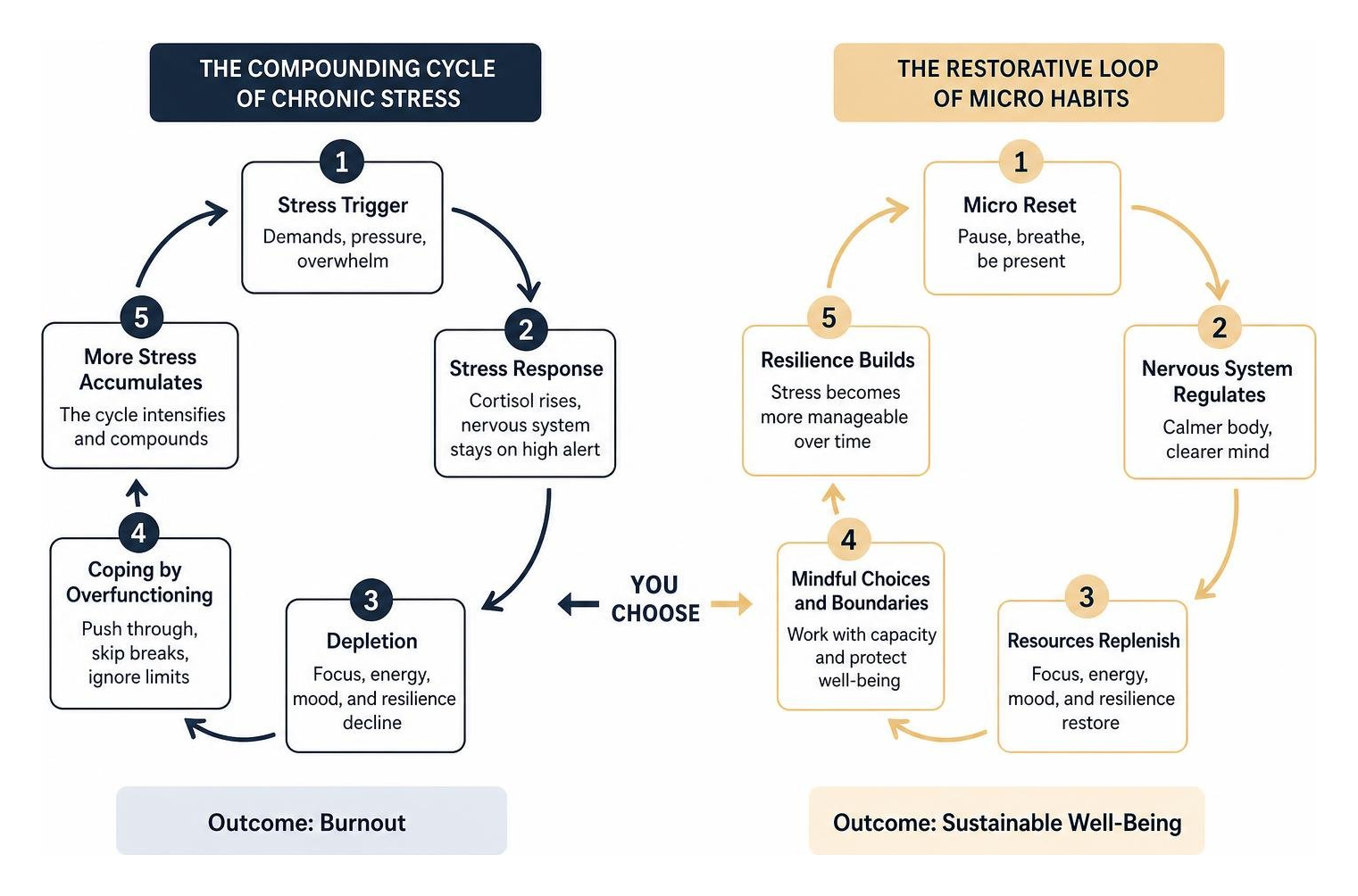
To understand why small habits are so incredibly powerful, we have to look at what chronic stress actually does to our biology. The human nervous system is designed for short, acute bursts of stress followed by long periods of deep rest and integration. When we live in a state of constant, unrelenting pressure, our bodies remain locked in a survival response, unable to distinguish between a demanding email inbox and a physical threat.
Over time, this constant state of high alert chemically alters the brain. Chronic stress floods our system with cortisol. While cortisol is necessary for waking up and responding to immediate demands, its prolonged elevation damages the prefrontal cortex—the brain’s executive center responsible for decision-making, planning, and emotional regulation. When the prefrontal cortex is depleted, we lose our sense of agency. We slide into what psychologists call "negative filtering," where we can only perceive the most troubling aspects of our lives, creating a self-fulfilling loop of hopelessness.
This state is closely linked to what we call the "3 Ps of pessimism":
- Permanence: Believing that this exhaustion is our new, unchangeable reality.
- Pervasiveness: Feeling like every single area of our life is failing because work is overwhelming.
- Personalization: Concluding that our struggle is a character flaw rather than a physiological response to an unsustainable workload.
Furthermore, our natural cortisol awakening response naturally peaks about 30 to 45 minutes after waking up. If the very first thing we do upon opening our eyes is grab our phone and scroll through work notifications, we flood our already dysregulated stress system with an immediate spike of adrenaline. This sets a reactive neurological baseline for the entire day. By learning to recognize these biological patterns, we can use targeted micro-practices to gently steer our nervous system back to safety. If you want to dive deeper into identifying your own patterns, you can read our guide on Recognizing Early Burnout Signs.
Micro-Practices: Tiny Burnout Prevention Daily Habits for Busy Professionals
When we are already running on empty, the thought of adding a complicated self-care routine to our schedule can feel like another chore. This is why we advocate for "oasis moments"—micro-practices that take less than five minutes but effectively interrupt the accumulation of stress throughout the day.
Mindfulness is often misunderstood as a practice that requires sitting in silent meditation for an hour. In reality, a highly effective mindfulness practice can be as simple as taking 60 seconds to step away from your desk, close your eyes, and tune into your physical senses without judgment. These small pauses help us identify our emotional thresholds—the subtle point where healthy engagement tips over into survival-driven panic.
For professionals navigating high-pressure careers in places like Seattle, WA, Portland, OR, or Chicago, IL, building these micro-practices into the workday is essential. We can easily anchor these habits to existing routines:
- The Transition Walk: Taking a five-minute walk around the block immediately after ending your workday, completely disconnected from technology, to create a psychological "door" between your professional and personal life.
- Screen-Free Lunch: Eating your lunch away from all screens to allow your brain's default mode network to rest and process information.
- The 10-Minute Email Rule: Before responding to non-urgent late-night emails, pause for ten minutes to evaluate if the response can wait until morning.
By committing to these tiny shifts, we build a reliable foundation of resilience. For a structured look at how these habits protect you, check out 7 Proven Habits to Prevent Burnout and Build Long-Term Resilience. Additionally, if you are looking for specific regional advice on managing a demanding lifestyle, explore our 10 Work-Life Balance Tips for Modern Professionals in Seattle.
The Sleep-Stress Connection: Rest as Biological Maintenance
If there is one non-negotiable foundation for burnout prevention, it is sleep. Research has shown that getting fewer than six hours of sleep per night is the single biggest predictor of clinical burnout—even more influential than high workloads or toxic workplace dynamics. When we are sleep-deprived, the emotional regulation centers in our brain become roughly 60% less effective. This explains why a minor inconvenience can feel like an absolute catastrophe when we are exhausted.

True physical recovery requires us to prioritize sleep as a form of biological maintenance rather than a luxury. To optimize your sleep hygiene and protect your circadian rhythm, consider these simple daily habits:
- Maintain Sleep Consistency: Go to bed and wake up at the same time every day, even on weekends. Keeping a consistent schedule is just as critical for your nervous system as the total number of hours slept.
- The 30-Minute Digital Disconnect: Turn off all screens at least 30 minutes before bed. Blue light exposure delays melatonin production by up to 90 minutes, keeping your brain in a state of alert long after you turn off the lights.
- The Evening Brain Dump: Spend three minutes writing down any racing thoughts, lingering tasks, or anxieties in a notebook before bed to physically externalize them and clear your mind.
- Keep It Cool: Research indicates that keeping your bedroom cool, around 65°F (18°C), supports the deep, restorative sleep stages your brain needs to repair stress damage.
The Minimum Viable Routine: Rebuilding When You Have Zero Energy
When you are in the deep stages of burnout, your prefrontal cortex is physically depleted. This means your executive functioning—your ability to make decisions, plan schedules, and initiate new actions—is temporarily impaired. Trying to implement a complex new lifestyle routine when you are in this state is neurologically impossible. It is not a matter of willpower; your brain simply does not have the resources to execute it.
To bypass this executive dysfunction, we must design a "Minimum Viable Routine" that shifts the cognitive load from the energy-expensive prefrontal cortex to the automatic basal ganglia. The basal ganglia is the deeper, older part of the brain that handles habits we perform without thinking, like brushing our teeth or tying our shoes. By making our recovery habits incredibly small and low-friction, we can build a baseline of wellness without draining our limited mental reserves. To help you monitor your recovery progress, we recommend reading How to Track Burnout Symptoms.
The Two-Minute Rule: Initiating Burnout Prevention Daily Habits Without Overwhelm
The most effective way to build these automatic pathways is by utilizing the "Two-Minute Rule," a concept popularized by habit experts like James Clear. The rule states that when you start a new habit, it should take less than two minutes to do.
For someone experiencing burnout, this might look like:
- Instead of committing to a 30-minute meditation, commit to taking five slow, deep breaths in bed before picking up your phone.
- Instead of planning a grueling gym session, commit to simply putting on your walking shoes and stepping outside.
- Instead of writing a detailed journal entry, commit to writing one sentence starting with, "Today I feel..."
These tiny actions might feel almost embarrassingly small, but that is exactly the point. The goal is not intensity; it is the art of showing up. Every time you perform a two-minute habit, you are casting a vote for a new identity, proving to your nervous system that you are someone who prioritizes recovery. Over time, these small actions naturally expand. To learn more about this approach, you can read about The Two-Minute Rule for Burnout Recovery.
Somatic Resets: Activating the Vagus Nerve and Parasympathetic System
When chronic stress has locked your body into a fight-or-flight state, cognitive strategies alone are often not enough. We have to speak directly to the nervous system through the body. The most direct pathway to the parasympathetic nervous system—the system responsible for rest, digestion, and recovery—is the vagus nerve.
The vagus nerve runs from the brainstem through the neck and down into the chest and abdomen. Because of its physical pathway, we can stimulate it and trigger a calming response in just a few minutes using somatic resets:
- Vocal Resonance: Singing, humming, or chanting gently vibrates the vocal cords, which directly stimulates the vagus nerve and lowers your heart rate.
- Extended Exhalations: Breathe in for a count of four, and exhale slowly for a count of eight. Making your exhalations longer than your inhalations signals to your brain that you are safe, immediately slowing down your physiological stress response.
- The Cold Splash: Splashing cold water on your face for 10 seconds activates the mammalian dive reflex, which rapidly reduces heart rate and interrupts acute anxiety loops.
By integrating these somatic tools into your daily life, you actively discharge accumulated stress from your physical tissues. If you are ready to explore deeper therapeutic approaches to somatic recovery, take a look at The Best Therapy for Burnout: Effective Strategies to Recover and Thrive.
Relational Resilience: Protecting Your Partnership from Chronic Stress
We do not experience burnout in a vacuum. When we are chronically exhausted, we inevitably bring that depletion home, which can place a heavy burden on our most cherished relationships. Loneliness and burnout exist in a bidirectional feedback loop: burnout causes us to isolate ourselves, and that isolation further accelerates our emotional exhaustion.

In our practice, we utilize Emotionally Focused Therapy (EFT) to help couples understand how chronic stress triggers negative relational patterns. When one or both partners are burned out, their emotional reserves are depleted. They may become highly reactive, defensive, or emotionally withdrawn. A partner's quiet exhaustion can easily be misinterpreted as coldness or a lack of care, sparking cycles of conflict.
To protect your partnership from the toll of chronic stress, we recommend building relational resilience through small, shared rituals:
- The Six-Second Hug: A daily, intentional hug lasting at least six seconds. This duration is long enough to trigger the release of oxytocin, lowering cortisol levels and fostering a deep sense of safety and connection.
- The Stress-Dumping Boundary: Before talking about work stressors, ask your partner: "Do you have the emotional space for me to vent right now?" This simple question respects your partner's emotional thresholds and prevents cumulative relational fatigue.
- Shared Oasis Moments: Dedicate 10 minutes in the evening to sit together without screens, holding a warm cup of tea, and checking in on your emotional states rather than just discussing logistics.
Nurturing these connections is a vital buffer against external pressures. To explore how professional support can help you balance work demands and relationship health, read about Finding Balance in Work & Life: How Therapy in Seattle, WA Can Help with Chronic Workplace Stress and Burnout.
Frequently Asked Questions About Burnout Prevention
What is the difference between coping with stress and preventing burnout?
Coping with stress is primarily reactive; it involves managing the symptoms of tension after they have already accumulated (such as taking a vacation or going to a spa day when you are already exhausted). Preventing burnout is proactive. It involves establishing daily boundaries, sleep hygiene, and somatic resets that prevent emotional debt from building up in the first place, ensuring your emotional reserves remain stable.
How do I set boundaries without feeling guilty?
Guilt is a natural response when we begin to prioritize our own well-being over the demands of others, but we must remember that setting boundaries is a form of self-preservation, not selfishness. Start by identifying your emotional thresholds. Saying "no" to an extra task or a late-night email is actually saying "yes" to your long-term sustainability and your ability to show up fully for the things that truly matter.
Can daily movement really help if I am already exhausted?
Yes, but the key is to choose gentle, low-intensity movement rather than exhausting workouts. Taking a brisk 10-minute walk after lunch or aiming for 5,000 steps a day is enough to lower stress hormones, stimulate serotonin, and reset your nervous system without further draining your physical energy.
Conclusion: Step Into Lasting Peace with Spark Relational Counseling
Reclaiming your life from chronic exhaustion does not require a massive, overnight transformation. It is built through the quiet, steady practice of burnout prevention daily habits that honor your body's need for rest, safety, and connection.
At Spark Relational Counseling, May Han and our dedicated team of therapists are here to support you on this journey. We offer virtual individual and couples counseling using mindfulness-based relational therapy across Washington, Oregon, and Illinois. By incorporating transformative modalities like Emotionally Focused Therapy (EFT), Accelerated Experiential Dynamic Psychotherapy (AEDP), and brain spotting, we help you counter negative brain autopilots to cultivate lasting peace and deeply loving relationships.
You do not have to carry the weight of exhaustion alone. If you are ready to transition from merely surviving to truly thriving, we invite you to take the first step. Reach out to us today and explore how our specialized Individual Therapy for Relationship Issues can help you find your way back to balance, connection, and lasting well-being.