What Is Cross-Cultural Counseling?

Cross-cultural counseling is therapy that recognizes culture as a central part of a client's life, not a side detail. It asks counselors to understand how a person's identity, values, language, family roles, faith, community, and lived experience shape their stress, relationships, and ideas about healing. The counselor then adapts communication, assessment, and treatment so care fits the client rather than forcing the client to fit a standard model.
This matters as communities become more diverse and mental health care still reflects gaps in access and provider representation. Good cross-cultural care helps clients feel understood, reduces harmful assumptions, and makes room for the values that matter most in their relationships and daily lives.
I’m May Han, a Licensed Marriage and Family Therapist at Spark Relational Counseling who uses mindfulness and emotionally focused approaches to help individuals and couples build more connected relationships. My work with clients across Oregon, Washington, and Illinois informs this cross cultural counseling definition and the practical ways cultural awareness can support meaningful therapy.
Between 2000 and 2019, the white population in the United States decreased by 10%. Furthermore, Hispanic, Asian American, and multiracial populations accounted for 93% of the nation’s population growth between 2023 and 2024. Pew Research projects that by 2055 the United States will not have a single ethnic majority. Immigrants currently comprise roughly 12% of the U.S. population.
Yet, professional representation lags significantly. In 2015, only 15% of psychologists were people of color, and by 2019, approximately 75% of mental health counselors still identified as white. Compounding these numbers, around 37% of Americans live in areas with designated mental health provider shortages—a gap that heavily impacts diverse urban neighborhoods and rural towns across the Pacific Northwest and the Midwest.
When therapy operates through a monolithic lens, it falls into what early scholar C. Gilbert Wrenn termed cultural encapsulation: defining reality according to a single set of cultural assumptions while ignoring the rich context of the person sitting across from us. Modern clinical practice demands that we treat multiculturalism not as an elective specialty, but as psychology's "Fourth Force," standing alongside psychodynamic, behavioral, and humanistic traditions.
The Cross Cultural Counseling Definition: Core Principles and Foundations
To establish a clear cross-cultural counseling foundation, we look beyond surface-level techniques. At its core, cross-cultural counseling is the deliberate application of universal and culture-specific psychological principles grounded in an appreciation of the client's cultural, relational, and epistemological worldviews.
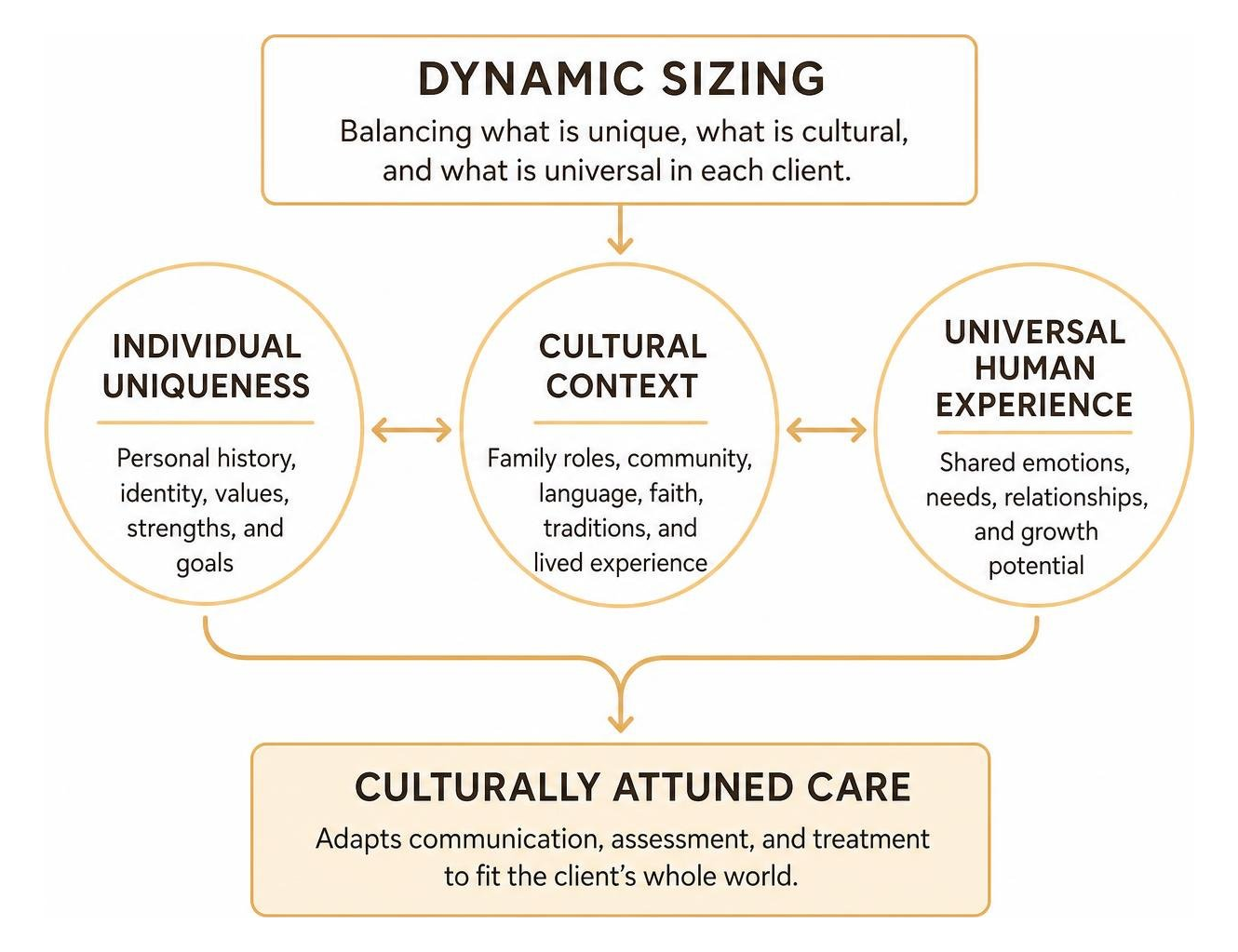
When examining what is cross-cultural therapy, we recognize that human distress cannot be separated from the social systems in which it develops. Rather than viewing an individual as an isolated psychological unit, culturally attuned practitioners practice dynamic sizing—the clinical ability to know when to generalize cultural knowledge without stereotyping, and when to focus on the client's unique individuality.
Historical Evolution of the Cross Cultural Counseling Definition
The journey toward modern cultural competence began in earnest during the 1970s. Pioneering thinkers like Paul B. Pedersen challenged the monocultural assumptions of Western mental health. In foundational literature such as Counseling Across Cultures: A Half-Century Assessment, scholars documented how conventional therapy historically exported Eurocentric values—such as radical individualism, strict mind-body dualism, and emotional verbalization—to communities whose relational paradigms operate quite differently.
Over the last fifty years, organizations such as APA Division 52 (International Psychology) and diverse counseling bodies established frameworks to account for historical trauma, migration stress, and systemic oppression. Healing is no longer viewed as bringing a client into compliance with dominant societal norms; it is about cultivating safety, emotional integration, and relational harmony within the client's authentic life context.
Distinguishing Cross-Cultural, Multicultural, and Intercultural Counseling
While these terms are frequently used interchangeably in everyday conversation, they hold distinct structural meanings within mental health practice.
- Multicultural Counseling: Focuses primarily on navigating domestic diversity within a pluralistic society. It addresses how race, ethnicity, socioeconomic status, gender, and sexual identity interact with systemic power dynamics within a specific nation. Examining what are the goals of multicultural counseling reveals a strong emphasis on social justice, equity, and dismantling domestic institutional barriers.
- Cross-Cultural Counseling: Traditionally emphasizes comparative frameworks, examining psychological processes across international boundaries, global epistemologies, and distinct cultural worldviews. It balances the etic (universal human experiences) with the emic (culture-specific expressions and meanings).
- Intercultural Counseling: Concentrates specifically on the relational space and interactive communication dynamics between two or more individuals from differing backgrounds, such as the therapeutic alliance itself or partners in cross-cultural partnerships.
| Framework | Primary Scope | Core Objective | Clinical Focus |
|---|---|---|---|
| Multicultural Counseling | Within-nation diversity (race, gender, class, sexual identity) | Equity, identity validation, and systemic justice | Addressing domestic power dynamics and social barriers |
| Cross-Cultural Counseling | Global, transnational, and comparative cultural systems | Harmonizing universal theories with indigenous paradigms | Integrating emic traditions and worldviews |
| Intercultural Counseling | Direct relational interface between differing identities | Enhancing interpersonal attunement and communication | Relational repair, dialogue, and mutual understanding |
Core Competency Frameworks and the Tripartite Model

Translating the cross-cultural counseling definition into daily clinical work requires structured models. The most established of these is the Tripartite Model developed by Derald Wing Sue and colleagues, later expanded through the Multicultural and Social Justice Counseling Competencies (MSJCC).
Understanding what does it mean to be a culturally competent therapist involves moving past static knowledge. It centers on cultural humility—an ongoing, lifelong commitment to self-evaluation, acknowledging power imbalances, and viewing the client as the expert of their own lived experience.
Applying the Tripartite Model to the Cross Cultural Counseling Definition
The Tripartite framework breaks clinical cultural responsiveness into three interconnected pillars:
- Self-Awareness (Beliefs & Attitudes): Counselors examine their personal background, heritage, privileges, and implicit biases. We explore how our internalized norms might lead to unexamined assumptions regarding family roles, emotional expression, or relationship dynamics.
- Knowledge: Clinicians actively learn about the socio-political realities, migration histories, cultural values, and systemic barriers experienced by diverse groups. As outlined in the International Handbook of Cross-Cultural Counseling, acquiring this knowledge prevents well-meaning practitioners from invalidating a client's reality.
- Skills: Practitioners adapt their clinical methods. Rather than relying on rigid, manualized techniques, we utilize modalities that meet the client's emotional and cultural context, such as Emotionally Focused Therapy (EFT), Accelerated Experiential Dynamic Psychotherapy (AEDP), Experiential therapy, and Brainspotting.
The RESPECTFUL Model and Multidimensional Identity Factors
To ensure identity is evaluated comprehensively, counselors often employ the RESPECTFUL model created by Michael D'Andrea and Judy Daniels. Exploring what are multicultural factors to consider in counseling highlights how overlapping factors shape our emotional lives:
- R – Religious/Spiritual Identity: Exploring how faith, ancestral connections, or secular views influence existential meaning and distress.
- E – Economic Class Background: Understanding how financial history and current class resources shape access, safety, and stress thresholds.
- S – Sexual Identity: Affirming sexual orientation and honoring relational choices free from heteronormative assumptions.
- P – Psychological Maturity: Assessing emotional processing capacities within the client's developmental context.
- E – Ethnic/Cultural/Racial Identity: Validating the impact of racial identity, heritage, and lived experiences of discrimination.
- C – Chronological Developmental Challenges: Recognizing life-stage transitions across the lifespan.
- T – Trauma and Threats to Well-Being: Processing systemic oppression, personal injury, intergenerational trauma, and environmental stress.
- F – Family History and Dynamics: Honoring diverse kinship structures, collectivist expectations, and extended family networks.
- U – Unique Physical Characteristics: Addressing societal appearance standards, visible differences, and physical abilities.
- L – Location of Residence and Language Differences: Acknowledging regional cultures (from Seattle and Portland to Chicago), dialects, and linguistic comfort.
Clinical Challenges and Modality Adaptations in Practice
Translating theory into effective clinical practice comes with distinct challenges. Literature reviewing how does culture affect counseling scholarly articles reveals that traditional Western assessment methods carry inherent risks of misdiagnosing culturally normative behaviors as pathological. For instance, somatic expressions of distress—such as describing emotional heartbreak through physical chest tightness or fatigue—can sometimes be misinterpreted when viewed exclusively through a Western diagnostic lens.
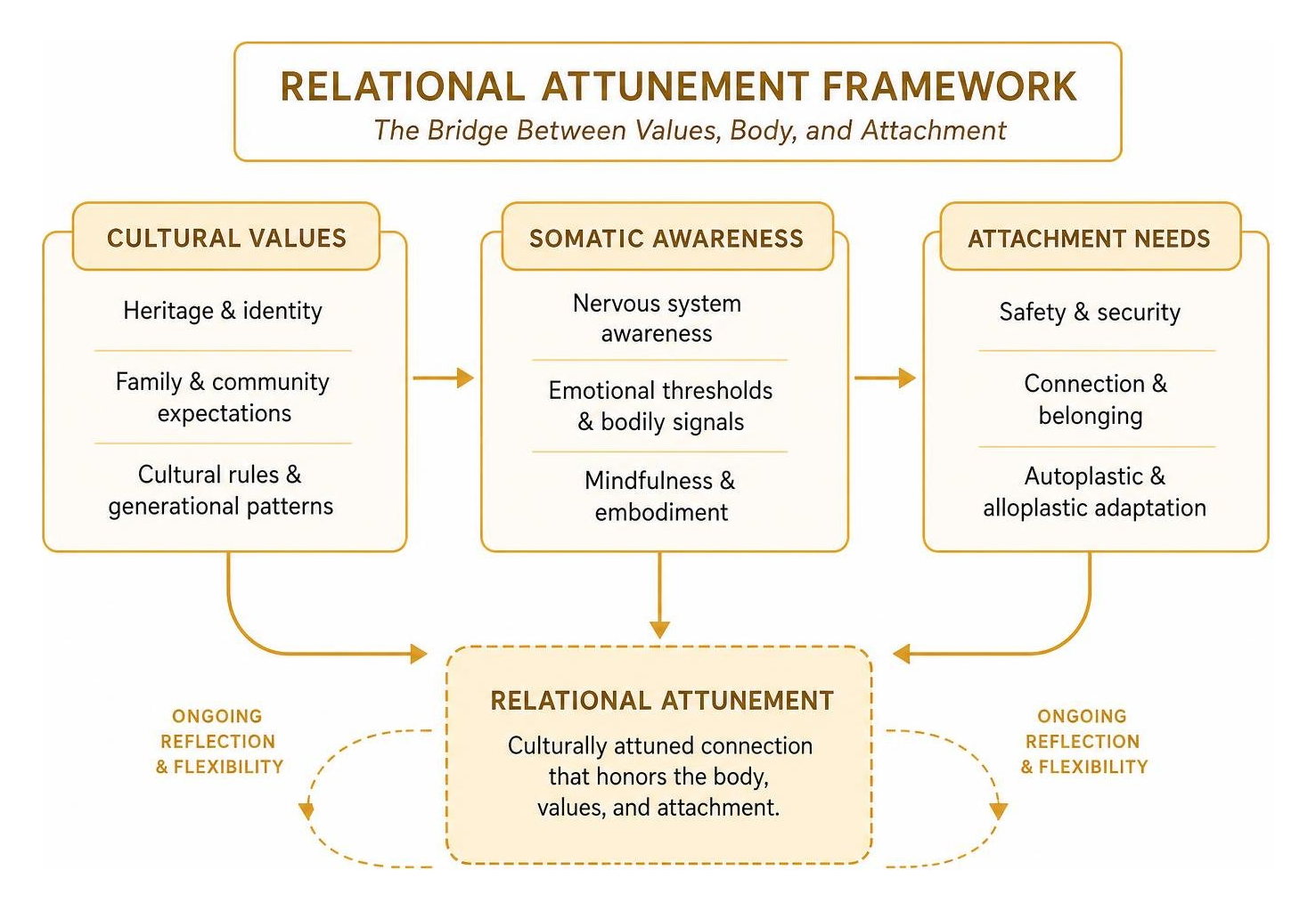
In our practice, we utilize mindfulness to help clients gently track internal nervous system activation, recognize emotional thresholds, and establish manageable boundaries. By pairing somatic awareness with modalities like Brainspotting and AEDP, we access neurobiological and emotional processing pathways that transcend purely cognitive or linguistic constraints.
Integrating Indigenous Traditions and Relational Systems
A core element of what is the cultural sensitivity approach is honoring that individual well-being is often inextricably linked to relational ecosystems. In group-oriented or collectivist cultures, an individual's sense of self is deeply tied to family and community harmony.
Clinicians must understand autoplastic adaptation (helping a client process how they adapt internally to their environment and relational commitments) alongside alloplastic adaptation (encouraging adjustments to external conditions). Learning how a culturally aware therapist can strengthen your relationship involves using Emotionally Focused Therapy (EFT) to restructure underlying attachment patterns. We help partners express core attachment longings while validating the cultural rules, generational expectations, and family hierarchies that shape how those feelings are communicated.
When navigating relationship therapy or individual healing, practical considerations around healthcare access also arise. While using in-network health insurance can provide helpful immediate coverage, it is equally important to understand its constraints. Insurance billing requires assigning a formal mental health diagnosis that becomes a permanent part of your medical record. This documentation can carry unexpected privacy concerns and potential downstream impacts for future life choices, such as private disability coverage, life insurance underwriting, specialized employment security clearances, or international adoption processes. Holistic, culturally responsive therapy often benefits from the discretion, autonomy, and confidentiality of private-pay structures that keep treatment decisions strictly between client and clinician.
Overcoming Communication Gaps and Healthcare Inequities
Language represents far more than literal vocabulary; it carries subtle emotional nuance, metaphor, and felt memory. For bilingual or immigrant individuals, accessing services like Mandarin counseling allows them to process deeply rooted experiences in their primary language, avoiding the fatigue of constant internal translation.
As highlighted in the 7th edition of Counseling Across Cultures, bridge-building requires deep linguistic and somatic attunement. When therapists tune into nonverbal pacing, emotional pauses, and culturally grounded metaphors, clients experience genuine emotional safety.
Frequently Asked Questions About Cross-Cultural Mental Health
What is the primary cross-cultural counseling definition in clinical psychology?
In clinical psychology, cross-cultural counseling is defined as the intentional integration and application of universal and culture-specific therapeutic theories, assessments, and relational interventions that respect the epistemological, social, and cultural worldviews of clients worldwide. It seeks to provide care that aligns with the client's cultural reality rather than imposing a single normative standard.
How do language barriers and communication nuances affect therapeutic outcomes?
Language differences and subtle nonverbal communication styles deeply influence emotional resonance, diagnostic accuracy, and the therapeutic alliance. When practitioners miss cultural idioms of distress or pathologize somatic expressions of grief, clients may feel unseen. Clear, culturally aligned communication fosters mutual trust, reduces misinterpretation, and ensures that interventions match the client's authentic experience.
What ethical responsibilities do therapists have regarding cultural diversity?
Professional ethical codes, including those from the American Counseling Association (ACA), mandate that therapists practice cultural sensitivity during assessment, diagnosis, and treatment planning. Beyond minimum compliance, ethical cross-cultural practice involves aspirational ethics and social justice advocacy—actively identifying systemic oppressions, addressing personal biases, avoiding cultural encapsulation, and expanding accessible care to historically underserved communities.
Conclusion
Understanding the modern landscape of mental health requires us to move beyond rigid, one-size-fits-all clinical models. As our communities across Oregon, Washington, and Illinois continue to grow in diversity and global interconnectedness, culturally responsive care has become the foundational standard for ethical, lasting emotional healing.
At Spark Relational Counseling, founder May Han, LMFT, and our team help individuals and couples step out of negative, protective autopilots and step into deep, lasting relational connection. By weaving mindfulness-based relational approaches, Emotionally Focused Therapy (EFT), Experiential modalities, AEDP, and Brainspotting into our virtual practice, we honor the rich tapestry of your lived experience.
If you are seeking a supportive space where your cultural background, relational values, and personal story are genuinely understood, explore our culturally sensitive individual counseling services. Together, we can create a collaborative path toward meaningful healing, resilience, and connection.