Find a Mental Health Counselor in Portland Who Fits Your Needs

To find the right mental health counseling Portland option, start by looking for a licensed therapist whose focus matches your goals, whether that is anxiety, burnout, relationship conflict, trauma, or a major life transition. Then ask about their approach, cultural awareness, availability, fees, and whether they offer a brief consultation so you can see if the connection feels comfortable.
A great counselor does more than help you manage symptoms. They consider your relationships, work pressures, identity, past experiences, and the stage of life you are in. In Portland, licensed counselors may work in private practices, clinics, hospitals, schools, and community mental health settings. Many offer individual, couples, family, group, and online therapy.
The best fit is personal. You deserve a therapist who brings sound clinical training, clear boundaries, and a style that helps you feel understood while also giving you practical ways to create change.
I am May Han, a Licensed Marriage and Family Therapist at Spark Relational Counseling, serving clients in Oregon, Washington, and Illinois. My work in mental health counseling Portland draws on mindfulness and emotionally focused approaches to help individuals and couples move beyond repeating patterns and build more connected relationships.
Understanding Mental Health Counseling Portland: Approaches, Philosophy, and Benefits
When seeking therapeutic care across the Pacific Northwest, understanding the foundational philosophies of modern therapy allows you to choose a path centered on genuine transformation rather than mere symptom suppression. Professional mental health counseling is grounded in a deep respect for human growth, viewing challenges not as inherent flaws, but as adaptive responses to life circumstances, relational environments, and neurobiological stress patterns.
What Defines Professional Mental Health Counseling Portland?
Professional mental health counseling is distinct from strictly pathologizing medical models. Rather than reducing your experiences to a static clinical label, modern relational and experiential counselors prioritize systemic change, emotional awareness, and developmental resilience. A comprehensive Therapy Portland Oregon: A Guide to Navigating and Finding Support emphasizes that therapeutic work should explore the entire context of your life—including community structures, family dynamics, work environments, and systemic pressures.
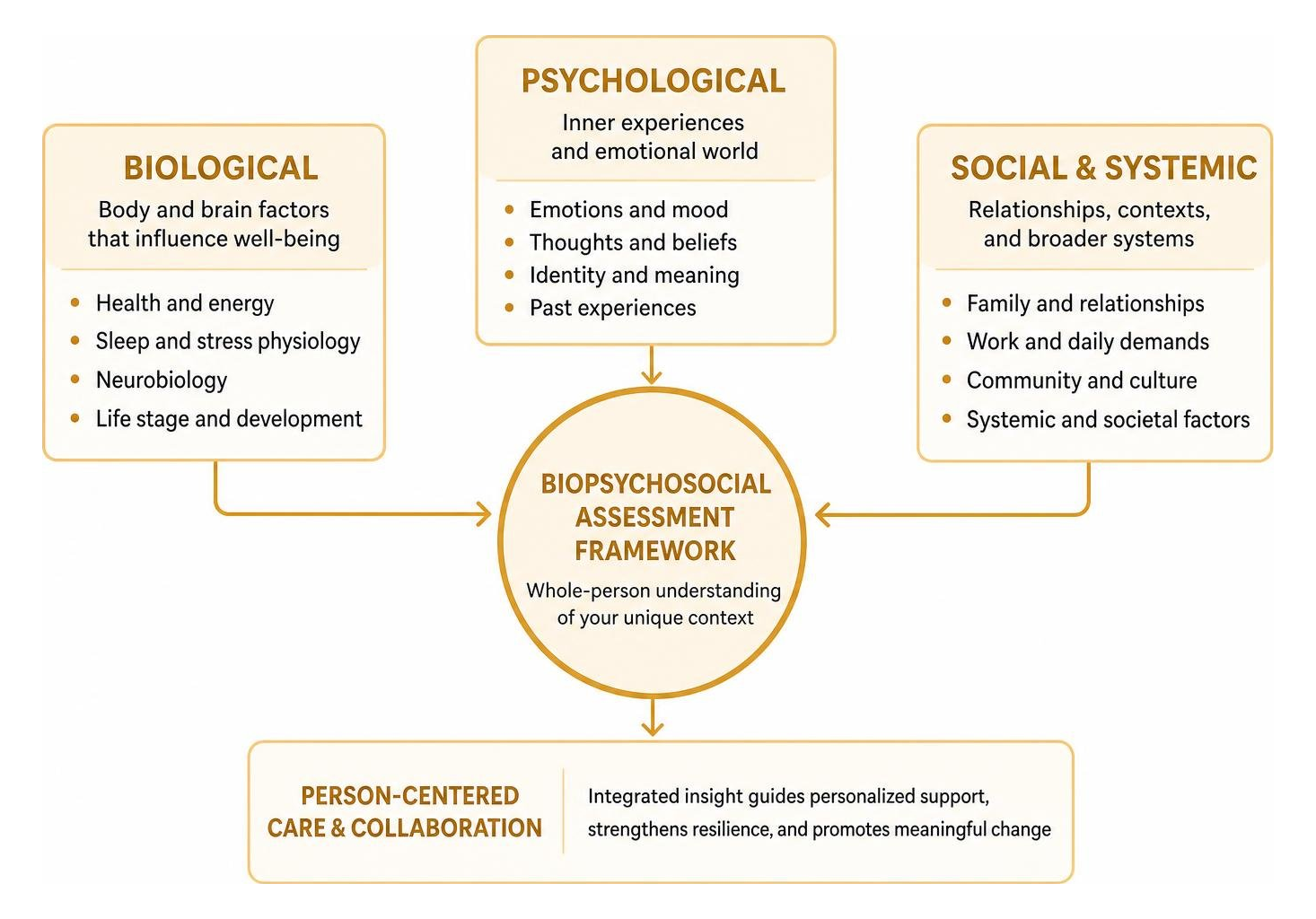
By integrating biopsychosocial assessments with human-centered care, professional counseling helps you gently interrupt automatic internal survival loops, resolve emotional wounding, and step into grounded, intentional living.
The Developmental and Human Growth Perspective
Counseling operates on the foundational truth that human beings continue to grow, adapt, and evolve throughout every stage of life. Whether navigating young adulthood in Northwest Portland, managing mid-career burnout, or adjusting to new family dynamics in Lake Oswego or Happy Valley, developmental counseling honors the predictable crises and transitions that accompany human maturity.
Instead of asking "What is wrong with you?", an experiential, growth-oriented counselor explores "What has happened to you, and how has your nervous system adapted?" This paradigm builds authentic resilience, expands self-compassion, and equips you with somatic and emotional resources to thrive across lifespan transitions.
Common Concerns and Therapist Qualifications in Oregon

Finding a therapist whose specific qualifications match your lived experience ensures that your clinical care is ethical, safe, and tailored to your goals.
Key Concerns Addressed in Counseling
Therapy offers transformative support for a broad spectrum of personal and interpersonal issues:
- Anxiety and Nervous System Overwhelm: Navigating acute panic, generalized dread, social unease, or high-functioning distress through dedicated anxiety treatment.
- Relational Conflicts and Communication Loops: De-escalating recurring distress cycles, rebuilding trust, and restoring emotional safety via marriage and couples counseling in Portland Oregon or targeted therapy for relationship issues in Portland OR.
- Depression and Emotional Numbness: Uncovering the root emotional burdens that drain vitality and restoring a felt sense of purpose and presence.
- Trauma Processing and Somatic Integration: Gently resolving attachment ruptures and traumatic memories using body-centered modalities.
- Life Transitions and Identity Exploration: Clarifying personal values, boundaries, and life direction during significant relational, career, or geographic shifts.
Licensing and Professional Standards in Oregon
In Oregon, mental health practitioners are strictly regulated by state licensing boards to maintain clinical excellence, confidentiality, and public safety. The Oregon Board of Licensed Professional Counselors and Therapists (OBLPCT) and the Oregon Board of Licensed Social Workers govern regional licenses.
| Credential | Full Title | Governing Board | Primary Educational & Clinical Focus |
|---|---|---|---|
| LPC | Licensed Professional Counselor | OBLPCT | Graduate degree in mental health counseling; comprehensive training in human development, clinical assessment, and psychotherapy modalities. |
| LMFT | Licensed Marriage and Family Therapist | OBLPCT | Graduate degree in marriage, couple, and family therapy; deep specialization in relational systems, family dynamics, and interpersonal patterns. |
| LCSW | Licensed Clinical Social Worker | Oregon Board of Licensed Social Workers | Master of Social Work (MSW); focused on community systems, clinical interventions, social justice, and systemic advocacy. |
| Associate / Candidate | Registered Associate (LPC/LMFT) or CSWA | OBLPCT / Social Work Board | Post-graduate clinicians actively completing extensive supervised clinical residency hours toward full independent licensure. |
All licensed practitioners in Oregon must complete rigorous graduate coursework, pass comprehensive state and national board examinations, undergo thousands of hours of direct clinical supervision, and regularly complete continuing education in clinical ethics, cultural competence, and suicide prevention.
Therapeutic Modalities and Delivery Formats

Modern mental health treatment offers deep, experiential modalities that go beyond traditional conversation to help you access and transform the underlying neurobiological patterns of distress.
Proven Therapeutic Approaches and Modalities
Rather than relying purely on behavioral correction, our approach emphasizes experiential, attachment-focused, and somatic methodologies that create lasting changes in the brain and nervous system:
- Emotionally Focused Therapy (EFT): Rooted in adult attachment theory, EFT helps individuals and partners identify the protective emotional loops driving relational conflict. By uncovering primary attachment vulnerabilities and expressing unmet emotional needs safely, clients de-escalate tension and forge secure emotional bonds, making it especially effective in premarital counseling Portland Oregon and ongoing relationship therapy Portland Oregon.
- Accelerated Experiential Dynamic Psychotherapy (AEDP): A healing-oriented model that focuses on processing difficult emotional experiences within the safety of an affirming therapeutic connection, transforming pain into vitality.
- Experiential and Mindfulness-Based Therapy: Utilizing somatic mindfulness to help you recognize internal emotional thresholds before reaching reactivity. This real-time awareness allows you to gently set manageable boundaries and remain anchored in your values.
- Brainspotting: A specialized neurobiological modality that utilizes specific eye positions to access, process, and release deep-seated somatic trauma, emotional pain, and negative subconscious autopilots stored within the subcortical brain.
Comparing In-Person Sessions and Virtual Therapy
Modern care delivery gives you the flexibility to choose the setting that best supports your lifestyle, nervous system, and daily commitments.
While in-person counseling provides a dedicated physical sanctuary outside of your home, specialized online therapy in Oregon offers exceptional clinical depth with unparalleled ease. Virtual care removes commute stress along the I-5 or Sunset Highway, enables seamless scheduling across Portland, Eugene, Seattle, or Chicago, and lets you process vulnerable emotions from the comfort of your personal space. For a deeper breakdown of remote clinical care, explore our comprehensive online therapy Oregon guide.
Steps to Finding the Right Fit for Your Needs

Finding a counselor who truly resonates with your goals requires an intentional evaluation of practical and interpersonal factors.
How to Choose the Best Mental Health Counseling Portland Has to Offer
When beginning your search, follow these essential steps:
- Clarify Your Therapeutic Objectives: Identify whether you want to focus on individual trauma resolution, nervous system stabilization, couples communication, or navigating career burnout.
- Review Clinical Modalities: Seek therapists trained in experiential, relational modalities (such as EFT, AEDP, or Brainspotting) if you want deep, transformative healing rather than surface-level advice.
- Evaluate Insurance Considerations Thoughtfully: While utilizing in-network insurance benefits can reduce immediate out-of-pocket costs, it is vital to understand the constraints and trade-offs. Insurance billing mandates that your therapist assign you a formal psychiatric diagnosis, which becomes a permanent part of your medical record. This can have unforeseen consequences for future life choices, including obtaining private disability or life insurance policies, undergoing security clearances, adopting children, or entering specific fields of employment. Additionally, managed care companies often limit session counts, dictate treatment duration, and compromise your clinical privacy. Many clients choose private-pay or out-of-network care to protect their absolute confidentiality and retain autonomy over their healing journey.
- Schedule Consultations: Take advantage of brief initial calls to evaluate the practitioner's warmth, clinical style, and relational presence.
Finding Culturally Responsive and Inclusive Support
True mental health care must account for systemic realities, cultural backgrounds, and intersectional identities. When seeking culturally sensitive individual counseling, look for providers who actively practice cultural humility, acknowledge systemic inequities, and provide a welcoming space for BIPOC, neurodivergent, and LGBTQIA+ communities. A culturally responsive counselor validates how social structures impact personal well-being rather than treating your distress in a vacuum.
What to Expect During Your Initial Consultation and Intake
The initial phase of therapy is designed to establish safety, transparency, and clinical direction:
- Intake and Biopsychosocial History: Before or during your first session, you will complete intake paperwork covering your physical health, family history, relational patterns, and current stressors.
- Collaborative Goal Setting: You and your therapist will outline meaningful, achievable milestones for your work together.
- Establishing the Therapeutic Container: Your counselor will explain confidentiality guidelines, discuss boundaries, and cultivate an environment where you feel fully supported to explore vulnerable emotions at your own pace.
Frequently Asked Questions About Portland Counseling
What is the difference between an LPC, LMFT, and LCSW in Oregon?
All three credentials represent master's-level, fully licensed independent mental health professionals in Oregon. An LPC (Licensed Professional Counselor) typically focuses on individual human development, mental health counseling, and psychotherapy. An LMFT (Licensed Marriage and Family Therapist) specializes in relational dynamics, couples therapy, and systemic family structures. An LCSW (Licensed Clinical Social Worker) emphasizes the intersection of individual clinical psychotherapy, community environments, and systemic advocacy.
How do Portland counselors handle crisis intervention versus long-term therapy?
Crisis intervention focuses on immediate stabilization, de-escalation, and collaborative safety planning during acute distress. In contrast, intermediate and long-term counseling provides a consistent, structured space for deep attachment repair, addressing chronic anxiety, healing trauma, and building lasting emotional and relational patterns.
What should I ask a prospective counselor during an initial consultation?
Consider asking:
- What experiential modalities (such as EFT, AEDP, or Brainspotting) do you use to help clients shift stubborn emotional patterns?
- What is your experience supporting clients with my specific concerns?
- How do you integrate mindfulness and nervous system awareness into your sessions?
- What are your session fees, scheduling policies, and telehealth options?
Conclusion
Finding the right therapeutic partnership is one of the most meaningful investments you can make in your personal vitality and relational peace. Led by May Han, LMFT, Spark Relational Counseling provides specialized virtual individual and couples therapy across Oregon, Washington, and Illinois. By integrating mindfulness-based relational therapy, Emotionally Focused Therapy (EFT), AEDP, and Brainspotting, we help you step out of negative brain autopilots and cultivate grounded self-awareness and deeply connected relationships.
Whether you are navigating chronic stress, seeking anxiety treatment, or looking to restore safety and intimacy in your partnership, compassionate and skilled support is available. Reach out today to schedule an initial consultation and take the next step on your path to lasting healing and personal growth.
