The Best Washington Virtual Individual and Couples Therapy
Why Washington Mindfulness Therapy for Couples Is Worth Your Attention

Washington mindfulness therapy for couples connects partners with evidence-based, present-moment healing that goes far beneath surface-level conflict. If you are looking for a quick overview of what this approach offers, here is what you need to know:
| Question | Quick Answer |
|---|---|
| What is it? | Therapy that weaves mindfulness practices into relational healing, helping partners regulate emotions and reconnect |
| Who is it for? | Couples in Washington navigating conflict, disconnection, life transitions, or cultural differences |
| Key modalities | Emotionally Focused Therapy (EFT), AEDP, Brainspotting, EMDR, somatic awareness |
| Format | Virtual telehealth and in-person sessions across Washington |
| Who to contact | Spark Relational Counseling - free consultation available |
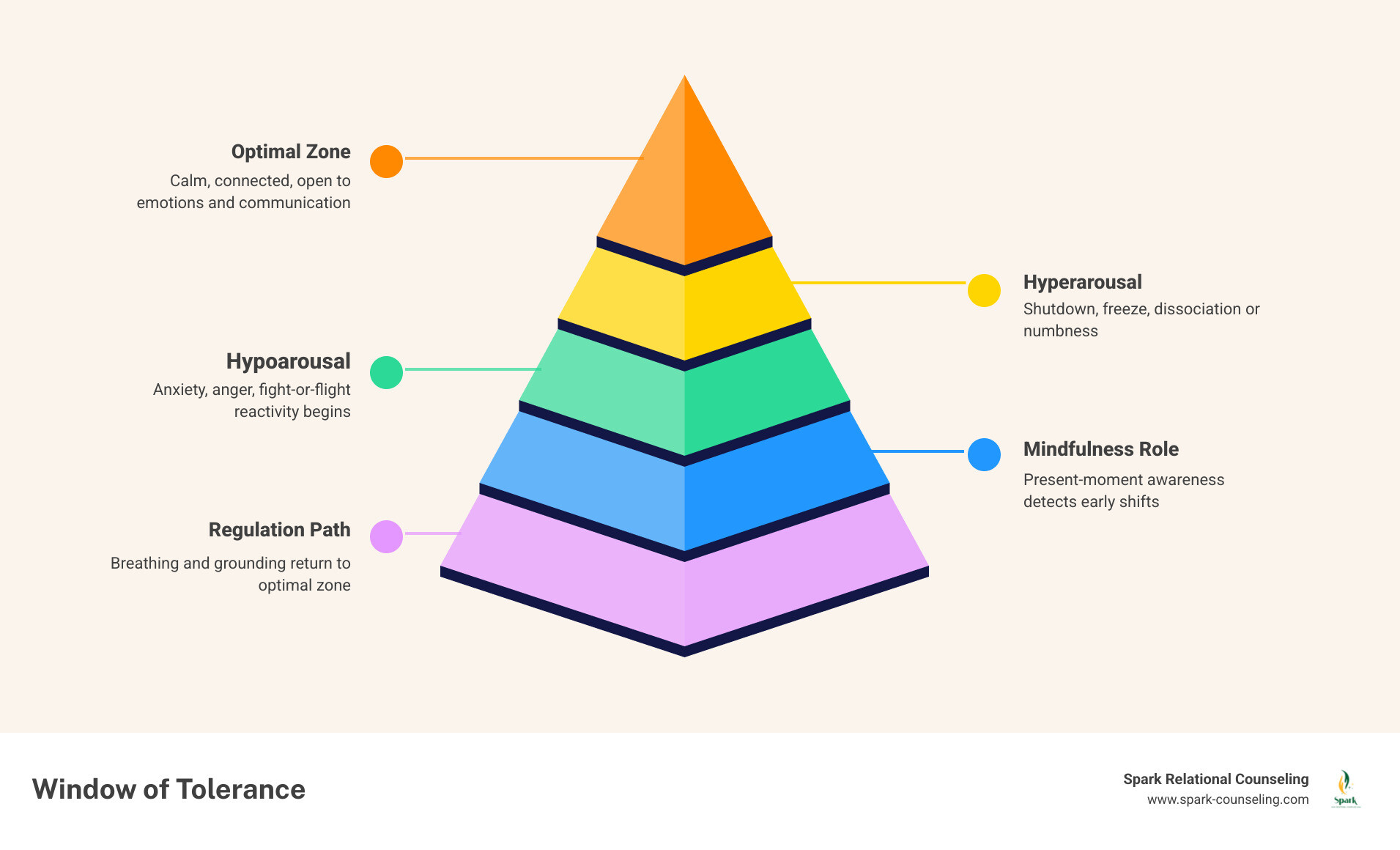
There is a moment many couples recognize: the conversation starts, the tension rises, and suddenly both partners are somewhere far from each other -- even while sitting in the same room. That threshold, where connection tips into shutdown or reactivity, is exactly where mindfulness-based relational therapy does its most meaningful work.
With over 500 mindfulness-based therapists listed in the Washington, DC area alone, the options can feel overwhelming. This guide cuts through the noise to help you find the right fit -- whether you are in Seattle, the DMV corridor, or anywhere across the state seeking virtual care.
I am May Han, a Licensed Marriage and Family Therapist at Spark Relational Counseling, and my work with washington mindfulness therapy couples draws on my training in Emotionally Focused Therapy and mindfulness-based approaches to help partners move out of painful cycles and back into genuine connection. If what you have just read resonates, keep reading -- the next sections walk you through exactly how this kind of healing unfolds.
The Benefits of Washington Mindfulness Therapy Couples Can Expect

When we talk about washington mindfulness therapy couples often wonder if they are simply going to be asked to "breathe through" their problems. In reality, the integration of Emotionally Focused Therapy (EFT) principles into a relational context is a sophisticated clinical tool. It is about moving from "autopilot" reactions—those sharp words or icy silences that happen before you even realize you're upset—to a state of intentional presence.
Research shows that EFT is highly effective in helping individuals navigate distressed emotions and transition into healthier relational patterns. When applied to a partnership, this means learning to de-escalate conflict by recognizing your own internal "alarm bells" early. Instead of a conversation spiraling into a three-day standoff, mindfulness allows you to pause at the emotional threshold.
One of the primary benefits is the regulation of the nervous system. Chronic relational stress keeps our bodies in a state of high cortisol, which shuts down the parts of the brain responsible for empathy and complex problem-solving. By utilizing somatic awareness, we help you lower those cortisol levels, creating a physiological foundation for intimacy. You cannot feel close to someone if your body perceives them as a threat.
At Spark Relational Counseling, May Han and our team focus on How Mindfulness Builds Loving Relationships by teaching partners how to hold space for their own discomfort without projecting it onto the other. This creates a "brave space" where emotional safety isn't just a concept, but a felt experience in the body.
Core Modalities for Deep Relational Healing
To move beyond the surface, we utilize specific, evidence-based modalities that prioritize the "here and now" experience over intellectual analysis. While traditional talk therapy can sometimes leave couples feeling "stuck" in their stories, experiential methods target the areas of the brain where trauma and attachment patterns are stored.
| Modality | Focus Area | Relational Outcome |
|---|---|---|
| Emotionally Focused Therapy (EFT) | Attachment bonds and emotional cycles | Replaces "Protest Polka" cycles with secure connection |
| AEDP | Undoing aloneness through positive emotion | Deepens emotional resilience and "felt" support |
| Brainspotting | Subcortical processing of trauma | Resolves deep-seated triggers that cause reactivity |
| Experiential Therapy | Present-moment somatic awareness | Moves therapy from "talking about" to "experiencing change" |
In our practice, May Han and Spark Relational Counseling work together to guide you through these transformative layers. We lean heavily into Emotionally Focused Therapy (EFT) because it addresses the core human need for secure attachment. Studies indicate that 70-75% of couples using EFT move from distress to full recovery, and approximately 90% show significant improvement.
For those who have found that "just talking" hasn't helped, we might introduce Accelerated Experiential Dynamic Psychotherapy (AEDP) or Brainspotting. These tools help process relational trauma that is held in the body -- the kind of pain that makes your chest tighten when your partner uses a certain tone of voice. By addressing these "spots" in the brain, we can achieve Couples Peace: Mindfulness Approach that feels lasting and real.
Specialized Washington Mindfulness Therapy Couples and Individual Support
Relationships do not exist in a vacuum. They are shaped by our histories, our identities, and the major life transitions we navigate. Washington mindfulness therapy couples often seek us out for specialized support that honors these complexities:
- Perinatal and Postpartum Support: The transition to parenthood is one of the most significant shifts a couple can experience. We provide a sanctuary for expecting and new parents to navigate identity shifts and the "roommate syndrome" that can occur when sleep is low and stress is high.
- Interracial and Multicultural Dynamics: We offer culturally responsive care for interracial couples navigating different worldviews, family expectations, and systemic stressors. Our approach acknowledges that your cultural identity is central to how you relate.
- EMDR for Relational Trauma: Sometimes, an individual's past trauma (from childhood or previous relationships) acts as a "third party" in the current marriage. Eye Movement Desensitization and Reprocessing (EMDR) helps the individual process these wounds so they no longer dictate the couple's present-moment interactions.
- Identity and Allyship: We provide an affirming space for LGBTQIA+ couples and individuals exploring their authentic selves within the context of a mindful relationship.
Accessibility and Virtual Care in the Evergreen State

In a state as geographically diverse and professionally driven as Washington—from the tech hubs of Seattle, Bellevue, and Redmond to the growing communities in Spokane and Sammamish—accessibility is paramount. We believe that high-end, specialized clinical care should not be limited by your commute.
May Han and Spark Relational Counseling provide Online Therapy In Washington that is research-proven to be just as effective as in-person sessions. Virtual therapy allows you to engage in deep, transformative work from the comfort of your own home, which often helps partners feel more relaxed and open.
For busy professionals in the Seattle area, telehealth eliminates the stress of traffic and allows for more consistent attendance—a key factor in therapeutic success. We maintain the highest ethical standards for Washington licensure, ensuring that your virtual "room" is a secure, private, and sacred space.
We also understand that navigating insurance can be a barrier. While we operate with transparency regarding out-of-network benefits and superbills, we prioritize making the process seamless so you can focus on your healing rather than your paperwork.
How to Start Your Journey with Washington Mindfulness Therapy Couples Counseling
Starting therapy is a courageous act of hope. At Spark Relational Counseling, May Han and our team want to ensure that the fit between you and your therapist is resonant and secure. The journey toward a more mindful marriage begins with a few simple steps:
- The Free Consultation: We offer a 15-minute consultation to discuss your needs and ensure our approach aligns with your goals. This is a "no-pressure" space to see if we feel like the right partners for your journey.
- The Intake Process: Once we decide to work together, our intake process is designed to gather a holistic view of your relationship history and individual needs.
- Setting Manageable Boundaries: Early in marriage counseling, we work on setting boundaries that protect the relationship while you are in the "messy middle" of healing.
- Integration: We encourage you to practice mindfulness outside of our sessions. You might even explore 5 Peaceful Spots in Seattle, WA for Mindfulness Practice and Anxiety Relief to ground yourselves between appointments.
Frequently Asked Questions about Mindfulness Therapy
Is virtual mindfulness therapy as effective as in-person sessions?
Yes. Research consistently shows that the therapeutic alliance—the bond between therapist and client—is the strongest predictor of success, and this bond is just as powerful over video. In fact, many couples find that being in their own environment helps them apply mindfulness skills directly to the space where their daily lives unfold.
How does Emotionally Focused Therapy (EFT) differ from traditional talk therapy?
Traditional talk therapy often focuses on "problem-solving" or teaching communication skills (like "I" statements). While helpful, these can feel like a band-aid when emotions are high. EFT goes deeper to the attachment level. It helps you understand the why behind the fight—usually a fear of disconnection or a need for reassurance—and helps you rebuild the bond from the inside out.
Can mindfulness help couples navigating interracial or multicultural dynamics?
Absolutely. Mindfulness encourages a "beginner's mind" and non-judgmental awareness. This is incredibly helpful when partners need to understand a perspective or cultural nuance that is different from their own. It allows for a "brave space" where cultural differences are seen as opportunities for deeper knowing rather than obstacles to be overcome.
Conclusion
Reclaiming the vitality of your relationship is possible. By choosing washington mindfulness therapy couples can move away from the "negative brain autopilots" that lead to isolation and toward a life of intentional, present-moment love.
May Han and the team at Spark Relational Counseling are committed to providing more than just coping skills; we are here to help you achieve a lasting peace that transforms how you see yourself and your partner. Whether you are navigating the early years of marriage, the complexities of parenthood, or a long-term transition, marriage counseling is a profound investment in your shared future.
Take the first step today. Let us help you find your way back to each other.
