Why So Many Smart, Successful People Are Stuck in Dating

A therapist for dating is a licensed mental health professional who helps you understand and shift the emotional patterns, attachment wounds, and self-beliefs that keep your love life feeling stuck — before, during, or between relationships.
| What a Dating Therapist Helps With | What to Expect |
|---|---|
| Repeating patterns | Identify why you keep attracting the same dynamic |
| Dating anxiety | Build emotional tools to show up with less fear |
| Self-worth | Reconnect with what you actually want and deserve |
| App fatigue and burnout | Date with more intention, less exhaustion |
| Vulnerability and avoidance | Move toward connection instead of away from it |
| Post-breakup readiness | Process past hurt before re-entering dating |
Dating in 2026 is a lot. You are managing a full life — work, responsibilities, maybe caring for others — and somewhere in between, you are supposed to find a meaningful relationship. For many high-achieving adults, dating has quietly become a second job they never signed up for: endless swiping, first dates that go nowhere, and a creeping sense that something must be wrong with them.
It is not a personal failing. It is a signal worth paying attention to.
The frustration is real and it is common. Therapists who specialize in dating hear the same themes again and again: "I keep attracting the wrong people," "I go numb once someone actually likes me," "I want connection but I find myself pulling away." These are not random bad luck. They are patterns — and patterns can shift with the right support.
That is exactly where working with a therapist for dating becomes meaningful. Rather than offering scripts or rules, this kind of therapy goes deeper, helping you understand what is actually driving your choices, your fears, and your walls.
I'm May Han, a Licensed Marriage and Family Therapist at Spark Relational Counseling, and I work with individuals across Oregon, Washington, and Illinois using mindfulness and emotionally focused approaches to help people break out of the cycles keeping them from the love they want — making me a therapist for dating and relationships who meets you where you are. In the sections ahead, we will walk through exactly how this process works and what you can expect.
The Modern Landscape: Why You Might Need a Therapist for Dating
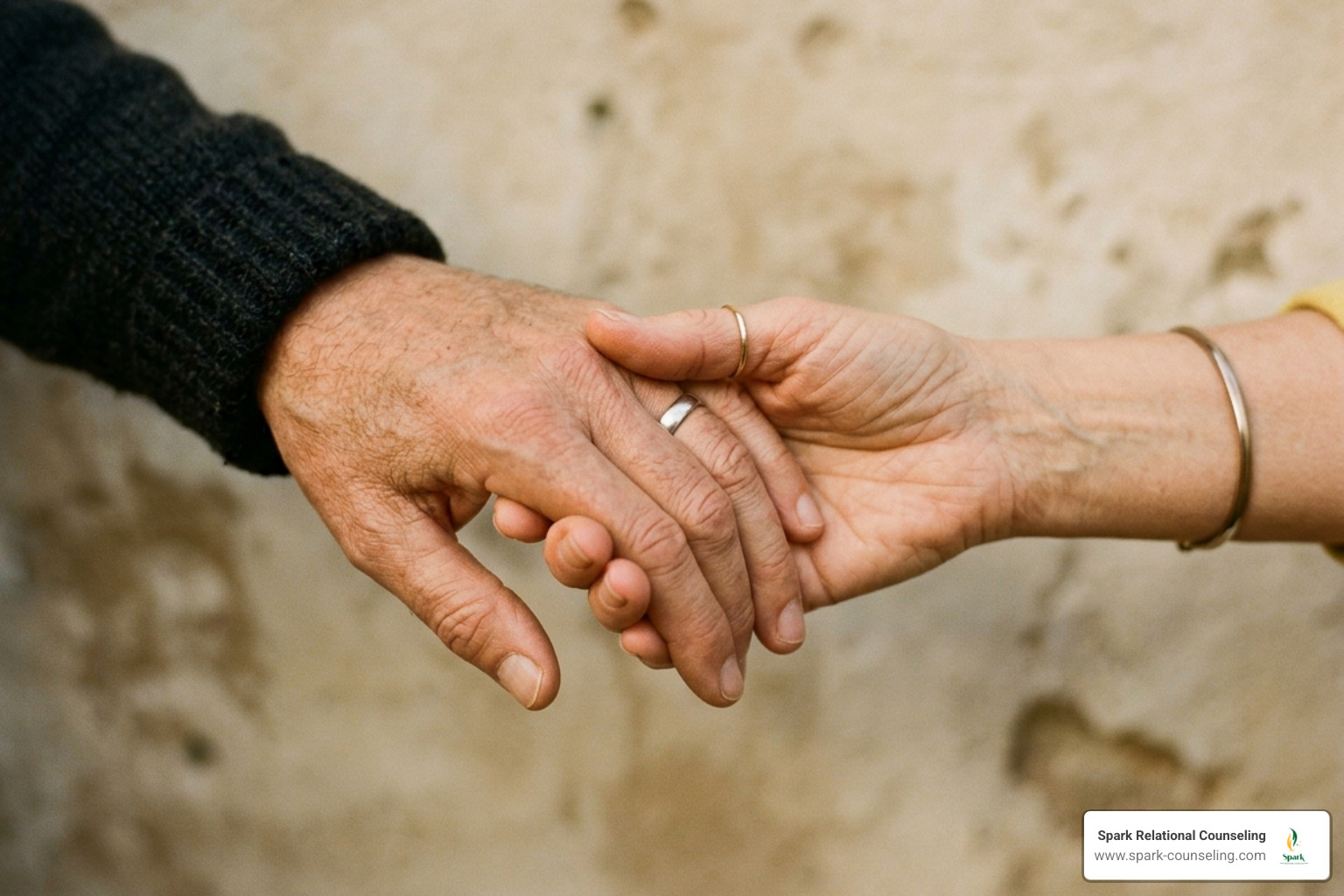
Modern dating in cities like Seattle, Portland, or Chicago can feel like a paradox. We are more "connected" than ever through technology, yet many of us experience a profound sense of urban loneliness. The digital age has introduced "app fatigue," where the act of swiping through hundreds of profiles begins to feel more like a chore than a path to romance. This exhaustion often leads to "situationships"—those ambiguous, undefined connections that provide some companionship but lack the security and commitment many truly crave.
Working with a therapist for dating allows you to step back from the noise. While society often treats dating as a numbers game, we view it as a relational process. If you find yourself discouraged by uninspiring dates or promising connections that suddenly fizzle out, you are not alone. Research into dating therapy shows that the primary benefit is gaining clarity on your internal roadblocks—the things that happen inside you when someone gets too close or when you feel rejected.
It is important to distinguish between dating coaching and therapy. While a coach might help you with the "how-to" of dating, a therapist helps you with the "who" you are within the relationship.
| Dating Coaching | Dating Therapy |
|---|---|
| Focuses on external goals and "performance" | Focuses on internal patterns and healing |
| Offers rules, scripts, and tactical advice | Explores attachment styles and emotional history |
| Focuses on the present and future only | Integrates past experiences to change the present |
| Goal: Get the date | Goal: Build a secure, authentic connection |
Beyond the Swipe: Rewiring Your Romantic Patterns

At Spark Relational Counseling, May Han and our team believe that dating is one of the most powerful mirrors for our internal world. It activates our deepest fears and our highest hopes. To move beyond the repetitive cycles of the past, we use evidence-based, experiential approaches that go deeper than traditional talk therapy.
We utilize Emotionally Focused Therapy (EFT) and AEDP (Accelerated Experiential Dynamic Psychotherapy) to help you process the “here-and-now” emotions that surface during dating. If you have ever felt your heart race before a first date or felt a sudden urge to “ghost” someone who seems perfect, those are your nervous system's protector parts in action.
Through Experiential therapy and Brainspotting, we can help you locate where these anxieties live in your body. This is particularly helpful for individual therapy for relationships, as it allows us to bypass the analytical brain and heal the underlying emotional triggers. Instead of just talking about why you are avoidant, we help you feel safe enough to stay present in the moment.
Healing Attachment with a Therapist for Dating
Most of our dating struggles are rooted in our attachment styles. Whether you lean toward anxious attachment (worrying about being left) or avoidant attachment (worrying about being trapped), these patterns often run on “autopilot.”
A therapist for dating helps you recognize your emotional thresholds—the point where your anxiety or fear becomes so loud that you can no longer act from your values. By using mindfulness, we help you slow down these moments. You learn to notice the “tightness in the chest” or the “mental spiral” before it dictates your behavior. This self-awareness is the first step in managing dating anxiety, allowing you to respond to a potential partner with steadiness rather than panic.
Cultivating Self-Worth and Emotional Resilience

Many people come to us believing they need to "fix" themselves to be lovable. We disagree. You are already worthy of love; the work is about uncovering the barriers you have built against it. This often involves addressing loneliness and the fear that you are "too much" or "not enough."
In our sessions, May Han and Spark Relational Counseling work together to create a luxe, supportive space where you can practice vulnerability safely. We focus on building emotional resilience—the ability to face rejection without it shattering your sense of self. We reframe rejection not as a failure, but as a lack of "fit." Just as you wouldn't expect every person you meet to become your best friend, not every date is meant to become a partner.
Finding Your Rhythm with a Therapist for Dating
When you date from a place of self-worth, your choices change. You begin to make values-based choices rather than fear-based ones. Instead of wondering, "Do they like me?" you start asking, "Do I like how I feel when I am with them?"
We help you set manageable boundaries. This might look like:
- Deciding how much time you want to spend on apps per week.
- Communicating your needs for consistency early on.
- Recognizing red flags without making excuses for them.
- Honoring your own pace for physical and emotional intimacy.
This shift allows you to move away from "performing" and toward authentic connection.
Practical Strategies for Intentional Connection

While we focus on deep emotional work, a therapist for dating also helps with the practicalities of modern romance. Your online profile and your communication style are extensions of your internal world. If your profile is "safe" and generic, you may be protecting yourself from being truly seen. We can help you align your digital presence with your authentic self.
Signs You Need a Professional Tune-Up
How do you know if it is time to seek support? Consider if any of these resonate:
- You feel "numb" or bored by everyone you meet.
- You consistently choose partners who are emotionally unavailable.
- You experience overwhelming anxiety if a partner doesn't text back immediately.
- You find yourself "people-pleasing" and losing your sense of self in early dating.
- You are recently divorced or out of a long-term relationship and feel terrified to start over.
- You feel like you have to hide your true self to be "marketable."
If you are already in a relationship but feeling the strain of these early patterns, exploring premarital counseling can also be a proactive way to ensure your foundation is secure.
Frequently Asked Questions about Dating Therapy
Is dating therapy only for people actively dating?
Not at all. In fact, some of the most profound work happens when you are taking a break. Being away from the "noise" of active dating allows you to reflect on your patterns with more clarity. We help you prepare for re-entry so that when you do decide to date again, you do so with more intention and less dread.
How does dating therapy differ from general therapy?
While it is still "real therapy," a therapist for dating maintains a specific focus on the relational patterns that emerge in the early stages of connection. We look at what gets activated when you are meeting new people, how you handle uncertainty, and how you navigate the transition from "me" to "us."
Can dating therapy help if I am taking a break from relationships?
Yes. Many of our clients in Portland, Seattle, and Chicago come to us during a "dating sabbatical." This is an excellent time to work on your relationship with yourself, heal from past breakups, and define exactly what you want your future partnership to look like.
Conclusion
Your love life is not a separate part of your existence; it is deeply intertwined with your overall well-being. At Spark Relational Counseling, May Han and our team are dedicated to helping you navigate the complexities of modern romance with grace and self-compassion. By utilizing mindfulness-based relational therapy, we help you counter the negative brain autopilots that keep you stuck in unfulfilling cycles.
Whether you are in the heart of Ballard, the suburbs of Bellevue, or the neighborhoods of Happy Valley, our virtual sessions are designed to provide a luxe, healing environment from the comfort of your home. It is April 2026, and dating continues to evolve—but your need for secure, authentic connection remains constant.
If you are ready to stop "performing" and start connecting, we invite you to reach out. For more information, you can explore our complete guide to individual therapy for relationship issues. You don't have to navigate this journey alone. Let's work together to create the loving relationships you deserve.