Understanding Why Your Success Feels Like a Mask

To understand what is dysthymia in high achievers, it helps to look closely at its clinical definition. Dysthymia is a chronic mood disorder officially categorized as Persistent Depressive Disorder (PDD) in the DSM-5. Unlike an acute depressive breakdown that renders someone unable to get out of bed, dysthymia is characterized by a low-grade, constant depressive baseline.
For high performers—executives, clinicians, attorneys, entrepreneurs, and dedicated leaders—dysthymia does not typically destroy functional capacity. Instead, productivity remains high while emotional vitality quietly drains away. You can review the formal clinical definition of dysthymia to learn how medical guidelines categorize this condition.
In high achievers, the disorder often fuses with identity. Because the low mood, chronic fatigue, and mild cynicism persist for years, high-performing individuals rarely say, "I am experiencing depression." Instead, they assume, "This is just who I am—I'm a realistic, tired, driven perfectionist."
| Diagnostic Aspect | Persistent Depressive Disorder (Dysthymia) | Major Depressive Disorder (MDD) |
|---|---|---|
| Minimum Duration | 2 consecutive years (1 year in children/teens) | 2 consecutive weeks |
| Symptom Intensity | Low to moderate, continuous, lingering baseline | Severe, acute, deeply debilitating episodes |
| External Functionality | Often remarkably high; work output maintained | Often severely impaired; daily tasks compromised |
| Gaps in Symptoms | Symptom-free periods never exceed 2 months | Distinct episodic breaks between depressive states |
Defining Persistent Depressive Disorder vs. Major Depression
The primary distinction between Persistent Depressive Disorder and Major Depressive Disorder comes down to duration and trajectory. Standard diagnostic criteria for persistent depressive disorder require a depressed mood for most of the day, on most days, for at least two years. For major depressive disorder, symptoms must be present for at least two weeks, marked by acute emotional paralysis or intense sorrow.
High achievers with dysthymia can also experience what clinicians call "double depression." This occurs when a person living with chronic persistent depressive disorder experiences a severe major depressive episode on top of their low-grade baseline. To explore how chronic low mood intersects with high daily performance, read our High Functioning Depression Complete Guide.
The Paradox of High Functioning and Smiling Depression
The phenomenon known as "smiling depression" describes a stark contrast: high external productivity paired with deep internal distress. Driven professionals often rely on rigid impression management to protect their professional status and maintain social expectations.
This deliberate masking of symptoms creates continuous emotional exhaustion. High achievers deploy work as an emotional buffer, using deadlines and accomplishments to drown out quiet feelings of emptiness. For a deeper look into this experience, see our article on Can You Be Depressed and Be Highly Functional?.
Why High Performers Are Prone: Neurobiology and Psychology

When examining what is dysthymia in high achievers, neurobiology and psychology offer complementary insights. Driven individuals often operate in high-stress corporate or professional environments that physically alter brain chemistry over time.
A recent clinical review of high-functioning depression reveals that high-functioning chronic depression differs significantly from classic, lethargic major depression. Rather than showing overall neurological slowing, high achievers demonstrate a state of persistent neurobiological strain.
Explaining What Is Dysthymia in High Achievers Through Brain Mechanics
High-functioning depression is often characterized by functional hyper-arousal. In this state, sustained high cortisol levels and chronic high beta brainwave activity keep the body on constant alert. The prefrontal cortex—the seat of executive function, logic, and planning—continually overrides the limbic system's signals of exhaustion and emotional pain. High performers literally use top-down cognitive power to force their bodies through work.
Over time, this continuous stress lowers the brain's anhedonia threshold. According to the Kindling Theory, chronic stress in high-performance settings alters dopamine pathways, creating an effort-reward paradox. High achievers keep working out of habit, routine, or fear rather than genuine reward, because their neural reward centers stop updating the perceived value of their accomplishments.
Perfectionism, Contingent Self-Worth, and Imposter Syndrome
Psychologically, high performers often struggle with socially prescribed perfectionism and contingent self-worth—the belief that one's value as a human being depends entirely on recent accomplishments.
When self-worth is tied to output, the inner critic becomes extremely harsh. Success brings no lasting relief, only a brief pause before the next target must be met. Imposter syndrome convinces high achievers that slowing down will expose them as incompetent.
You can read more about these dynamics in our guide on Why High Achievers Experience Depression, or review external perspectives on Understanding dysthymia in high performers.
Hidden Symptoms, Risks, and Diagnostic Challenges

Diagnosing dysthymia in high achievers is notoriously difficult because traditional clinical assessments rely heavily on visible functional impairment. When an executive presents with high income, career growth, and an intact family life, standard screenings can easily miss underlying distress. Clinicians often need specialized assessment ratios, balancing standard screening tools like the PHQ-9 with the Work and Social Adjustment Scale (WSAS) to evaluate internal distress versus external output. For a complete list of indicators, consult this clinical review on Symptoms of high-functioning depression.
The Threat of the Sudden Crash and Untreated Risks
Leaving persistent depressive disorder untreated creates significant long-term risks. Because high achievers override early warning signs of exhaustion, they rarely slow down until forced to by a sudden health crisis or catastrophic break.
Prolonged elevation of cortisol and chronic allostatic load carry physical risks comparable to major depressive episodes, including elevated cardiovascular strain and executive functioning decline. Dysthymia is not simple executive burnout. Burnout is a situational reaction to workplace conditions that typically improves with rest and altered circumstances; dysthymia is a chronic mood disorder that follows a person across all areas of life.
Identifying What Is Dysthymia in High Achievers for Loved Ones and Colleagues
Loved ones and colleagues can look for subtle shifts that reveal hidden pain beneath high performance:
- Persistent cynicism, quiet gloominess, or loss of genuine warmth.
- Irritability or quickness to frustration over minor operational missteps.
- Inability to celebrate wins, immediately shifting focus to the next task.
- Relying on work or continuous busywork to avoid unstructured personal time.
- Subtle social withdrawal, skipping gatherings while remaining fully available for work calls.
- Chronic fatigue, reliance on stimulants to start the day, and somatic complaints like headaches or digestive issues.
Evidence-Based Treatments and Recovery Strategies

Recovering from dysthymia requires moving beyond strict logic and self-discipline. High achievers cannot simply out-think or out-work chronic depression.
At Spark Relational Counseling, founder May Han and our clinical team work with high-performing professionals across Oregon, Washington, and Illinois. We combine evidence-based experiential care with somatic awareness to help clients step out of automatic cognitive loops and uncouple self-worth from productivity.
When considering therapeutic support, high achievers often evaluate whether to use health insurance. While insurance can offer helpful in-network coverage, it requires a formal mental health diagnosis that becomes part of your permanent medical record. This can create potential privacy concerns or complicate future personal evaluations, such as life insurance applications, security clearances, adoption proceedings, or executive background checks. Many high-performing clients choose private pay options to ensure complete confidentiality and flexible care tailored to their needs.
In our therapeutic work, we intentionally move beyond rigid cognitive protocols. Instead, we emphasize Emotion-Focused Therapy (EFT), Accelerated Experiential Dynamic Psychotherapy (AEDP), Experiential therapy, and Brainspotting. These modalities work deeply with stored emotional stress and the nervous system. EFT helps clients track real-time emotional thresholds, teaching high achievers to recognize when their system is entering functional hyper-arousal so they can set manageable boundaries.
Medical Interventions, Therapy, and Advanced Care
For chronic, stubborn dysthymia, a multi-faceted approach works best. Research shows that up to 60% of individuals with chronic depressive conditions do not find full relief from medications alone. In severe, treatment-resistant cases, interventions like Transcranial Magnetic Stimulation (TMS)—a non-invasive procedure targeting underactive brain regions—or tailored psychiatric care can offer valuable support.
Therapeutically, experiential and relational modalities help high achievers shift out of top-down emotional suppression. You can explore practical recovery paths in our guide on How Achievers Overcome Hidden Depression, or watch this Video guide on why high achievers feel low.
Practical Steps to Break the Perfectionism Cycle
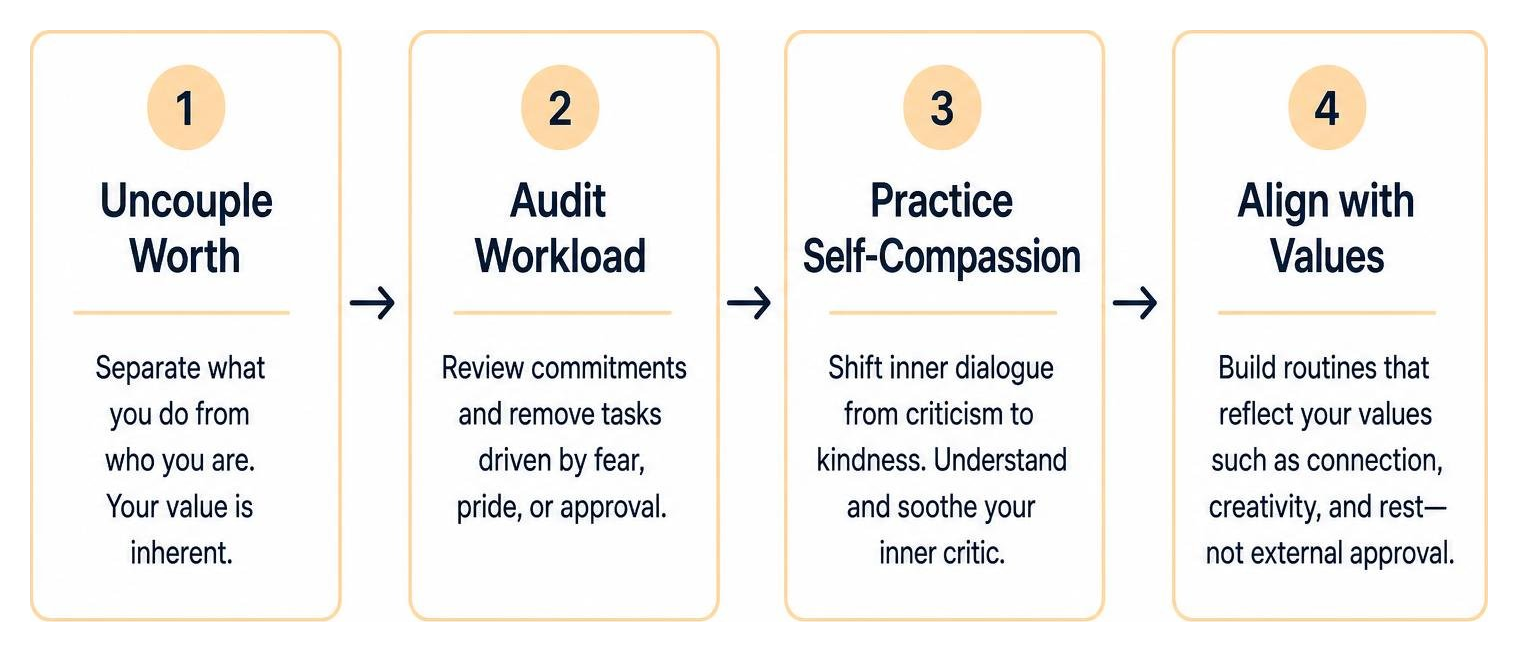
To heal from persistent depressive disorder, high achievers can begin implementing these practical, daily shifts:
- Uncouple Performance from Worth: Intentionally separate what you do from who you are. Practice internalizing that your core human value remains unchanged regardless of quarterly metrics.
- Conduct a Workload and Obligation Audit: Review your weekly schedule and remove tasks driven solely by fear, pride, or approval-seeking.
- Practice Compassionate Inner Dialogue: Shift your inner narrative from critical drive to supportive self-compassion. Ask your inner critic what fear it is trying to protect you from.
- Build Values-Aligned Routines: Align your daily schedule with internal values—such as genuine connection, creative play, or physical rest—rather than external accolades. Read our regional High Achiever Mental Health Guide in Oregon for additional resources.
Frequently Asked Questions About Dysthymia in High Performers
Can someone be extremely successful and still have clinical depression?
Yes. External success, high income, and professional accolades do not protect the brain against neurochemical imbalances or chronic stress. High achievers frequently use career performance as a masking strategy, maintaining high external output while enduring persistent low mood, internal numbness, and exhaustion inside.
How long does dysthymia typically last if left untreated?
By definition, persistent depressive disorder lasts for at least two consecutive years in adults, but without intentional therapeutic intervention, it often persists for decades. Over time, untreated dysthymia increases the risk of "double depression"—where severe major depressive episodes occur on top of the chronic baseline—and heightens the risk of physical burnout or health complications.
What is the difference between executive burnout and dysthymia?
Executive burnout is typically a situational response to prolonged workplace stress, overwork, or unsupportive environments; it generally improves when work conditions change or extended rest is taken. Dysthymia is a formal chronic mood disorder that follows an individual across all life domains—work, relationships, hobbies, and personal time—lasting for years regardless of workplace changes.
Conclusion
Understanding what is dysthymia in high achievers is the first step toward releasing the heavy mask of perfectionism. True success does not require sacrificing your emotional vitality, energy, or peace of mind.
At Spark Relational Counseling, founder May Han and our team offer specialized virtual counseling using mindfulness-based relational therapy, Emotion-Focused Therapy, and experiential modalities across Oregon, Washington, and Illinois—including client care in Portland, Seattle, Chicago, Bellevue, and surrounding communities. We help high performers break out of automatic hyper-arousal patterns, process underlying pain, and build authentic lives grounded in peace and loving relationships.
If you are ready to explore compassionate, confidential therapy tailored to your unique context, learn more about our specialized High Functioning Depression Therapy and reach out to our team today.