Understanding Infidelity and Betrayal Trauma in Relationships

Affair recovery in Bellevue begins with understanding that healing is possible through structured phases of crisis stabilization, somatic trauma processing, and attachment repair. When betrayal enters a partnership, the ground beneath your feet disappears. You might find yourself replaying conversations from months ago, scrutinizing bank statements, or feeling an overwhelming sense of vertigo in your own living room. The discovery of an affair is not simply a marital disagreement; it is a profound rupture to your relational reality that triggers acute nervous system dysregulation.
Infidelity is cited as a major contributing factor in 20–40% of divorces, according to the American Association for Marriage and Family Therapy. Yet, what many couples experiencing this crisis do not realize is that more than half of marriages survive infidelity. When handled with deliberate care and deep emotional exploration, the shock of betrayal can paradoxically become the catalyst for building a relationship that is far more transparent, resilient, and emotionally attuned than the one that existed before.
The experience of discovering a breach of trust often creates an attachment injury—a psychological wound that shatters basic assumptions of safety, security, and predictability. Understanding what occurred requires looking at the nuance of the betrayal.
| Betrayal Type | Core Indicators | Primary Relational Impact |
|---|---|---|
| Emotional Infidelity | Secretive digital intimacy, emotional confiding outside the bond, boundary erosion | Erosion of psychological safety, comparison, loss of primary emotional priority |
| Physical Infidelity | Secret physical or sexual encounters, hidden logistics, direct deception | Somatic shock, violation of bodily and relational agreements, acute loss of trust |
| Combined Betrayal | Sustained double life involving deep affection and physical intimacy | Severe attachment rupture, destabilization of shared history and reality |
Infidelity vs. Cheating: Defining the Breach of Trust
While people often use the terms interchangeably, there is a helpful clinical distinction between everyday cheating and deep infidelity. Cheating is a broad term that captures any act breaking an implicit or explicit rule—from secretive texting to physical encounters. Infidelity, by contrast, strikes directly at the foundational covenant of the partnership. It is the dismantling of shared reality through sustained deception and the reallocation of energy, vulnerability, and intimacy outside the primary commitment.
Understanding healing after betrayal involves recognizing that the breach is rarely just about physical acts. Micro-betrayals, hidden financial accounts, curated online relationships, and emotional secrecy all signal an erosion of relational transparency. Healing begins when both partners stop debating the technical definitions of what occurred and instead turn toward the felt experience of broken trust.
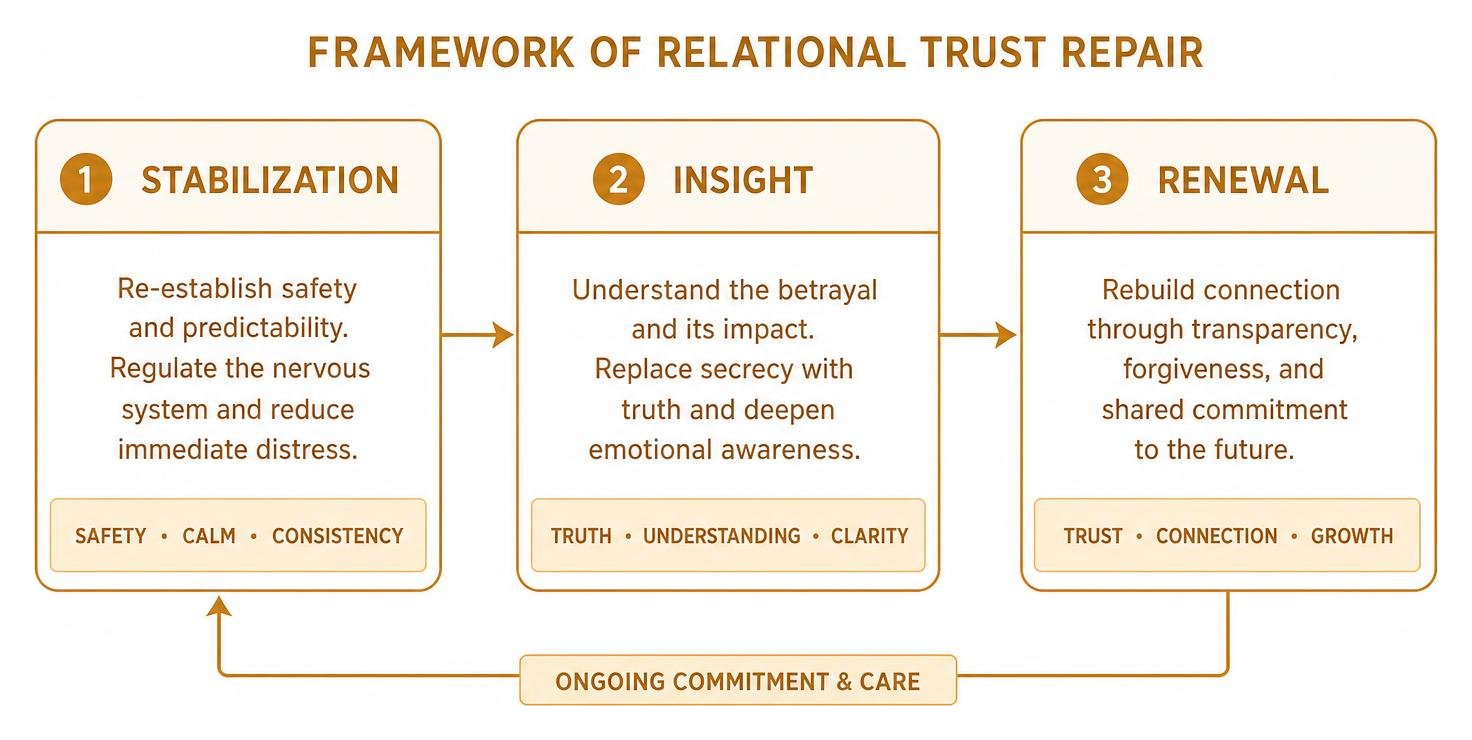
The Psychological Toll and PTSD-Like Symptoms of Betrayal
Imagine waking up at 3:00 AM, your heart pounding, your thoughts racing through a catalog of timestamps and unexplained absences. You check your sleeping partner's breathing, caught between an urge to seek comfort and an instinct to pull away. This reaction is not an overreaction—it is betrayal trauma.
When trust is abruptly severed, the brain's threat detection center treats the relational world as physically unsafe. Betrayed partners frequently experience symptoms nearly identical to post-traumatic stress:
- Hypervigilance: Constantly scanning your environment, checking devices, and monitoring your partner's tone of voice.
- Intrusive imagery and memories: Involuntary flashbacks of discovery or mental movies of the affair occurring without warning.
- Emotional and somatic flooding: Sudden waves of panic, nausea, chest tightness, or visceral rage.
- Dissociation and numbing: Feeling detached from your body or living behind a sheet of glass to blunt acute emotional pain.
Holistic, trauma-informed care meets these symptoms with gentle stabilization rather than asking you to "just move on."
Evidence-Based Approaches to Affair Recovery Bellevue Couples Rely On
Healing from deep betrayal is rarely accomplished by willpower or standard advice from well-meaning friends. It requires a dedicated clinical container that creates psychological safety for raw honesty and structured repair.

Couples seeking specialized infidelity counseling benefit most from therapies designed around how the nervous system attaches and heals. Rather than relying on rigid behavioral check-ins, modern relational therapy focuses on de-escalating protective defenses, processing underlying emotional pain, and restructuring attachment bonds.
Evidence-Based Methods in Affair Recovery Bellevue Practices
Led by founder May Han, our clinical work at Spark Relational Counseling centers on experiential, somatic, and attachment-focused modalities:
- Emotionally Focused Therapy (EFT): Betrayal creates profound distress where partners fall into painful cycles—often one partner pursues answers with intense urgency while the other withdraws in shame or fear. EFT helps identify these cycles, de-escalate crisis responses, and re-establish a secure attachment bond through corrective emotional experiences.
- Accelerated Experiential Dynamic Psychotherapy (AEDP): AEDP harnesses the brain's innate capacity for healing by processing intense, unbearable emotions in the presence of an attuned, compassionate therapist. It allows both partners to move through grief, anger, and shame without becoming overwhelmed.
- Brainspotting: For partners experiencing acute betrayal trauma, Brainspotting accesses subcortical brain areas where trauma and somatic distress are stored. By locating specific eye positions linked to emotional activation, clients can process traumatic shock without having to verbally relive every agonizing detail.
- Mindfulness-Based Relational Therapy: Using somatic awareness, we help partners identify their internal emotional thresholds. You learn to recognize when your nervous system is entering fight-or-flight, enabling you to set manageable boundaries during difficult conversations before emotional flooding occurs.
Structuring the Journey: Key Phases of Healing and Forgiveness
Recovery follows a clear, paced trajectory. Navigating the phases of affair recovery ensures couples do not rush into premature forgiveness before trust has been authentically rebuilt.
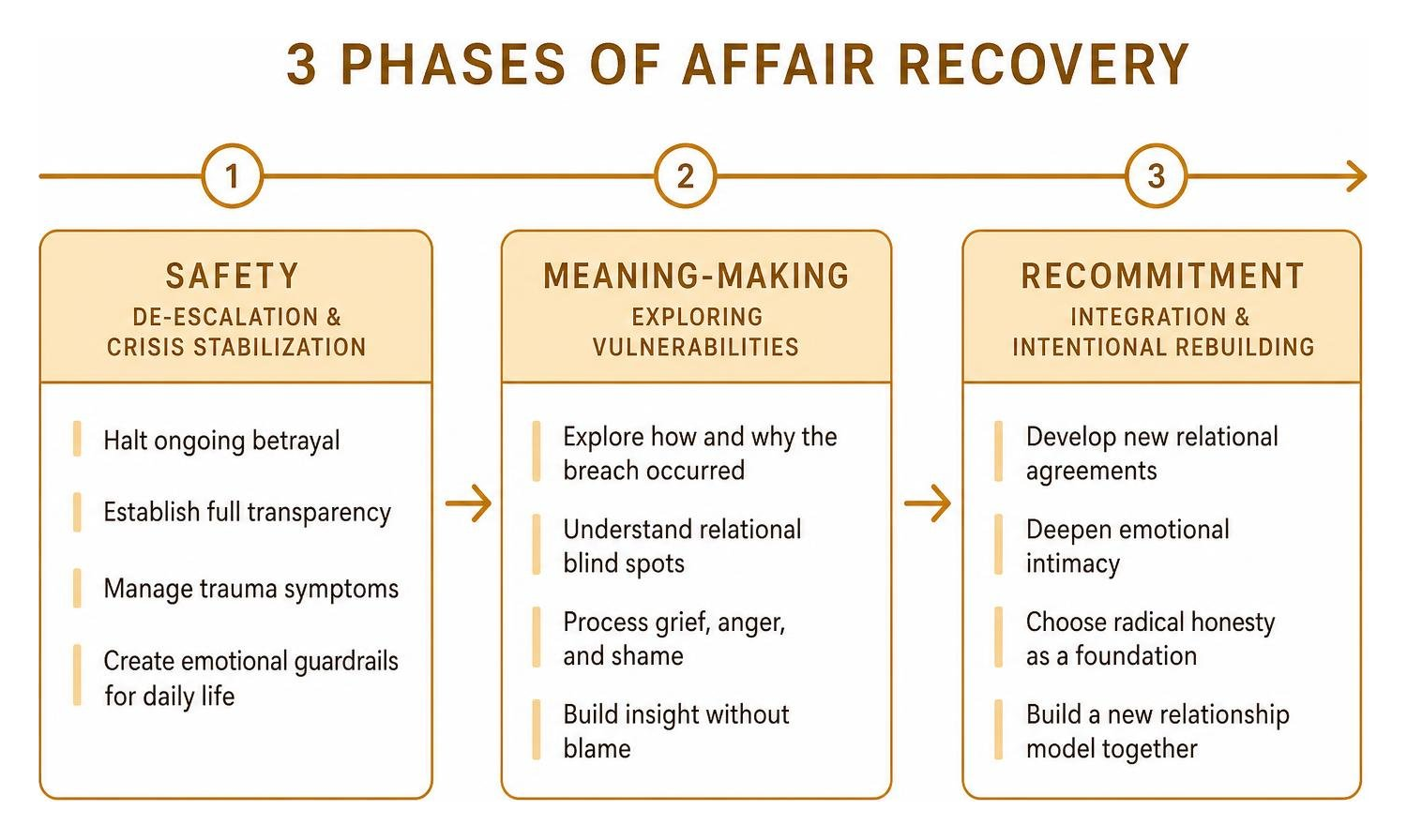
- Phase 1: Safety, De-escalation, and Crisis Stabilization: Halting ongoing betrayal, establishing full transparency, managing trauma symptoms, and creating emotional guardrails for daily life.
- Phase 2: Meaning-Making and Exploring Vulnerabilities: Exploring how and why the breach occurred without blaming the betrayed partner, understanding relational blind spots, and processing grief.
- Phase 3: Integration, Attachment Repair, and Intentional Rebuilding: Developing new relational agreements, deepening emotional intimacy, and choosing to construct a new relationship model based on radical honesty.
Research indicates that infidelity-affected couples who complete structured therapy achieve comparable levels of relational functioning to non-infidelity couples after six months of care. In fact, couples who openly address and process an affair often make greater relational gains than those who leave long-standing distress unaddressed.
Practical Steps for Rebuilding Emotional Intimacy and Trust
Rebuilding intimacy after betrayal requires intentional, consistent daily practices rather than grand gestures.
Learning the foundational steps of rebuilding trust after infidelity requires moving away from defensiveness and toward sustained, transparent attunement.
Cultivating Accountability and Moving Past Guilt
For the partner who engaged in the affair, moving from paralyzing guilt into active, healing remorse is essential. Guilt is self-focused ("I am a terrible person; I cannot bear seeing what I did"), which often leads to emotional withdrawal or defensiveness. Remorse, however, is partner-focused ("I see the pain my actions caused, and I am here to support your healing").
Meaningful accountability includes:
- Radical, unprompted transparency: Offering honest information consistently, removing secrecy around devices and schedules without being policed.
- Non-defensive holding of pain: Listening to your partner's anger and sorrow without interrupting, offering counter-accusations, or demanding a timeline for their forgiveness.
- Relational consistency: Ensuring your daily actions, words, and emotional presence match reliably over extended periods.
Starting Affair Recovery Bellevue Sessions and Online Support
Beginning therapy can feel daunting, but the process is structured to provide relief from the very first session. Through modern, accessible online therapy in Washington, you can access specialized care directly from the privacy of your home in Bellevue, Seattle, Kirkland, or Redmond.
When considering payment and care options, many clients inquire about utilizing health insurance. While in-network benefits can help offset costs, it is important to understand the significant constraints that insurance billing places on your relational care. Insurance companies mandate a formal mental health diagnosis for one partner to justify coverage, which permanently becomes part of your medical record. This diagnosis can impact future life choices, including underwriting for private life or disability insurance, security clearances, specific employment opportunities, and adoption proceedings. Furthermore, insurance providers often require detailed treatment summaries, compromising your relational privacy. Opting for private-pay care ensures absolute confidentiality, complete clinical freedom without diagnostic labeling, and personalized session pacing tailored entirely to your relationship's unique recovery timeline.
Frequently Asked Questions About Infidelity and Recovery
Can relationships truly recover and thrive after cheating?
Yes. While an affair causes intense distress, research consistently demonstrates that relationships can not only survive but fundamentally transform. Clinical studies show that couples who disclose an affair and work through it in structured therapy often achieve deeper intimacy, improved communication, and higher relational satisfaction than they experienced prior to the crisis. Recovery does not mean forgetting; it means using the crisis to dismantle dysfunctional patterns and build a conscious, secure partnership.
What percentage of marriages survive infidelity?
Research suggests that between 60% and 75% of couples choose to stay together after infidelity is discovered. More than half of marriages navigate the rupture successfully when both partners commit to addressing underlying issues, processing trauma, and establishing transparent communication through guided therapeutic interventions.

Does the emotional pain of an affair ever completely go away?
The sharp, agonizing sting of betrayal does fade over time. Betrayal pain behaves like waves in the ocean: initially, they arrive as overwhelming swells that feel impossible to survive. Through somatic processing, EFT, and nervous system regulation, those waves gradually lose their intensity and frequency. While the memory of the event remains a part of your relational history, it ceases to carry chronic emotional pain, transforming instead into a testament of resilience, boundary clarity, and deepened self-worth.
Conclusion
The discovery of an affair marks the end of your old relationship dynamic, but it does not have to mark the end of your connection. Healing from betrayal requires courage, vulnerability, and expert clinical guidance to navigate the stormy waters of trauma, guilt, and emotional rebuilding.
At Spark Relational Counseling, therapist May Han and our practice support individuals and couples across Washington—including Bellevue, Seattle, Sammamish, and Redmond—as well as Oregon and Illinois. We provide a warm, non-judgmental, and trauma-informed space to help you quiet negative brain autopilots, cultivate nervous system safety, and rediscover genuine connection.
Whether you choose to heal together or need clarity on your individual path forward, schedule your affair recovery therapy in Bellevue and Seattle today to take your first grounded step toward lasting peace.