Love Without Labels: A Guide to LGBTQ+ Couples Therapy in Seattle
LGBTQ Couples Therapy Seattle: Affirming Support for Your Relationship

LGBTQ couples therapy Seattle offers a private, affirming space for partners to improve communication, rebuild closeness, work through conflict, and handle the pressures that can come from life beyond the relationship. The right therapist will respect each partner's identity, avoid assumptions about gender roles or relationship structure, and help you build practical patterns that fit your relationship.
| What to look for | Why it matters |
|---|---|
| LGBTQ+-affirming care | Your identities, pronouns, and relationship structure are treated as part of the full picture, not as problems to solve. |
| Couples-specific training | Approaches such as Emotionally Focused Therapy (EFT) can strengthen connection and conflict skills. |
| Intersectional awareness | Therapy can make room for how race, gender identity, disability, faith, class, and workplace stress shape your shared life. |
Seattle has a large LGBTQ+ community and strong legal protections, yet progressive surroundings do not erase minority stress, family tension, subtle bias, or the strain of always needing to explain yourself. Couples may seek support around intimacy, coming out, parenting decisions, non-monogamy, trust, or the same repeating argument that leaves both people feeling alone.
I am May Han, a Licensed Marriage and Family Therapist at Spark Relational Counseling, and I use mindfulness and emotionally focused techniques to help couples create safer, more connected relationships. My work in lgbtq couples therapy seattle is grounded in empathy, cultural awareness, and helping partners step out of painful autopilot patterns.

Navigating Relationship Dynamics: A Guide to LGBTQ+ Couples Therapy in Seattle
Relationships thrive when both partners feel deeply seen, emotionally safe, and understood. In Seattle, where approximately 15% of the adult population identifies as LGBTQ+—one of the highest per capita rates in the United States—queer partners enjoy a vibrant, supportive ecosystem. Yet living in a progressive city does not shield couples from internal vulnerabilities or external relational strain. Research shows that LGBTQ+ couples are 2.5 times more likely to seek couples therapy compared to heterosexual couples, reflecting both a proactive commitment to relational health and a response to specialized cultural dynamics.
When we explore how couples grow together, we recognize that every partnership operates within a broader context. External pressures, subtle social biases, and subtle interpersonal habit loops can quietly erode intimacy over time. To understand whether structured support is right for your partnership, exploring Couples Therapy in Seattle: Does It Help or Hurt? offers valuable perspective on how specialized guidance helps partners heal repeating cycles rather than falling deeper into them.
Addressing Unique Challenges in LGBTQ+ Relationships
While queer couples experience universal relationship milestones like negotiating finances, dividing domestic routines, and sustaining physical intimacy, they also navigate distinct relational contours.
- Navigating the "Seattle Freeze": Even in an inclusive metropolitan environment, establishing deep, meaningful community networks can feel surprisingly difficult. Couples often rely heavily on one another for emotional support, which can inadvertently create hyper-independence or relational over-reliance.
- Ethical Non-Monogamy and Polyamory: Many queer relationships embrace open structures, consensual non-monogamy, or relationship anarchy. Crafting custom agreements requires nuanced boundary setting, emotional transparency, and freedom from heteronormative assumptions.
- Deconstructing Heteronormative Scripts: Without pre-packaged societal gender roles dictating who handles chores, initiates physical connection, or leads decision-making, partners must consciously negotiate their dynamics. While liberating, this lack of predefined blueprints sometimes leads to ambiguity or silent frustration.
- Asymmetrical Coming Out and Identity Shifts: Partners may be at vastly different stages of personal outness, gender transition, or self-discovery. Balancing one partner's need for public visibility with another's need for privacy requires careful empathy and patience.
How External Stressors Impact Queer Couples
Minority stress—the chronic physiological and psychological strain caused by living in a world that often marginalizes LGBTQ+ identities—does not disappear inside the home. Even in welcoming Pacific Northwest communities, external stressors continuously filter into private dynamics:
- Family Rejection and Complex Grief: Navigating holidays, family gatherings, or legal estrangement with families of origin can trigger deep abandonment fears or hyper-vigilance in one or both partners.
- Workplace Microaggressions: Enduring constant misgendering, subtle heterosexism, or hyper-visibility at work drains nervous system energy, leaving less emotional reserve for home life.
- Societal and Systems Bias: Distrust of healthcare, legal, or financial systems can make co-parenting, estate planning, or fertility processes feel vulnerable and exhausting.
When these systemic burdens build up, partners can inadvertently project their protective defenses onto each other. Therapy acts as an anchor, helping couples step out of reactive survival modes and return to mutual refuge.
Proven Therapeutic Modalities Adapted for Queer Relationships
Not all therapy approaches are created equal when working with LGBTQ+ partners. Modalities that rely heavily on rigid behavioral drills or traditional gender roles can leave queer clients feeling misunderstood. In our practice, we focus on deeply human, experiential, and somatic modalities that address the nervous system and emotional attachment core.
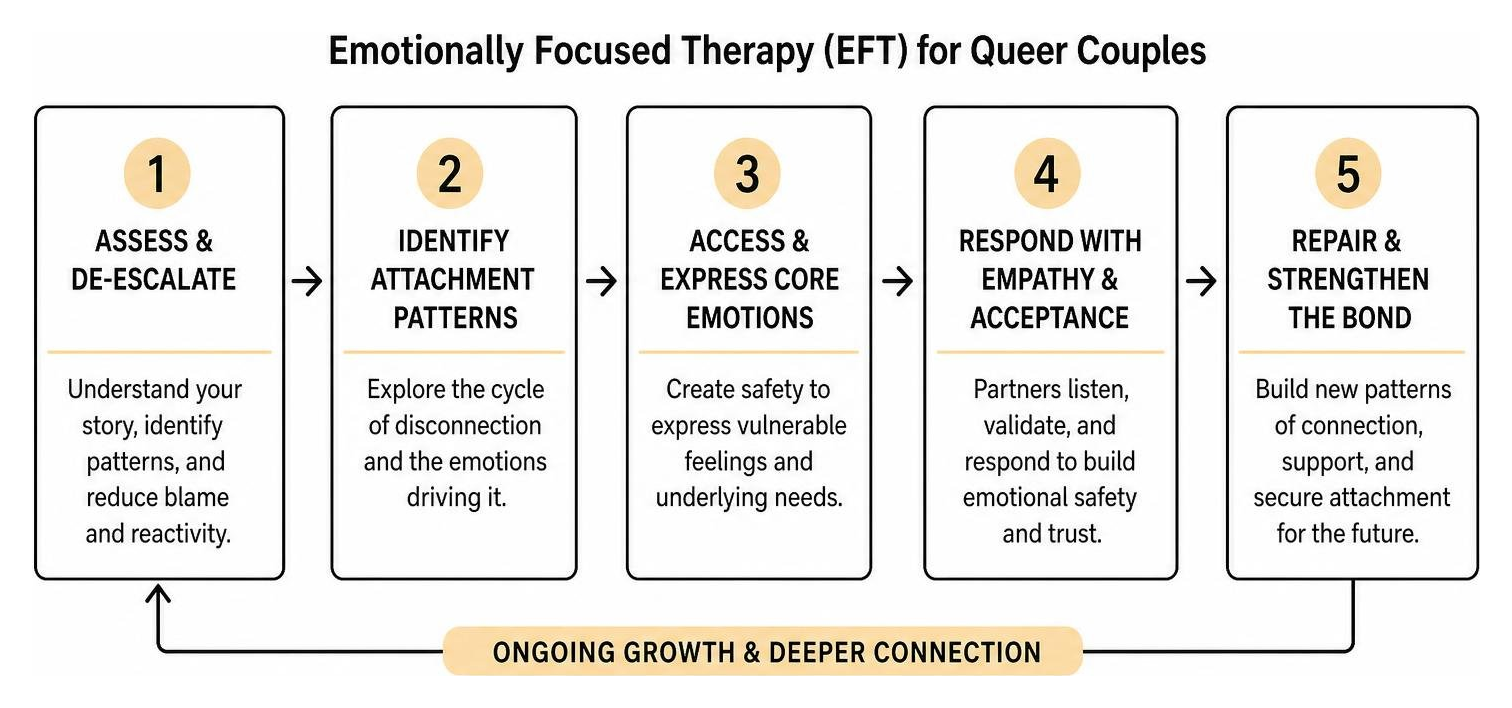
When exploring therapeutic care, learning about options through Exploring Therapy Options for Relationship Issues in Seattle helps clarify how modal approaches differ. Furthermore, exploring professional listings can help highlight providers dedicated to culturally competent care.
Adapting Mindfulness-Based Relational Therapy for LGBTQ+ Couples Therapy in Seattle
In lgbtq couples therapy seattle, we emphasize relational approaches rooted in Emotionally Focused Therapy (EFT), Accelerated Experiential Dynamic Psychotherapy (AEDP), Experiential Therapy, and Brainspotting. Rather than offering standardized, mechanical advice, these approaches help partners slow down and attune to their immediate, lived emotional experience.
Mindfulness allows partners to track their somatic signals—a tightening chest, a shallow breath, or a clenched jaw—before an emotional threshold is crossed. When partners learn to identify their nervous system triggers in real time, they can set soft, manageable boundaries instead of shutting down or lashing out.
For queer couples, EFT and experiential methods gently unwind systemic hyper-vigilance. A partner who experienced early rejection may misinterpret their companion's tiredness as abandonment. By tracking emotional responses in the present moment, partners discover how to express core longings for safety, affection, and validation directly, turning moments of friction into opportunities for secure attachment.
Intersectionality and Mindful Relational Approaches
No relationship exists in a vacuum. True affirming care honours intersectionality—the dynamic overlapping of race, ethnicity, gender identity, neurodivergence, disability, economic background, and spiritual heritage.

A Black transgender partner navigating corporate spaces experiences a fundamentally different daily reality than a white cisgender queer partner. An neurodivergent partner may process sensory overload differently during conflict than an neurotypical partner. An intersectional framework ensures we do not collapse a couple's complex experience into a single label. We look at how systemic power dynamics, chronic illness, financial inequality, or cultural expectations enter the therapy room, validating each person's lived truth without making anyone feel judged or defensive.
Finding the Right Affirming Therapist and Navigating Logistics
Selecting a counselor who moves beyond baseline tolerance into genuine cultural celebration is vital for meaningful healing.
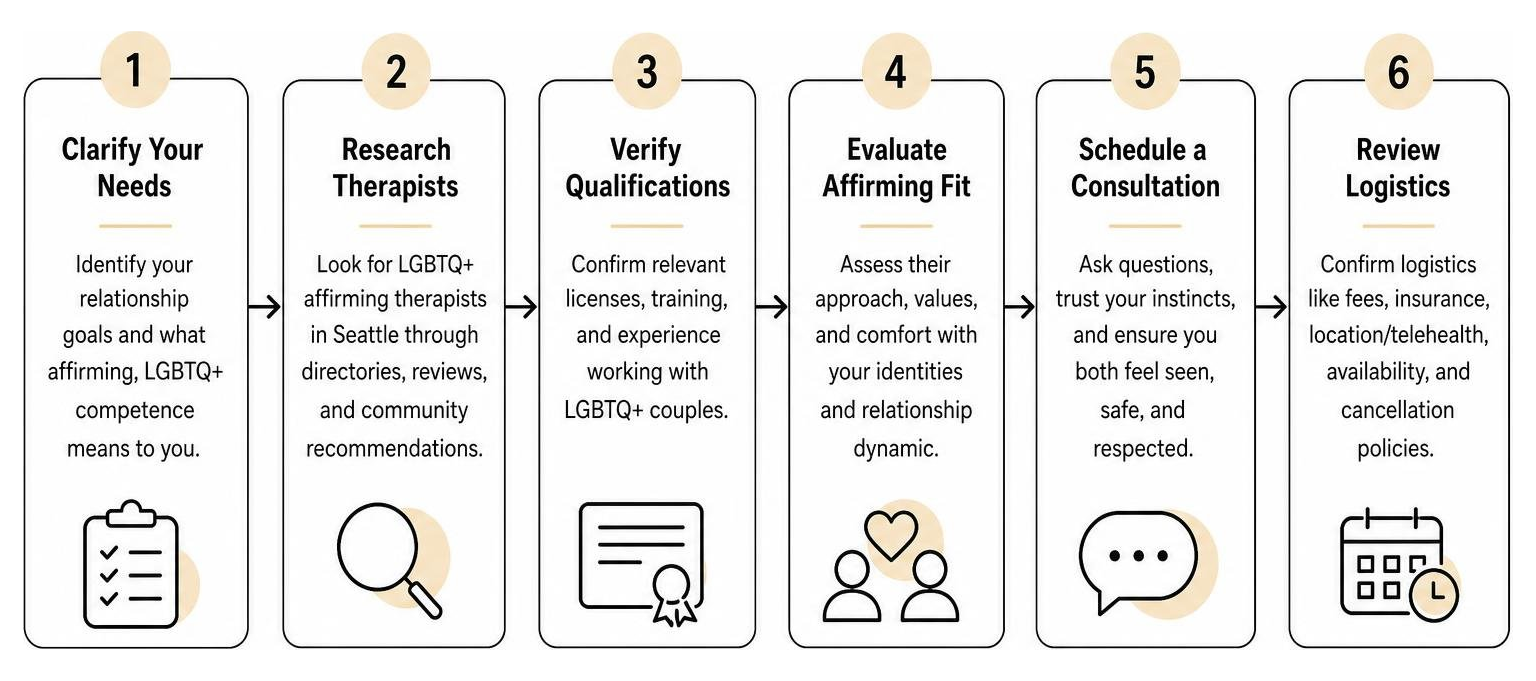
When beginning your search, reviewing our comprehensive Seattle Marriage Counseling Guide provides essential benchmarks for evaluating provider qualifications across Washington.
Essential Qualifications to Look For in an Affirming Counselor
To ensure your relationship receives insightful, skilled care, look for therapists who demonstrate:
- Lived or Dedicated Queer Competency: A deep, ongoing commitment to understanding LGBTQ+ history, terminology, and community nuance without expecting clients to educate them.
- Gender-Affirming Expertise: Clear understanding of non-binary, genderqueer, and trans relationship dynamics, including navigating medical transition, gender euphoria, and non-linear identity journeys.
- Advanced Training in Attachment Modalities: Certification or deep practice in Emotionally Focused Therapy (EFT), AEDP, or Somatic Experiential therapies rather than general, surface-level advice.
- Trauma-Informed Practice: Familiarity with religious trauma, family estrangement, systemic oppression, and Brainspotting techniques designed to heal bodily-held stress responses.
To locate qualified local providers, look for counselors and practices with documented experience serving the community.
The Advantages of Virtual LGBTQ+ Couples Therapy in Seattle
While in-person therapy offers rich physical presence, virtual counseling has emerged as an exceptionally effective, accessible option for couples throughout Seattle, Bellevue, Redmond, Sammamish, Spokane, and across Washington State.
Virtual sessions allow partners to join from their own comforting living space, wrapped in a favorite blanket, alongside pets who naturally soothe the nervous system. For busy professionals navigating demanding schedules, eliminating the rush through I-5 traffic helps keep emotional energy preserved for therapeutic work. Learn more about state-wide telehealth options via Online Therapy in Washington.
When to Seek Therapy and How to Prepare for Your First Session
Couples often wait until a crisis point before seeking support, assuming therapy is reserved for extreme distress. However, engaging in relational counseling proactively—when you first notice minor communication stalls—builds long-term resilience and deepens intimacy.
Recognizing Key Signs Your Relationship Needs Support
Consider reaching out for professional relational guidance if you or your partner experience:
- Repeating Emotional Autopilots: Getting stuck in the same cyclical argument about household tasks, social calendars, or intimacy, where both people end up feeling misunderstood.
- Somatic Overwhelm during Conflict: Experiencing rapid heart rates, emotional shutdown, or complete withdrawal during sensitive conversations.
- Navigating Major Life Transitions: Transitioning to ethical non-monogamy, planning for children, navigating career changes, or moving through gender affirmation.
- Intimacy Shifts: A desire to reconnect physically, emotionally, or spiritually after periods of burnout or emotional disconnect.
- Desire for Proactive Growth: Seeking to strengthen trust and communication before embarking on major joint commitments.
A 2020 survey revealed that 68% of LGBTQ+ couples in therapy reported noticeable improvements in relationship satisfaction within just 12 sessions. Furthermore, studies show that LGBTQ+ couples who participate in relational counseling together are 30% less likely to separate within two years compared to those who do not seek guidance.
Seattle Community Resources and Complementary Support
Therapy works best when reinforced by community connection. Seattle offers outstanding local resources that complement couples counseling:
- Gay City: Seattle's LGBTQ+ Center: Offers health services, peer support groups, wellness events, and community arts.
- Lambert House: Providing empowering social activities and support networks for LGBTQ+ youth and young families.
- PFLAG Seattle: Excellent support networks for families, allies, and multicultural queer communities.
- Ingersoll Gender Center: An invaluable trans- and gender-nonconforming-led organization providing peer support, economic support, and healthcare advocacy.
Frequently Asked Questions about LGBTQ+ Counseling
How much does couples therapy cost in Seattle?
In Seattle, professional couples therapy rates generally range from $180 to $300+ per hour session, reflecting the specialized clinical training and regional costs of living. The number of specialized LGBTQ+ relationship therapists in Seattle has grown by 40% since 2018, expanding care options across the region.
When considering financial logistics and health insurance, it is true that using in-network insurance benefits can offset immediate out-of-pocket costs. However, we strongly educate our clients on the serious constraints associated with billing health insurance for relational therapy.
Insurance companies require a formal mental health diagnosis (such as Major Depressive Disorder or Generalized Anxiety Disorder) for one partner, framing relationship support as a medical necessity rather than a healthy, growth-oriented choice. This diagnosis becomes a permanent part of your electronic medical record.
Unintended consequences of a medical mental health diagnosis can include:
- Compromised personal privacy, as insurance auditors can request session notes.
- Potential complications or increased premiums when applying for private life insurance or disability policies.
- Friction during background evaluations for sensitive security clearances or high-profile employment.
- Complications during legal proceedings or adoption assessments, where medical records may be scrutinized.
For these reasons, many couples choose private pay or utilize out-of-network benefits (via superbills) to protect their privacy, maintain control over their health records, and preserve complete autonomy over their care. Many providers also maintain limited sliding-scale spots for clients with financial need.
Can therapy help with open relationships and polyamory?
Absolutely. An affirming relational therapist provides a non-judgmental environment to design, refine, or troubleshoot non-monogamous structures. Rather than treating open dynamics as unstable, therapy helps partners map clear agreements, process jealousy through self-compassion, establish emotional thresholds, and cultivate transparent communication.
How does Seattle's legal landscape protect queer partners?
Seattle and Washington State provide robust legal protections for LGBTQ+ couples, including full marriage equality, non-discrimination protections in housing, public accommodations, and employment, state-protected second-parent adoption rights, and legal gender marker updates. While legal rights provide crucial structural security, therapy supports the internal emotional foundation—ensuring your personal bond is as strong as your legal protection.
Conclusion
Every partnership deserves a sanctuary where love can grow free from societal expectations or rigid stereotypes. In lgbtq couples therapy seattle, we welcome the full, authentic truth of who you are, guiding you away from defensive autopilots and into deep, secure connection.
If you are navigating personal growth, recovering from stress, or wanting to deepen emotional and physical intimacy, gentle support is available. Explore our dedicated Marriage and Couples Counseling Services or dive deeper into local wellness through our comprehensive Seattle Area Therapy Guide.
If you or your partner are also working through individual challenges alongside your relationship journey, learning about Individual Therapy for Relationship Issues or navigating the quiet burdens of High-Functioning Depression can help you rediscover ease. At Spark Relational Counseling, May Han and our team are honored to walk beside you, helping you cultivate lasting peace, emotional safety, and enduring love. Reach out to us today to begin your healing journey together.
