
The Perfectionist's Guide to Finding Therapy That Actually Works

High-achieving professionals—including corporate executives, founders, physicians, attorneys, and specialized leaders across Oregon, Washington, and Illinois—often operate under intense daily pressure. Yet research consistently reveals that individuals in high-responsibility roles delay psychological support far longer than the general population. In fact, while nearly 90% of top executives report experiencing a significant fear of failure in any given year, only 22% have ever met with a psychotherapist, even though 32% feel comfortable consulting an executive coach or business counselor.
Understanding why high achievers avoid therapy requires looking closely at the intersection of professional identity, psychological coping mechanisms, and career culture. For many, seeking help feels direct conflict with the qualities that built their career in the first place. You can read more about these structural patterns in our analysis of why high achievers ignore mental health.
The Self-Reliance Trap and Work-Identity Fusion
At the heart of therapy avoidance is the self-reliance trap. From early school years through rapid career advancement, high performers are rewarded for solving complex problems independently, enduring grueling schedules, and demonstrating unwavering composure. Over decades, this pattern creates work-identity fusion—a state where professional accomplishments and executive titles become the primary anchor of one's self-concept and internal worth.
When work identity and personal identity merge completely, experiencing internal distress feels like an existential threat. Admitting that stress is becoming unmanageable is not experienced as a routine health check; it feels like admitting a fundamental structural flaw in one's core self. This dynamic creates a false sense of control. High performers often convince themselves that because they can analyze financial reports, manage large teams, or navigate high-stakes litigation, they should also be able to master their internal emotional landscape through sheer willpower.
As explored in depth in Why High Achievers Resist Help—Until It Might Be Too Late, this illusion of environmental control leads people to assume they will know the exact right moment to step back before damage occurs. In reality, that self-imposed barrier keeps professionals isolated long after their internal resources have run dry.
Why High Achievers Avoid Therapy in Secret: Stigma and Professional Risk
Beyond internal identity threats, high achievers often cite very real, pragmatic concerns regarding reputation and career risk. In many high-stakes fields—such as medicine, law, finance, and executive leadership—there is an enduring workplace culture that treats vulnerability as liability.
Physicians and legal professionals, for instance, frequently express legitimate fears regarding state licensing board inquiries, where past mental health treatment might require formal disclosure or bureaucratic scrutiny. Corporate leaders worry about board perception, investor confidence, or peer standing if news of their therapy attendance slips out.
Because of these risks, a growing number of high-performing individuals seek mental health care completely in secret. They may book virtual telehealth sessions from parked cars, utilize personal email addresses outside company networks, or arrange self-pay care to keep their records completely off corporate benefit systems. While discreet telehealth offers a safe bridge, the necessity of secrecy highlights how deeply embedded professional stigma remains.
The Internal Forces: Perfectionism, Imposter Syndrome, and the Functional Mask

External professional expectations are only half the equation. The internal cognitive and emotional habits that drive career success can also act as powerful barriers to receiving effective psychological support. For a deeper look into these emotional dynamics, explore our piece on why high achievers experience depression.
How High Functioning Productivity Masks Internal Deterioration
The most deceptive aspect of high-achiever stress is the functional mask. High performers possess extraordinary abilities to compartmentalize pain and maintain high output even when suffering from severe anxiety, high-functioning depression, or advanced burnout.
Because deadlines are met, revenue targets are achieved, and meetings run smoothly, neither colleagues nor loved ones realize the severity of the internal collapse. However, chronic occupational stress steadily degrades key executive cognitive functions beneath the surface:
- Working memory efficiency: Processing complex, multi-layered information requires significantly more conscious effort.
- Emotional bandwidth: Patience for routine interpersonal interactions thins dramatically.
- Decision-making clarity: Strategic decisions become taxing, leading to subtle decision fatigue or avoidance.
- Physical reserves: Sleep architecture deteriorates, leaving the body in a continuous state of low-grade sympathetic activation.
Because outward performance remains intact, high achievers use their continued productivity as evidence that nothing is wrong, delaying crucial care until physical or emotional reserves are entirely exhausted.
The Role of Shame and Imposter Syndrome in Resisting Care
Perfectionism among professionals rarely stems from simple vanity; it is frequently driven by maladaptive perfectionism—a deep-seated fear of failure and exposure. Hand-in-hand with perfectionism is imposter syndrome, the persistent belief that one's success is an accident or fluke that could be exposed at any moment.
When high achievers experience internal anxiety or relationship strain, intense shame often follows. They delegitimize their own suffering, telling themselves, "I have a great salary, a respected career, and a wonderful family—I have no right to feel this way."
This cycle of self-minimization follows them even when they take the initial step into a counselor's office. As highlighted in Why High Achievers Can Struggle in Therapy, clients may catch themselves trying to "perform" therapy, presenting polished updates to their therapist while minimizing underlying pain out of shame. Bypassing this automatic performing self is one of the most vital stages of meaningful therapeutic work.
The High Cost of Waiting for a Crisis (and Early Signs to Watch For)
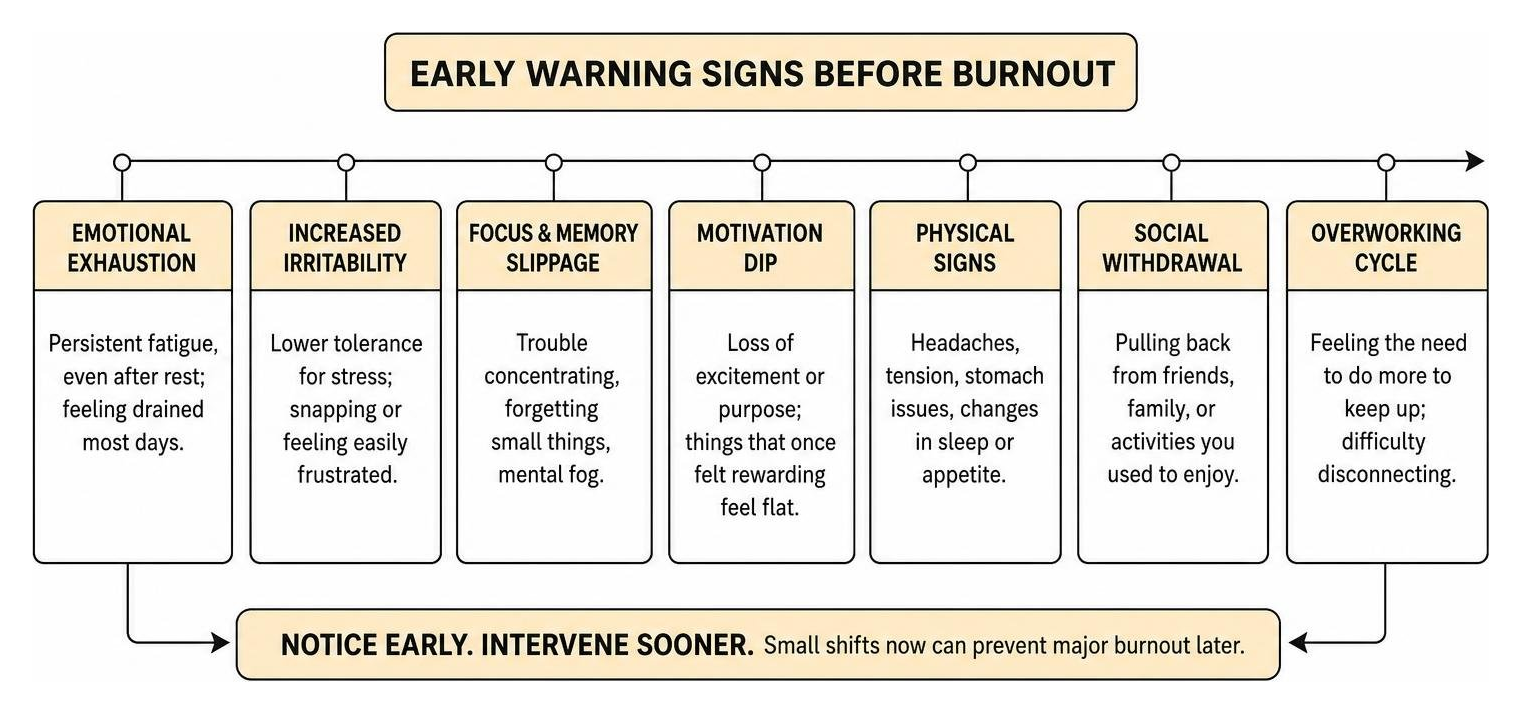
When high achievers delay help-seeking, stress does not simply vanish—it compounds quietly across every dimension of life. Waiting until a complete burnout crisis occurs brings steep physical, emotional, and relational costs.
Early Warning Signs Before Peak Burnout Occurs
Recognizing early indicators allows professionals to intervene long before a major breakdown forces an extended pause. Subtle warning signs include:
- Persistent Sleep Disruption: Waking up at 3:00 AM with racing thoughts about task lists or work conflicts, despite feeling physically exhausted.
- Emotional Numbness or Depersonalization: Feeling disconnected from personal achievements, ongoing projects, or key relationships—operating entirely on autopilot.
- Shortened Irritability Fuse: Reacting with sudden frustration toward minor disruptions, family members, or team members.
- Perfectionist Paralysis: Spending excessive time obsessing over low-stakes details or delaying new initiatives due to elevated fear of mistakes.
- Loss of Meaning: Reaching major career milestones or compensation targets only to feel an empty, unsettling sense of "Is this all there is?"
The Physical, Relational, and Career Costs of Delayed Action
When these early warning signs are ignored, the cost of delayed action escalates. Physically, chronic elevation of stress hormones contributes to gastrointestinal distress, cardiovascular strain, weakened immune function, and persistent fatigue.
Relationally, high-achieving leaders frequently sacrifice home life to maintain their professional standard. Partners and children often bear the brunt of an exhausted, irritable, or emotionally unavailable presence. We examine these specific relational dynamics in detail in our articles on when success at work doesn't translate to love and guidance for high achieving women dating therapy.
Waiting for a crisis can result in sudden leave from work, strained business partnerships, or unexpected health events that strip away choice and force extended recovery.
How to Find a Therapeutic Approach Tailored for High Performers

Standard, open-ended therapy models that lack structure or active engagement often frustrate high achievers. Successful therapy for high-performing professionals requires a specialized, collaborative approach that respects their intelligence, agency, and need for practical integration. For a comprehensive guide on selecting a therapist who understands these demands, read how to choose the right therapist.
Adapting Clinical Models: Goal-Directed Structure and Collaborative Postures
High achievers thrive when therapy is framed not as a top-down medical diagnosis, but as a peer-to-peer collaborative consultation. Rather than sitting passively, therapists working with leaders adopt a clear, active posture.
At Spark Relational Counseling, founder May Han and our practitioners utilize experiential, relational, and somatic approaches designed to reach deeper underlying patterns rather than staying stuck in intellectual debates:
- Emotion-Focused Therapy (EFT): Helps high achievers identify, process, and regulate core emotional states rather than intellectually analyzing or pushing them away.
- Accelerated Experiential Dynamic Psychotherapy (AEDP): Focuses on processing difficult feelings in real time alongside a supportive therapist, dismantling emotional isolation.
- Experiential Therapy & Brainspotting: Targets neurobiological stress stored in the brain and body, bypassing cognitive defensiveness to process deep-seated performance anxiety and past trauma.
- Mindfulness-Based Relational Therapy: Develops real-time awareness of bodily stress indicators, helping clients notice when their emotional thresholds are crossed so they can implement healthy boundaries before reaching exhaustion.
This structured framework aligns with the insights found in Therapy for High Achievers: Why Successful People Struggle Most with Asking for Help. To learn more about how we structure sessions for professionals, explore our guides on therapy for overachievers and mental health and therapy for entrepreneurs.
Why High Achievers Avoid Therapy Until Framing Shifts to Performance Optimization
Many professionals resist traditional therapy because it feels like a passive treatment for weakness. However, when mental health care is correctly reframed as strategic performance optimization and leadership emotional regulation, resistance vanishes.
Reframing therapy as a professional asset helps high performers:
- Decouple their intrinsic self-worth from daily output.
- Master emotional regulation under high-pressure scenarios.
- Build sustainable energy mapping systems instead of relying on continuous adrenaline.
- Improve executive presence and relational attunement with teams and partners.
Seen through this lens, attending therapy is not a failure of self-reliance—it is a proactive, high-return investment in long-term operational sustainability.
Practical Steps to Proactively Manage Stress Without Breaking Down
Transitioning from reactive crisis management to proactive emotional health requires practical systems. The comparison table below illustrates how proactive care shifts daily management:
| Area of Focus | Reactive Crisis Approach | Proactive Strategic Approach |
|---|---|---|
| Pacing & Workload | Pushing past physical limits until sudden exhaustion forces an extended leave. | Utilizing energy mapping to align high-priority strategic work with natural peak energy windows. |
| Boundary Management | Saying yes to every demand until resentment and overload cause total shutdown. | Applying mindfulness to spot emotional capacity thresholds early and set clear, firm boundaries. |
| Daily Recovery | Relying on weekend crash-and-burn cycles, alcohol, or total screen immersion to unwind. | Integrating deliberate micro-resets throughout the day to downregulate the nervous system. |
| Help-Seeking Behavior | Waiting until severe burnout, marriage strain, or physical collapse forces an intervention. | Engaging regular therapy or consultation sessions to maintain self-awareness and emotional baseline. |
To begin shifting toward a proactive model, high achievers can implement three straightforward practices:
- Map Daily Energy Dynamics: Track focus and mood across a two-week period. Identify when your cognitive output is sharpest and protect those blocks for deep work, reserving lower-energy periods for routine admin.
- Schedule Micro-Reset Moments: Build 2- to 3-minute nervous system breaks between back-to-back meetings. Simple deep breathing or stepping away from screens signals safety to your physiology and prevents cumulative stress buildup.
- Conduct Weekly Strategic Self-Reviews: End each week by asking three questions: What drained my energy unnecessarily? Where did I step past a healthy personal boundary? What small adjustment will preserve my well-being next week?
If you are ready to begin, learn more in our resource on how achievers overcome hidden depression and review our guide on how to start therapy.
Navigating Insurance Constraints and Protecting Privacy
When high-achieving professionals decide to seek care, how therapy is paid for becomes a crucial strategic decision. While utilizing in-network health insurance benefits can offer immediate financial coverage and lower out-of-pocket costs, relying on insurance for mental health care carries notable constraints that every high performer should carefully consider.
To cover therapy, health insurance companies strictly require a formal psychiatric diagnosis (such as Major Depressive Disorder or Generalized Anxiety Disorder) to be permanently attached to your medical record. This loss of privacy can have downstream consequences for high-responsibility professionals:
- Life and Disability Insurance: Insurance underwriters frequently audit medical records, and a documented psychiatric diagnosis can lead to significantly higher premiums, coverage exclusions, or policy denials.
- Specialized Licensing and Employment Opportunities: Certain medical, legal, executive, or government roles require full disclosure of medical histories, where past mental health diagnoses can trigger lengthy administrative reviews or impact employment advancement.
- Adoption and Security Clearances: Background checks for international adoption or federal security clearances often request access to formal health diagnostic histories.
Choosing private-pay (out-of-network) care ensures complete confidentiality. No formal diagnosis is required, no corporate or insurance database holds your session notes, and your treatment plan remains entirely between you and your therapist.
Frequently Asked Questions About Therapy for High Achievers
Why do top executives delay therapy longer than the general population?
Top executives often operate in high-isolation environments where showing doubt or exhaustion feels risky. Combined with high external functionality—which allows them to perform well professionally even while suffering internally—and long-standing habits of extreme self-reliance, executives frequently delay seeking help until physical health or key relationships reach a tipping point.
How can high-performing professionals protect their privacy while in therapy?
Professionals can maximize confidentiality by selecting private-pay, out-of-network therapy services rather than using corporate insurance plans that mandate formal diagnostic reporting. Utilizing personal contact details instead of work emails, attending virtual telehealth sessions from private environments, and working with licensed therapists in states like Oregon, Washington, or Illinois who adhere to strict privacy laws ensure your therapeutic care remains fully confidential.
How does clinical therapy address the root causes of high-achiever burnout?
Rather than simply offering surface-level stress management tips, relational and experiential therapy modalities—such as Emotion-Focused Therapy (EFT), AEDP, and Brainspotting—address the deep neurobiological and relational root causes of burnout. These approaches process underlying fears of failure, untangle work-identity fusion, resolve past performance trauma, and build nervous system resilience for long-term health.
Conclusion: Reframing Psychological Support as a Strategic Asset
Understanding why high achievers avoid therapy allows us to dismantle the unnecessary shame, identity threats, and privacy fears that keep so many exceptional professionals suffering in silence. True strength is not defined by how much chronic strain you can endure before collapsing; it is demonstrated by having the clarity to optimize your emotional baseline before a crisis forces your hand.
At Spark Relational Counseling, founder May Han and our team specialize in helping leaders, founders, and high-performing individuals across Oregon, Washington, and Illinois navigate burnout, perfectionism, and relational friction through mindfulness-based relational therapy, EFT, and experiential practices. Reclaiming your peace, restoring your energy, and deepening your closest relationships is the ultimate measure of success.
If you are ready to take a proactive step toward sustainable performance and deep relational health, learn more about our specialized high-functioning depression support today.