
Proof That Therapy for Burnout Actually Works
Why Rest Alone Fails Without Professional Therapy

When chronic exhaustion sets in, our immediate instinct is often to book a weekend getaway, clear our calendar for three days, or sleep for twelve hours straight. Yet, as many discover, waking up on Monday morning brings back the very same sinking sensation in the chest.
Rest provides essential physiological downtime, but rest alone cannot rewire the underlying internal scripts that drove you to exhaustion in the first place. Burnout is rarely just a calendar issue; it is a profound nervous system overload paired with deeply ingrained cognitive patterns. For driven professionals across Seattle, Portland, and Chicago, achievement often becomes entangled with self-worth. When your brain runs on autopilots of perfectionism, people-pleasing, and over-functioning, stepping away from work without psychological support often breeds guilt rather than healing.
Understanding Why High Achievers Ignore Mental Health reveals how easy it is to normalize chronic tension until our physical body enforces a shutdown. Without therapeutic intervention, high-capacity individuals use temporary breaks merely to recharge their batteries just enough to re-enter the exact same unsustainable dynamics.
True recovery requires addressing somatic dysregulation and the protective emotional numbness that develops when we ignore our limits for months or years. In our practice, exploring The Best Therapy for Burnout: Effective Strategies to Recover and Thrive centers on approaches that engage both emotional experiencing and the nervous system:
- Emotionally Focused Therapy (EFT): EFT helps individuals identify their core attachment longings and emotional triggers. It illuminates how fear of failure or relational disconnection fuels the compulsive drive to over-perform, helping you establish secure inner grounding and healthier boundaries with others.
- Accelerated Experiential Dynamic Psychotherapy (AEDP): AEDP focuses on processing difficult, buried emotions in the safety of a supportive therapeutic relationship. By undoing emotional aloneness, you can process past workplace trauma and cultivate resilience without numbing out.
- Experiential Therapy & Brainspotting: These modalities locate somatic markers of distress stored deep in the subcortical brain. Brainspotting helps release physical trauma, chronic hyperarousal, and somatic blockages that traditional conversation alone cannot reach.
- Mindfulness-Based Relational Work: Mindful awareness allows you to notice subtle emotional thresholds, tracking somatic cues before your nervous system tips into fight-or-flight overdrive.
Many clients initially wonder about navigating therapy options and insurance. While in-network insurance benefits can offer short-term cost relief, utilizing insurance often requires an official mental health diagnosis that permanently enters your medical record. This loss of absolute privacy can lead to unforeseen complications down the road, potentially impacting future life choices such as private disability coverage, life insurance underwriting, formal adoption processes, or specialized employment security clearances. Choosing private-pay therapy safeguards your confidentiality, allowing us to focus entirely on holistic healing without arbitrary third-party limitations.
Key Insights from Real Burnout Recovery Success Stories
Examining authentic burnout recoveries reveals that healing is neither linear nor accidental. The most inspiring journeys highlight people transforming their relationship with achievement, identity, and personal limits.
Consider Michelle's story: Burnout and what it taught me, which illustrates the powerful grip of being the person who "always gets things done." Managing high-stakes events alongside rotating 12-hour shifts, Michelle spent a week silently crying at her desk before finding the courage to seek medical leave. Her path highlights that Recognizing Early Burnout Signs requires honesty: true strength is not pushing through severe physical heaviness alone, but knowing when to step back, communicate openly with healthcare providers, and redefine rest.
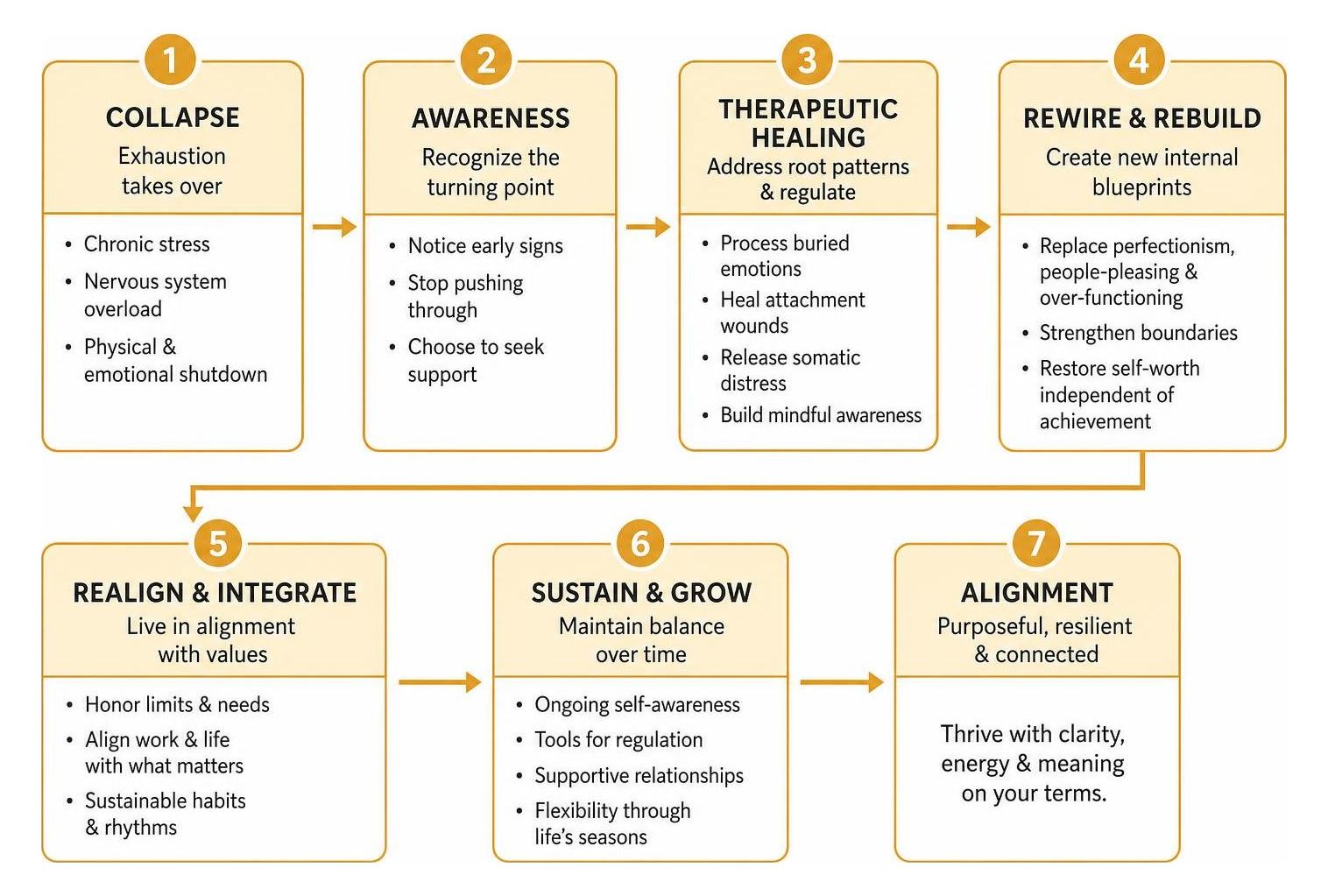
High-Achiever and Executive Burnout Recovery Success Stories
In high-pressure corporate environments, leadership roles often demand unrelenting output. As detailed in From burnout to breakthrough - by Theresa Aristarco, scaling an engineering team while managing 14 direct reports amidst organizational shifts led to a combined collision of physical illness and tech management burnout. Aristarco's eight-month sabbatical demonstrated that over-functioning at work often serves as an unconscious coping mechanism to retain control when internal capacity is draining.
Her recovery incorporated clinical support, community vulnerability, and creative exploration to dismantle the facade of effortless success. When executives allow their nervous systems to exit chronic fight-or-flight mode, they create room to evaluate what truly matters.
| Dimension | Passive Time Off (Vacation / Sick Days) | Active Therapeutic Recovery (Mindfulness & Relational Therapy) |
|---|---|---|
| Primary Focus | Temporary physical cessation of work tasks | Somatic nervous system regulation and emotional processing |
| Identity Dynamic | Maintains attachment to external validation | Decouples personal self-worth from occupational productivity |
| Boundary Work | Hopes demands will lessen upon return | Proactively establishes clear relational thresholds and intentional "yeses" |
| Relapse Risk | High; old cognitive autopilots resume immediately | Low; internal scripts and nervous system baselines are fundamentally rewired |
Lessons from Burnout Recovery Success Stories on Career Pivots
For many, recovery brings clarity that an existing role or environment is incompatible with nervous system health. When individuals ask themselves, "Should I Quit My Job If I'm Burnt Out?", the answer often lies in whether the workplace possesses psychological safety or if fundamental values realignment is necessary.
Take the experience shared in The Exit Interviews: How a Forced Reset Led to a Dream Role in a Tough Job Market, where an overworked corporate professional utilized a structured medical leave to break the cycle of self-sacrifice. Rather than rushing into the next corporate opening, she created intentional evaluation criteria—tracking "Must Haves, Nice to Haves, and Do Not Wants"—to assess potential employers.
Similarly, reflections from professionals in I Burned Out and Quit My Career. It Led Me to a New Way of Thinking. - Business Insider and I lost my job after burnout. It became the fresh start I needed. - B17 News emphasize that career pivots succeed only when internal mindsets shift. Leaving investment banking or disaster relief work creates space, but long-term peace requires retiring perfectionism so old habits do not simply follow you into a new venture.
Somatic Breakdown and Rebuilding Physical Resilience
The body always keeps score. In Burnout: A true story | Apolitical, the author shares how chronic stress triggered cognitive paralysis—her fingers freezing over the keyboard during a simple email—followed by panic attacks and physical collapse. High-intensity workouts initially aggravated her system by spiking cortisol. True healing began when she turned to medical guidance, counseling, mindfulness, and gentle movement like swimming and walking.
This mirrors insights from Burnout Wrecked My Health. I Lost 125 Pounds Getting It Back. - Business Insider and How I recovered from burn-out | Alan AtKisson, where physical stamina was rebuilt incrementally. Learning How to Track Burnout Symptoms empowers you to listen to physiological feedback—viewing fatigue not as a personal defect, but as the body’s natural request for restorative care.
Actionable Steps to Heal and Prevent Burnout Relapse
Recovery is a deliberate practice of nervous system realignment and relational boundary setting. Building a sustainable lifestyle involves concrete daily adjustments:

- Conduct a Boundary and "Shoulds" Audit: Review your weekly schedule and identify obligations rooted in people-pleasing. Rather than struggling with saying "no," focus on making conscious, intentional choices about what you say "yes" to.
- Implement Non-Negotiable Rest Anchors: Protect your baseline sleep hygiene, unhurried meals, and gentle daily movement. Treat calm walks or stillness as necessary physiological maintenance.
- Structure Your Activities with Pacing: Adopt the practice of balancing your daily schedule across three essential buckets:
- Restorative Activities: Time in nature, breathwork, or unhurried silence.
- Necessary Tasks: Everyday logistics managed with self-compassion.
- Pleasurable Moments: Creative expression or connection with loved ones devoid of performance metrics.
- Develop a Proactive Prevention Strategy: Learn How to Create a Burnout Prevention Plan to identify personal stress markers long before reaching a crisis point.
- Engage Experiential and Relational Therapy: Work with an EFT or AEDP practitioner to process underlying anxieties, decouple your self-worth from constant output, and build lasting resilience.
Frequently Asked Questions About Burnout Recovery
How long does it typically take to recover from severe burnout?
Full recovery from nervous system collapse usually requires anywhere from three months to over a year, depending on the duration of chronic stress and the depth of somatic depletion. In our clinical guide on How Long Does It Take to Recover from Burnout? Thoughts from a Seattle Therapist, we discuss how healing unfolds in distinct phases—from initial nervous system stabilization to deep identity integration.
Can you recover from burnout while staying at the same job?
Yes, provided your workplace offers psychological safety and is receptive to structural boundary adjustments. Recovery in the same role requires scaling back non-essential commitments, having honest conversations with leadership, and holding firm internal boundaries without succumbing to over-functioning. However, if an environment remains chronically toxic, transitioning to a healthier team or career path may be essential.
What is the difference between ordinary fatigue and burnout collapse?
Ordinary fatigue is acute tiredness resolved by a weekend of solid sleep or a brief holiday. Burnout involves emotional detachment, chronic cynicism, depersonalization, brain fog, and somatic distress that rest alone does not resolve. When reaching out to specialists, resources such as Find the right burnout therapist in Lake Oswego, OR can help connect you with targeted care.
Conclusion: Rewiring Brain Autopilots for Lasting Balance
Burnout recovery is ultimately an invitation to reclaim your authentic life. When you move beyond the exhausting pressure to prove your worth through relentless productivity, you create space for genuine vitality, emotional presence, and deeper connection with those you love.
At Spark Relational Counseling, led by May Han, we provide specialized virtual individual and couples therapy across Oregon, Washington, and Illinois. Utilizing mindfulness-based relational therapy, EFT, and brainspotting, we help professionals dismantle automatic survival patterns, regulate their nervous systems, and cultivate lasting peace. Whether you are seeking individual support, navigating relationship strain, or exploring dedicated therapy for entrepreneurs, we are here to support your journey toward sustainable well-being.
