Navigate Anxiety Treatment Options in the Rose City
Understanding Common Anxiety Disorders and Warning Signs

Navigating anxiety treatment in Portland, OR involves choosing licensed specialists (such as LMFTs, LPCs, or LCSWs) who utilize relational, somatic, and experiential modalities—like Emotionally Focused Therapy (EFT), AEDP, and Brainspotting—to address the root causes of nervous system hyperarousal. Whether accessing private-pay individual therapy, sliding-scale clinics, or flexible virtual care across Oregon, finding the right fit begins with identifying how anxiety presents in your daily life.
Anxiety is an adaptive survival response that occasionally miscalibrates. According to ADAA anxiety disorder research, anxiety disorders represent the most common mental health concern, occurring when the nervous system stays locked in chronic fight-or-flight. In our clinical work across Portland, we observe anxiety taking several distinct shapes, each requiring a tailored, relational approach to care.
Generalized Anxiety Disorder (GAD) involves pervasive, uncontrollable worry about daily events, health, finances, or family safety. Panic Disorder manifests as sudden, intense surges of terror accompanied by heart palpitations, shortness of breath, and dizziness. Social Anxiety Disorder creates an overwhelming fear of judgment or rejection in interpersonal settings, often leading to isolation. Specific Phobias trigger acute distress around distinct triggers, from enclosed spaces to medical procedures.
Many individuals also experience overlapping conditions. For example, high functioning depression frequently coexists with chronic anxiety; individuals maintain demanding careers and social facades while silently managing deep emotional depletion and internal panic.
| Anxiety Type | Primary Emotional Experience | Common Somatic Triggers | Relational & Daily Impact |
|---|---|---|---|
| Generalized Anxiety (GAD) | Chronic apprehension, persistent "what-if" loops | Muscle tension, GI distress, insomnia | Difficulty staying present, chronic fatigue, hyper-control |
| Panic Disorder | Sudden terror, fear of losing control or dying | Tachycardia, chest tightness, dizziness | Avoidance of crowded or unfamiliar transit routes |
| Social Anxiety | Fear of scrutiny, embarrassment, or inadequacy | Blushing, dry mouth, trembling, sweating | Career stagnation, difficulty forming intimate bonds |
| Co-occurring Burnout/Depression | Cynicism, dread, feeling perpetually behind | Physical exhaustion, heavy limbs, brain fog | Emotional withdrawal from partners, emotional numbing |
Understanding where your symptoms fall on this spectrum allows us to design interventions that address the root causes rather than simply managing surface-level distress.
Recognizing When to Seek Professional Support
It is entirely natural to feel nervous before a significant life transition or professional presentation. However, clinical anxiety creates persistent disruption rather than temporary unease. If you notice persistent sleep disruption, muscle tightness, digestive issues, or chronic irritability that strains your personal connections, professional care can provide substantial relief. Reviewing an anxiety disorders treatment complete guide can help clarify the difference between situational stress and conditions requiring structured clinical interventions.
Navigating Evidence-Based Modalities for Anxiety Treatment Portland OR
Effective anxiety care moves beyond passive venting to actively rewire autonomic responses. At Spark Relational Counseling, founder May Han and our clinical team emphasize deep, experiential modalities that help clients unhook from negative brain autopilots and cultivate long-term internal calm.
Rather than relying on rigid protocols, we find that deep nervous system healing occurs through relational and somatic frameworks:
- Emotionally Focused Therapy (EFT): Anxiety often reflects unmet attachment needs or relational insecurities. EFT helps individuals and couples identify underlying fears, process primary emotions, and develop secure internal and interpersonal attachments.
- Accelerated Experiential Dynamic Psychotherapy (AEDP): This approach focuses on processing difficult emotional experiences in real time within a safe, collaborative therapeutic relationship, unlocking inherent resilience.
- Brainspotting: By utilizing specific visual focal points, brainspotting accesses deep subcortical brain regions where traumatic stress and somatic anxiety are held, facilitating neurological reprocessing without requiring extensive verbal recounting.
- Experiential Therapy: Through focused role-play, expressive techniques, and guided somatic exploration, experiential methods allow you to confront internal conflicts directly rather than remaining stuck in intellectualized worry loops.
Integrative and Nature-Based Approaches in Anxiety Treatment Portland OR
Portland’s unique environment offers a natural setting for nervous system restoration. Integrative care often bridges the clinical space with somatic grounding and nature-informed mindfulness practices.
Mindfulness helps you identify emotional thresholds before overwhelm sets in, giving you the clarity needed to set manageable boundaries at work and in relationships. Techniques like sensory anchoring along local greenways or intentional breathing exercises help rebalance the sympathetic ("fight-or-flight") and parasympathetic ("rest-and-digest") nervous systems, reinforcing the work done during clinical sessions.
Medication Management and Collaborative Care
Therapy provides essential tools for psychological reorganization, but severe physiological anxiety can sometimes impede a client's ability to engage fully in sessions. In such instances, coordinating with a psychiatric provider or primary care physician for short-term or maintenance medication (such as SSRIs or SNRIs) can help establish a manageable baseline.
This integrated approach is particularly valuable when anxiety overlaps with chronic exhaustion. When work pressures overwhelm your coping resources, exploring focused therapy for burnout alongside medical collaboration ensures comprehensive emotional and biological support.
How to Find and Choose the Right Anxiety Specialist
Selecting a provider requires finding a licensed clinician whose therapeutic approach matches your personal values and relational needs. In Oregon, licensed professionals typically hold credentials such as Licensed Marriage and Family Therapists (LMFT), Licensed Professional Counselors (LPC), or Licensed Clinical Social Workers (LCSW).
When seeking care, consider whether in-person sessions in areas like Northwest Portland or virtual sessions across Oregon best accommodate your lifestyle. Engaging in online therapy offers exceptional flexibility, allowing you to process vulnerable emotions from the comfort of your home while eliminating commute-related stress.
To explore the essential questions you should ask prospective clinicians regarding their modalities, values, and relational focus, read our guide on how choose right therapist.
Accessing Affordable and Sliding-Scale Services in Portland
Financial considerations should never be an insurmountable barrier to quality mental health support. Portland offers various sliding-scale options through community training clinics and private practitioners dedicated to economic accessibility.
When evaluating your financial options, it is important to consider the differences between in-network insurance and private-pay care:
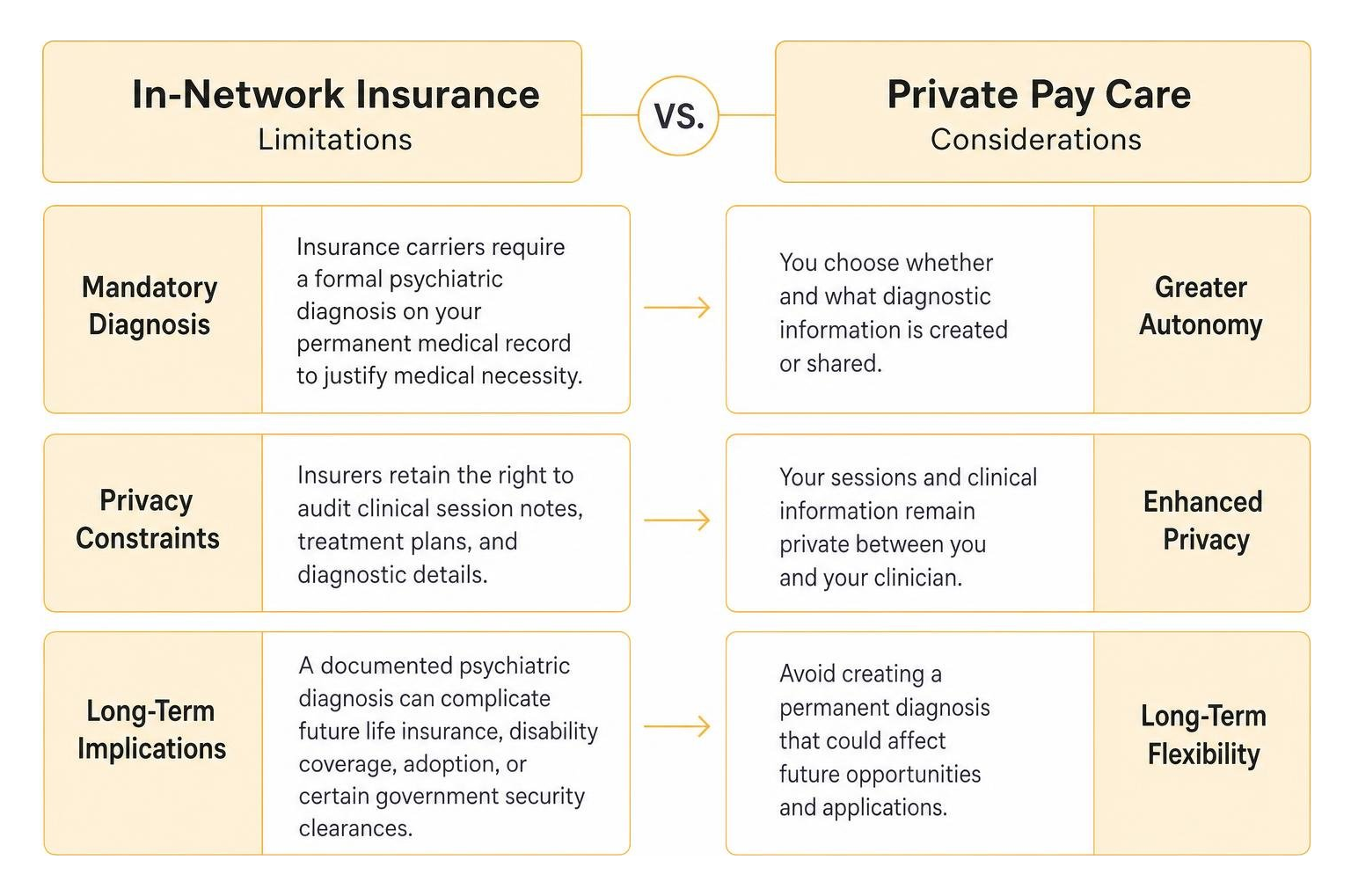
While in-network insurance provides clear immediate financial relief through set copays, it comes with notable structural constraints:
- Mandatory Diagnosis: Insurance carriers require a formal psychiatric diagnosis on your permanent medical record to justify medical necessity.
- Privacy Constraints: Insurers retain the right to audit clinical session notes, treatment plans, and diagnostic details.
- Long-Term Implications: A documented psychiatric diagnosis can sometimes complicate future life insurance policies, disability coverage applications, certain adoption processes, or specialized government security clearances.
Private-pay and out-of-network models protect your complete clinical privacy, allow you and your therapist to dictate the pace and length of treatment without arbitrary session limits, and avoid unnecessary diagnostic labels. Many providers offer itemized superbills, enabling you to seek direct out-of-network reimbursement from your insurer if you choose. For a broader overview of local care options, our resource on Portland OR therapy provides helpful navigation steps.
Steps in the Therapeutic Process and Long-Term Healing
Beginning treatment is a courageous step toward lasting self-understanding. Knowing what to expect at each stage helps demystify the experience and reduces anticipatory anxiety.

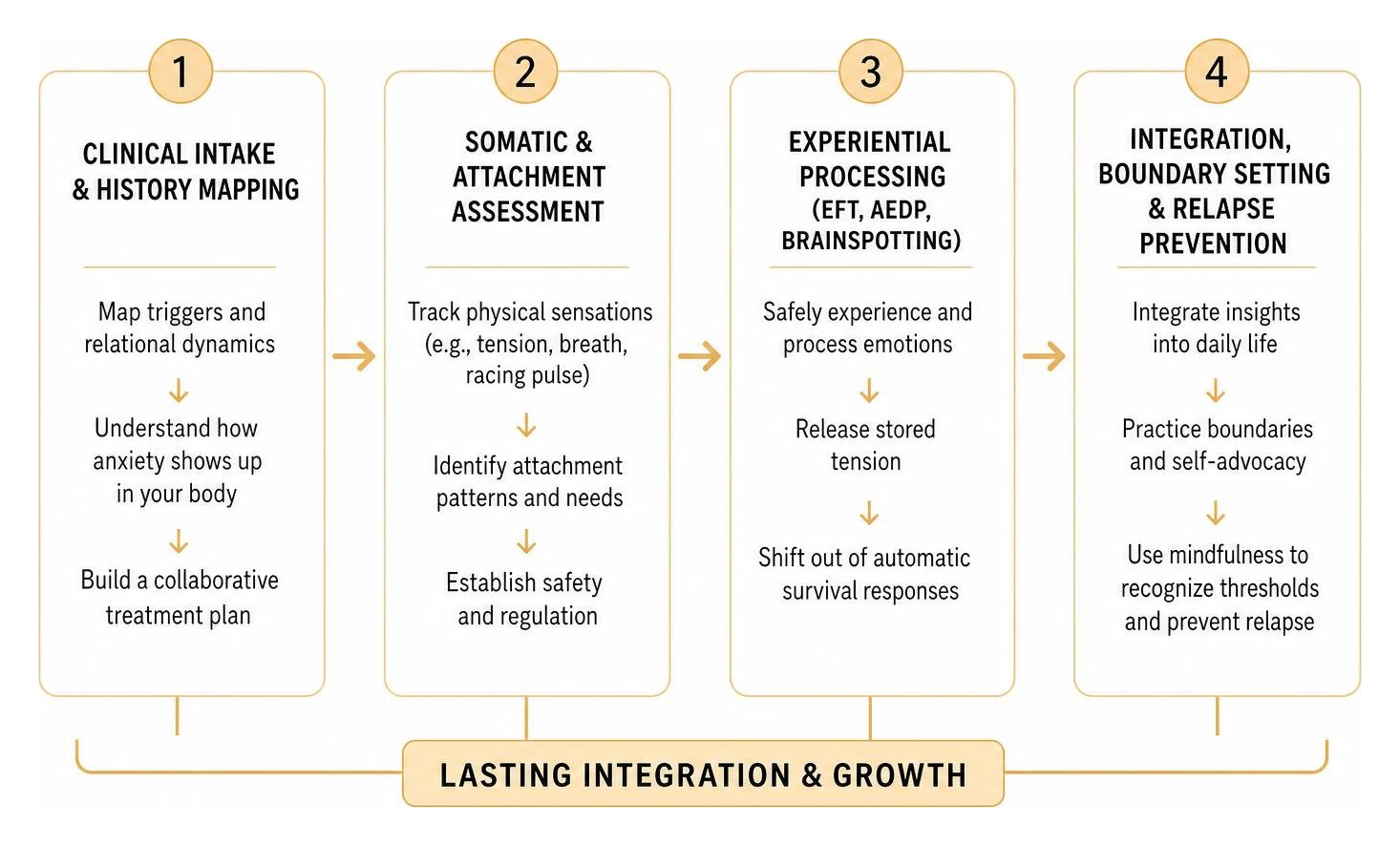
If you are wondering how to start therapy, the journey typically follows a collaborative progression:
What to Expect During Anxiety Treatment Portland OR
During early sessions, we map out the specific triggers and relational dynamics that fuel your stress responses. Rather than intellectualizing your feelings, we gently track how anxiety lives in your body—noticing tight shoulders, shallow breathing, or a racing pulse.
Using experiential techniques, AEDP, and brainspotting, sessions focus on safely encountering these physical sensations, releasing stored tension, and shifting out of automatic survival responses. Between sessions, you will practice using mindfulness to notice when you are nearing an emotional threshold, allowing you to set gentle, firm boundaries before becoming overwhelmed.
Improvement Timelines and Support Systems
Healing is an iterative, relational process rather than a rigid linear timeline. Most clients begin experiencing meaningful physiological stabilization and increased clarity within 8 to 16 weeks of consistent therapy.
- Weeks 1–4: Initial symptom relief, establishment of emotional safety, and identification of automatic anxiety patterns.
- Weeks 5–10: Deep experiential processing, nervous system retraining, and shifting underlying attachment insecurities.
- Weeks 11–16+: Consolidation of healthy boundaries, enhanced relational communication, and proactive relapse prevention.
Family and partners play an essential role during this process. Loved ones can support recovery by offering grounded, non-judgmental listening, respecting newly established boundaries, and avoiding the urge to solve or minimize uncomfortable emotions. For a deeper look at creating an enduring support network, explore therapy Portland Oregon: a guide to navigating and finding support.
Frequently Asked Questions About Anxiety Care in Portland
What is the average cost of an anxiety therapy session in Portland?
In the Portland metropolitan area, standard private-pay rates for an individual therapy session typically range from $150 to $250. Many practices offer sliding-scale fees based on household income or provide superbills for out-of-network insurance reimbursement.
How long does it take to experience relief from anxiety symptoms?
Many individuals experience initial relief within the first 3 to 6 sessions as they develop immediate somatic grounding tools and feel heard in a supportive environment. Deeper, long-lasting transformation—such as breaking lifelong emotional patterns and remodeling attachment styles—typically unfolds over several months of dedicated weekly care.
Is online therapy as effective as in-person anxiety treatment?
Yes. Clinical research consistently demonstrates that virtual therapy is just as effective as in-person sessions for anxiety disorders. Telehealth eliminates stressful commutes and allows you to integrate emotional regulation techniques directly into the environment where your everyday stressors occur.
Conclusion
Living with unmanaged anxiety can leave you feeling isolated, exhausted, and disconnected from the people who matter most. Yet anxiety is not an unchangeable trait—it is a signal from your nervous system asking for attention, understanding, and care. By combining mindfulness, emotionally focused processing, and experiential techniques, you can step out of exhausting survival loops and reclaim a life grounded in clarity, presence, and ease.
At Spark Relational Counseling, May Han and our dedicated team walk alongside individuals and couples throughout Oregon, Washington, and Illinois as they rediscover their emotional balance. Reach out today to explore our specialized anxiety treatment and take your next step toward sustainable peace.