
Smiling on the Outside: What Therapy Actually Helps High-Functioning Depression
The Hidden Anatomy of High-Functioning Depression

Therapy transforms high-functioning depression by moving beyond intellectual insight into direct, felt emotional experience. Experiential and relational approaches such as Emotion-Focused Therapy, AEDP, and Brainspotting help high achievers access the somatic and emotional layers beneath their polished exterior, gently dismantling the perfectionism that keeps them over-functioning while their internal reward system remains blunted. This work does not require you to stop achieving; it helps you reconnect with genuine pleasure, self-trust, and emotional presence.
You know how to get things done. You hit your deadlines, answer every email, show up for your friends, and manage demanding schedules across Seattle, Portland, or Chicago without missing a beat. Yet, when you close your front door at the end of the day, an overwhelming emptiness settles into the room. You wonder: can you be depressed and be highly functional?
The answer lies deep in your neurobiology. In high-functioning depression—clinically recognized often as persistent depressive disorder or dysthymia—the brain develops a stark division of labor. The executive control center in your prefrontal cortex remains fully operational, enabling you to plan, organize, and execute complex professional and personal tasks. At the exact same time, the ventral striatum, the core hub of your brain's reward system, experiences blunted output.
This neurobiological imbalance creates anhedonia: the inability to feel pleasure or satisfaction from activities that typically generate joy. You can complete a massive project or attend a celebratory dinner, but your brain registers no internal reward signal. Performance continues because your sense of obligation remains intact, but life feels drained of color. Recognizing the signs of high-functioning depression starts with understanding this profound internal-external disconnect.
| Feature | Classic Major Depressive Disorder | High-Functioning Depression (PDD / Dysthymia) |
|---|---|---|
| Outward Functioning | Significant executive impairment, missed work, visible withdrawal | High productivity, intact career, active social masking |
| Internal Experience | Overt despair, vegetative symptoms, acute distress | Chronic emotional numbness, persistent fatigue, internal void |
| Brain Circuitry | Disrupted prefrontal and striatal activity | Intact prefrontal executive network with blunted ventral striatum reward |
| Clinical Presentation | Acute episodes, readily spotted in screening tools | Low-grade, chronic course (2+ years), frequently concealed |
| Coping Style | Behavioral shutdown and isolation | Over-functioning, hyper-productivity, and social perfectionism |
Why Clinical Assessments Miss Hidden Depression in High Achievers
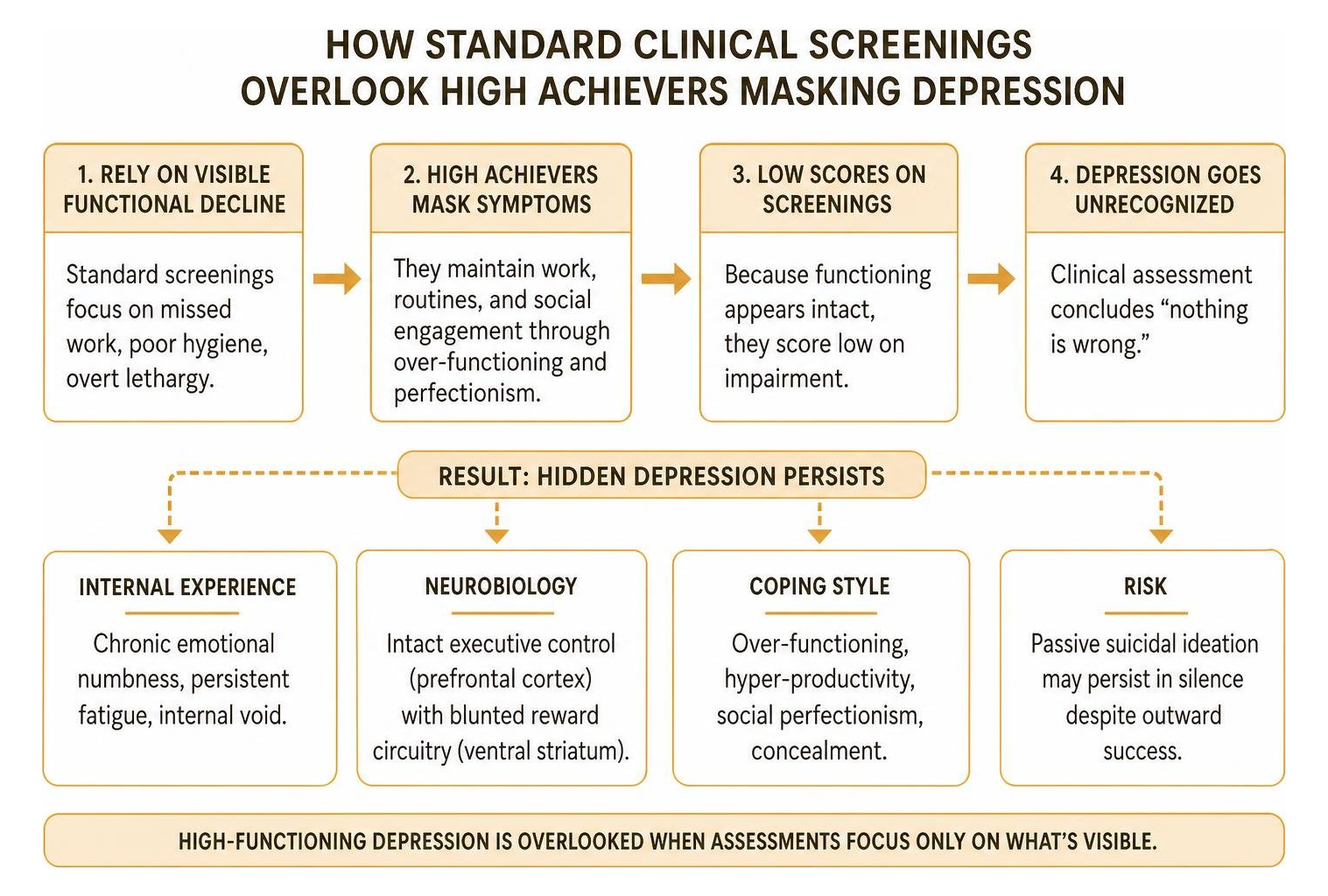
Standard clinical diagnostic tools frequently fail high achievers. Many standard questionnaires rely heavily on visible functional decline—such as missed days at work, poor hygiene, or overt lethargy—to gauge symptom severity. When a high-performing professional scores low on functional impairment because they continue to lead meetings and maintain family routines, standard medical visits often conclude that nothing is wrong.
This creates a dangerous blind spot. To truly understand dysthymia in high achievers, we must look beneath the veneer of daily productivity. In our culture, over-functioning is praised as dedication or grit rather than recognized as a protective emotional defense.
Research shows that about 9% of the general population experiences suicidal ideation at some point, and in people living with chronic depressive conditions, that rate climbs significantly higher. In high-functioning individuals, this ideation is often passive—a quiet, background whisper of wishing to simply disappear or not wake up, even while packing lunches or preparing quarterly presentations. Fortunately, clinical research also confirms that having even one meaningful protective factor—such as a beloved pet or a single trusted connection—can provide the anchor someone needs to choose life while doing the deep work of healing.
The Perfectionism-Concealment Loop
How does this chronic state sustain itself year after year? It is maintained through a powerful, self-reinforcing dynamic known as the perfectionism-concealment loop.
When your brain is starved of spontaneous pleasure due to reward-circuitry blunting, external validation becomes one of the few remaining ways to feel a brief spark of worth. You learn to rely on socially prescribed perfectionism—the belief that acceptance depends entirely on meeting impossibly high standards.
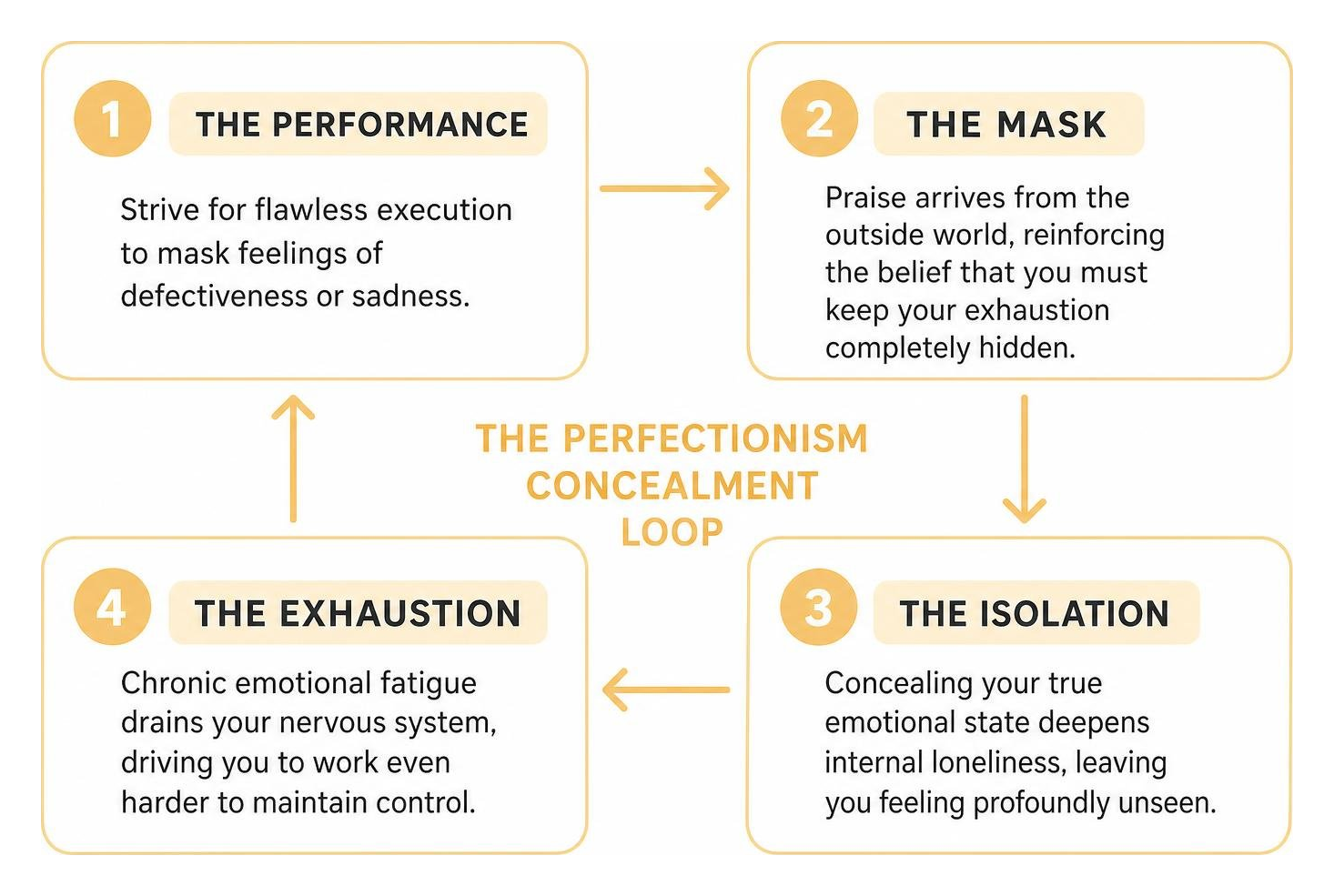
This creates a painful cycle:
- The Performance: You strive for flawless execution to mask feelings of defectiveness or sadness.
- The Mask: Praise arrives from the outside world, reinforcing the belief that you must keep your exhaustion completely hidden.
- The Isolation: Concealing your true emotional state deepens internal loneliness, leaving you feeling profoundly unseen.
- The Exhaustion: Chronic emotional fatigue drains your nervous system, driving you to work even harder to maintain control.
Breaking this loop requires understanding why high achievers avoid therapy in the first place: the terrifying fear that slowing down will cause the entire structure of their life to collapse.
How Therapy Transforms High-Functioning Depression
True transformation does not come from simply analyzing your thoughts on paper. High-functioning individuals are already experts at intellectualizing their emotions. Instead, lasting neurobiological and emotional recovery happens when therapy engages your direct, felt experience in a safe, relational space. Exploring how achievers overcome hidden depression reveals that therapy must help you move out of your head and into your body.
At Spark Relational Counseling, founder May Han and our clinical team use mindfulness-based relational modalities—including Emotion-Focused Therapy (EFT), Accelerated Experiential Dynamic Psychotherapy (AEDP), Experiential therapy, and Brainspotting. Rather than treating you like a problem to solve, these experiential therapies help you locate where emotional numbness and unprocessed grief are held in the nervous system. By gently leaning into somatic awareness, we can access the underlying neural pathways where chronic over-functioning began.
Personal narratives, like those found in What High-Functioning Depression Actually Feels Like | Medium, remind us that real healing begins when we stop curating an image of wellness and start experiencing our actual feelings without judgment.
How Therapy Transforms High-Functioning Depression by Dismantling Perfectionism
In experiential therapy, we do not simply discuss perfectionism; we actively experiment with dismantling it in real time. We help clients conduct intentional imperfection assignments. This might mean intentionally sending a brief email with a minor omission, showing up five minutes late to a non-critical engagement, or allowing a domestic task to sit undone for an evening.
Clients often experience what therapists call "doorknob disclosures"—sharing their deepest, most vulnerable pain only in the final moments of a session because their perfectionist armor feels too heavy to drop earlier. When a therapist receives these moments with deep attunement and safety, the brain learns that connection does not require performance. You learn that your actions have direct emotional impact and that you are allowed to take up space simply as you are.
The Five V's Framework for Reclaiming Joy
To rebuild a life rich in genuine reward, we frequently utilize structured, somatic-friendly frameworks like Dr. Judith Joseph's Five V's. This model offers clear markers to help you reconnect with vitality:

- Validation: Acknowledging your internal pain without dismissing it because your life looks "good on paper." You validate the exhaustion before trying to fix it.
- Venting: Releasing suppressed emotional energy through somatic processing, expressive journaling, or safe relational conversations rather than holding it internally.
- Values: Distinguishing your authentic, soul-level desires from socially conditioned expectations. We identify what truly matters to you versus what simply earns applause.
- Vitals: Tending to physical fundamentals—restorative sleep, nourishing meals, movement, and screen boundaries—that directly sustain nervous system balance.
- Vision: Cultivating small, forward-looking moments of pleasure. We track daily "joy points"—such as savoring morning tea or feeling warm sunlight—to gently coax your brain's reward centers back to life.
From 'Human Doing' to 'Human Being': How Therapy Transforms High-Functioning Depression for Joy and Relationships
When over-functioning is your primary coping strategy, your identity becomes fused with your output. You become a "human doing." In therapy, we work to shift your center of gravity toward becoming a "human being."
This transformation has profound effects on your relationships. Masking depression creates an invisible wall between you and the people who love you. They may sense your emotional distance but cannot name why you seem unreachable. Through EFT and experiential work, you learn to express emotional needs without fear of being a burden.
Mindfulness practices play a central role here. We teach you to recognize your subtle emotional thresholds—the slight tightness in your chest or jaw that signals you are nearing capacity—and practice setting manageable boundaries. Stepping into authentic presence is often the foundation of therapy for burnout, helping you preserve your vitality for the relationships and experiences that nourish you most.
Supporting Long-Term Neurobiological Recovery Through Therapy
Healing chronic depression is an organic, neurobiological process that requires time, patience, and consistency. In conditions like persistent depressive disorder, the brain has spent years adapted to chronic stress and emotional dampening. Research demonstrates that therapeutic continuity, often supported by medical interventions when appropriate, produces measurable neuroplastic change.

Sustained therapeutic work supports neurogenesis—the growth of new neural pathways—and helps reverse the hippocampal volume reduction associated with long-term depressive stress. Because chronic depression alters baseline neurobiology, meaningful evaluation of therapeutic shifts typically requires a window of ten to twelve weeks of consistent care.
When navigating treatment options, many people explore whether to use insurance benefits. While utilizing in-network insurance can offer immediate financial assistance, it is equally important to understand its constraints. Using insurance mandates a formal psychiatric diagnosis that becomes part of your permanent medical record. This documentation can carry unforeseen implications for future private disability coverage, life insurance underwriting, certain types of employment security clearances, or international adoption processes. Investing in private, confidential therapy protects your medical privacy while offering tailored care unconstrained by third-party diagnostic requirements.
Frequently Asked Questions About High-Functioning Depression Therapy
How long does therapy take to show results for high-functioning depression?
Because high-functioning depression often develops over several years, neurobiological recovery is a gradual process. While clients frequently feel an initial sense of relief within the first few sessions simply by taking off their emotional mask, meaningful shifts in baseline mood and reward response typically require consistent care over three to six months. Ten to twelve weeks is generally the timeframe needed to observe tangible changes in how you respond to stress, set boundaries, and experience authentic joy.
How do I know if I need therapy if my life looks successful on paper?
If you find yourself constantly asking, "how do I know if I have high-functioning depression?", that internal questioning is itself an important indicator. You do not need to wait for your career or relationships to deteriorate before seeking support. If you feel chronic detachment, persistent emotional exhaustion, pervasive self-criticism, or a sense that you are merely going through the motions, therapy can help you align your internal reality with your external life.
Can online therapy effectively address chronic, hidden depression?
Yes. Evidence-based virtual care is remarkably effective for high achievers. Through secure online therapy, you can engage in deep relational and experiential work from the comfort and privacy of your home or office across Oregon, Washington, and Illinois. Virtual sessions eliminate travel stress and allow you to integrate therapeutic insights directly into the physical environment where your daily life happens.
Conclusion: Breaking the Cycle of Silent Suffering
High-functioning depression thrives in secrecy. It tells you that as long as your calendar is full and your achievements are visible, your pain does not count. But enduring silent exhaustion is not a requirement for success.
At Spark Relational Counseling, May Han and our compassionate team believe your emotional life deserves the same care, attention, and investment that you dedicate to your external responsibilities. Through mindfulness-based relational therapy, we help clients across Portland, Seattle, Chicago, and surrounding communities counter negative brain autopilots, soften perfectionism, and rediscover lasting, authentic joy.
You do not have to carry everything alone. Learn more about our specialized approach to healing High-Functioning Depression and take your first step toward true relief today.