The Creative Cure for Burnout
Beyond Exhaustion: Why Rest Alone Cannot Cure Burnout

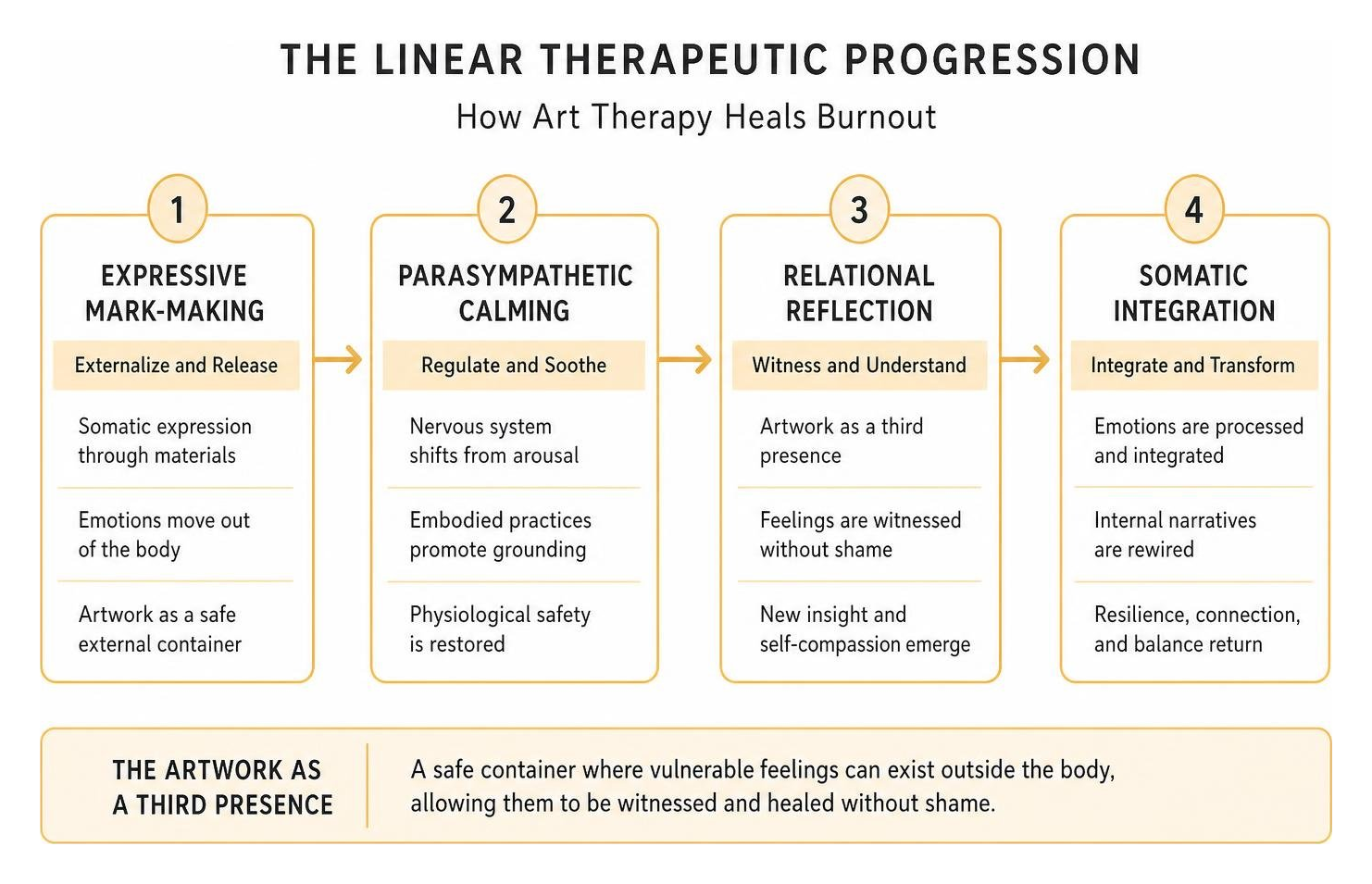
Art therapy heals burnout by engaging non-verbal, somatic processing that down-regulates the sympathetic nervous system, reduces circulating cortisol, and helps the body release stored stress that passive rest cannot reach. Through tactile creative expression within a safe therapeutic relationship, the nervous system shifts out of chronic fight, flight, or freeze states and begins restoring emotional regulation, curiosity, and a felt sense of agency.
You wake up on a Saturday morning after ten hours of sleep, yet the weight in your chest remains completely unchanged. You stare at your coffee cup, feeling a strange numbness where your natural drive, passion, and curiosity used to live. When you open your laptop, even a simple email feels like moving a boulder uphill.
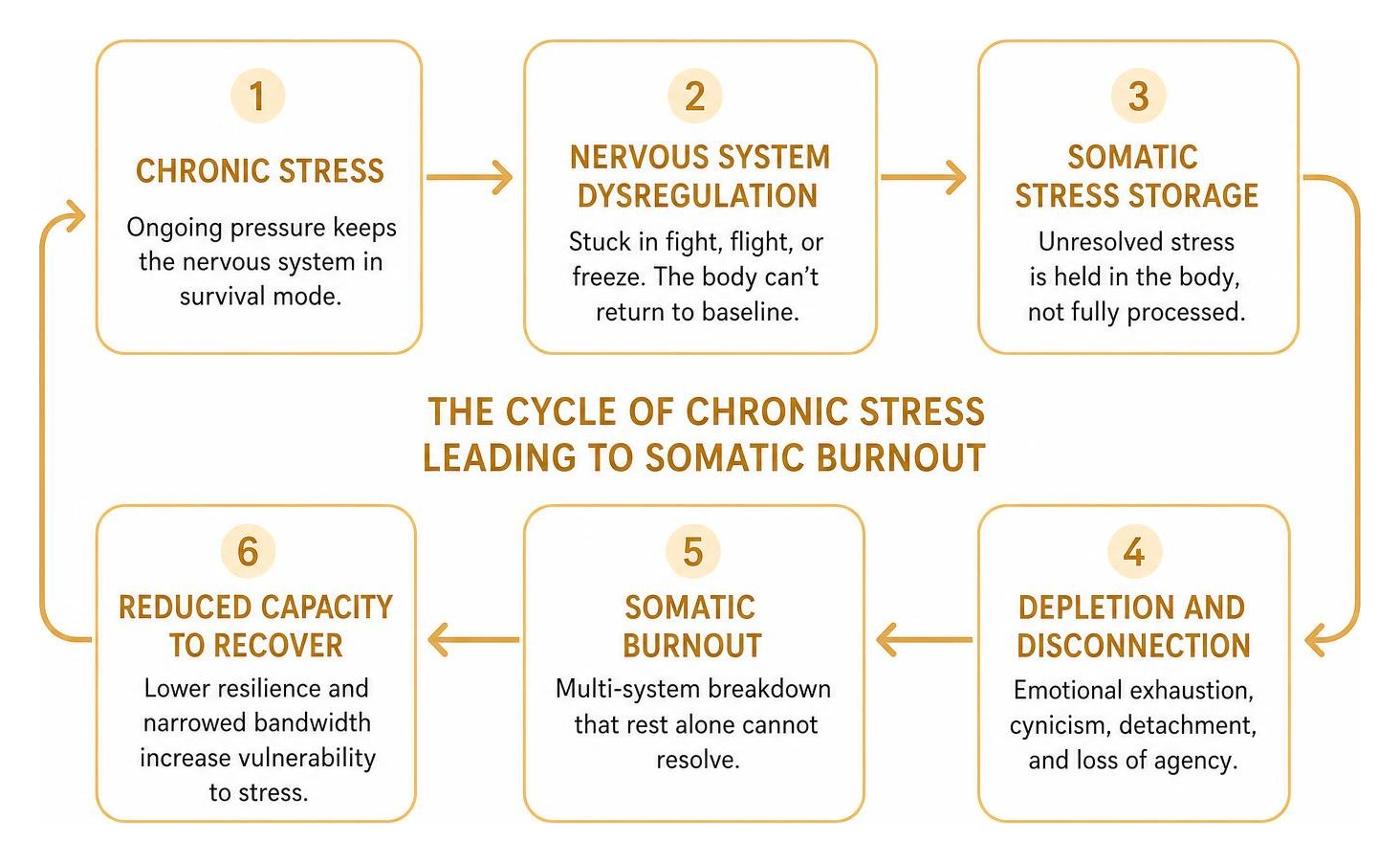
Recent research indicates that roughly 75% of people experience burnout, demonstrating that this crisis extends far beyond simple fatigue. Burnout represents a multi-system breakdown characterized by profound emotional exhaustion, cynicism, detachment, and an alarming loss of agency. When your nervous system remains trapped in continuous survival modes—fight, flight, or freeze—the body stores unresolved stress somatically.
Understanding this dynamic begins with recognizing early signs of burnout before chronic dysregulation takes root. Burnout does not simply tire our muscles; it hijacks our neurobiology, depleting our emotional bandwidth and dimming our spark.
The Limits of Passive Recovery and Cognitive Overload
Why doesn't a weekend on the couch resolve chronic depletion? Passive rest—such as sleeping in, watching television, or scrolling through a phone—often acts like a mild pain reliever: it temporarily masks the discomfort without repairing the underlying tissue. When you sit passively, your brain's Default Mode Network (DMN) frequently remains overactive, replaying interpersonal tensions, workplace crises, and self-critical narratives.
True recovery requires intentional down-regulation of the sympathetic nervous system and experiential reconnection with our core self. When considering how long it takes to recover from burnout, we must recognize that purely cognitive approaches can sometimes hit a wall. When our intellect is exhausted, analyzing our exhaustion only deepens cognitive fatigue. Experiential modalities—such as Emotion-Focused Therapy (EFT), Accelerated Experiential Dynamic Psychotherapy (AEDP), and Brainspotting—reach the somatic holding patterns that analytical thinking alone cannot touch.
The Purposelessness Paradox: Why Creating 'Bad' Art Restores Curiosity
Modern professional culture trains us to optimize every single minute for measurable outcomes, monetary value, or external applause. Burnout is often the direct consequence of turning ourselves into relentless output machines.
Here lies what we call the purposelessness paradox: intentionally making unstructured, non-aesthetic, or frankly "bad" art is profoundly restorative precisely because it carries zero performance stakes. When you smear ochre paint across paper with no intention of displaying it, your ego-driven self-monitoring centers power down.
As psychologist Mihaly Csikszentmihalyi documented in his foundational work on flow, deep creative immersion shifts us out of threat-based hypervigilance and into an open state of play. By eliminating expectations of polished output, we invite genuine curiosity back into our lives, reconnecting to the vibrant inner self that chronic overwork suppressed.
The Science and Clinical Evidence: How Art Therapy Heals Burnout
Art therapy is not merely an intuitive wellness concept; it is an evidence-based clinical modality that creates measurable physiological shifts. By integrating creative expression into a safe, attuned therapeutic alliance, individuals can externalize complex, non-verbal emotional pain.
Neurological Mechanisms: How Art Therapy Heals Burnout and Regulates Stress
When engaging with physical art materials, your physiology responds in real time. Visual art-making stimulates bilateral brain activation, bridging the intuitive, sensory right hemisphere with the narrative, meaning-making left hemisphere.
- Cortisol Reduction: Engaging in tactile art production triggers the parasympathetic nervous system, significantly decreasing circulating stress hormones.
- Neurochemical Rebalancing: Rhythmic, sensory creation stimulates the release of dopamine, serotonin, and endorphins, elevating mood and restoring reward pathways.
- Neuroplasticity & Somatic Processing: By accessing deep subcortical processing areas—similar to the targets of Brainspotting—creative expression gently moves trapped somatic energy through the body without triggering overwhelming cognitive defenses.
- Mindful Threshold Awareness: By learning practical mindfulness tips for burnout, you learn to listen to bodily cues, noticing when your nervous system reaches its emotional ceiling and honoring your internal boundaries.
Key Clinical Trials and Evidence Across Healthcare Professionals
Recent clinical research demonstrates the profound efficacy of art therapy across high-stress disciplines.
A randomized controlled trial investigating healthcare professionals across acute NHS hospital trusts revealed that six weekly group art therapy sessions produced an adjusted mean difference reduction of 4.8 points in emotional exhaustion scores (95% CI 2.4 to 7.3; p<0.001) compared to waitlist controls. The RCT on art therapy in acute hospitals demonstrated that these therapeutic gains were sustained at a 3-month follow-up. Furthermore, 98% of participants rated the sessions as helpful, and 100% recommended the intervention to their peers.
These findings are corroborated by a broader systematic review on art therapy for healthcare workers encompassing 27 studies across 13 countries. The review demonstrated medium-to-large effect sizes for reducing emotional exhaustion, work-related stress, and psychological distress. Notably, nurses comprised 59% of the 1,580 participants studied, underscoring the therapy's power for frontline caregivers. A parallel London medics burnout pilot similarly revealed that art therapy effectively cut burnout risk by half, highlighting how non-verbal interventions restore those who carry immense caregiving burdens.
Therapeutic Art vs. Casual Art-Making: Key Differences
While picking up a paintbrush at home brings genuine calm, clinical art therapy involves specific relational dynamics, containment, and psychological processing led by a qualified mental health clinician.
| Feature | Casual Art-Making / Crafting | Clinical Art Therapy |
|---|---|---|
| Primary Focus | Aesthetic output, skill acquisition, or hobby relaxation | Psychological containment, somatic release, and self-discovery |
| Facilitation | Self-directed, instructor-led class, or social gathering | Licensed mental health professional trained in creative modalities |
| Emotional Safety | May inadvertently trigger difficult feelings without containment | Structured relational safety; emotions are safely processed and integrated |
| Technique Integration | Focuses on formal technique, rules, or crafting templates | Draws on EFT, AEDP, and experiential processing to rewire internal narratives |
| Goal | Creating an attractive decorative piece or passing time | Restoring nervous system equilibrium, building insight, and healing burnout |
Within an experiential framework, the artwork serves as a third presence in the consulting room—a safe container where vulnerable feelings can exist outside the body, allowing them to be witnessed and healed without shame.
Step-by-Step Guide: How Art Therapy Heals Burnout for Non-Artists

You do not need an artistic background to benefit from expressive art. The therapeutic value resides entirely in the process, not the final visual product.
Practical Exercises: How Art Therapy Heals Burnout for Non-Artists
Here are five accessible, experiential exercises designed to soothe nervous system hyperarousal and release emotional exhaustion:
- Somatic Scribble and Release: Take a piece of charcoal or a soft pastel. Close your eyes, take three deep diaphragmatic breaths, locate the physical tightness in your body, and allow your hand to make heavy, chaotic scribbles across the page. Let the physical movement drain the somatic pressure from your shoulders.
- Wet-on-Wet Watercolor Bleeds: Thoroughly dampen a heavy sheet of paper with clean water. Drop concentrated dots of liquid amber, deep indigo, or warm yellow paint onto the wet surface. Watch the colors bloom, spread, and merge without attempting to control their path—an embodied practice in letting go of rigid perfectionism.
- Neurographic Grounding Lines: Using a smooth marker, slowly draw organic, flowing lines from one edge of the paper to the other. Wherever lines intersect, gently round out the sharp corners with your pen, softening hard edges into fluid transitions to promote parasympathetic regulation.
- Guided Earth-Clay Molding: Warm a piece of natural terracotta or modeling clay in your palms. Knead, tear, flatten, and reshape the clay with your fingers without trying to build a specific object. Focus entirely on the grounding tactile sensation of weight, resistance, and malleability.
- Zero-Expectation Visual Journaling: Spend 10 minutes collaging torn textured paper, fabric scraps, or abstract washes of color that reflect your internal emotional climate. Leave the page untitled and unanalyzed; simply close the journal when finished.
Group Art Therapy: Overcoming Isolation in High-Stress Careers
Burnout thrives in isolation. When professionals experience chronic depletion, they often withdraw, carrying an unspoken belief that they alone are failing to manage their workload.
Group art therapy disrupts this isolation. In a clinical group setting, participants create alongside peers, externalizing their shared vulnerability on paper. Witnessing colleagues express similar grief, fatigue, and humanity normalizes the emotional toll of demanding environments. The process dismantles professional perfectionism, replaces vicarious exhaustion with mutual validation, and rebuilds the empathetic bonds essential for true resilience.
Integrating Expressive Arts into Workplace Wellness and Personal Care
For systemic healing to take root, expressive modalities must move from occasional emergency interventions into ongoing wellness architecture. Organizations can introduce structured creative debriefs led by licensed therapists, allowing teams to externalize high-stakes stress in a safe, non-punitive environment.
On a personal level, pairing creative expression with a thoughtful burnout prevention plan safeguards your emotional reserves. Dedicating brief, non-goal-oriented intervals throughout the week creates essential buffer zones against cognitive overload.
When self-guided practices are not enough, turning to structured therapy for burnout offers a guided pathway to identify root causes and reorganize your relationship with work and self-worth.
Research Limitations and Future Directions
While existing randomized controlled trials demonstrate strong efficacy, the literature surrounding art therapy continues to evolve:
- Long-Term Longitudinal Tracking: Most current studies track outcomes up to 3 to 6 months post-intervention; longer-term multi-year studies are needed to measure lasting resilience.
- Demographic Representation: The majority of existing healthcare-focused research features cohorts heavily weighted toward nursing and acute hospital staff; wider trials across corporate, educational, and tech sectors will enrich generalizability.
- Virtual Modality Efficacy: As telehealth platforms expand across regions like Washington, Oregon, and Illinois, deeper research will clarify how digital art therapy formats compare with in-person tactile sessions.
Frequently Asked Questions about Art Therapy and Burnout Recovery
Do I need artistic talent to benefit from art therapy?
No. Art therapy focuses entirely on internal emotional processing, somatic release, and self-expression rather than artistic technique or final aesthetics. In fact, having no background in art often makes the experience more freeing, as you have fewer performance expectations or technical habits to unlearn.
How quickly can art therapy reduce burnout symptoms?
Many individuals experience an immediate shift in physiological arousal during their very first session, noticing lowered heart rates, relaxed muscle tension, and mental spaciousness. Significant, lasting reductions in emotional exhaustion and depersonalization typically emerge over a structured course of six to eight clinical sessions.
What is the difference between art therapy and adult coloring books?
Adult coloring books offer structured, passive distraction that can temporarily soothe an overstimulated mind. In contrast, clinical art therapy is an active, open-ended psychotherapeutic process facilitated by a licensed clinician. It uncovers underlying subconscious narratives, releases stored somatic stress, and integrates deep emotional material through personalized creative exploration.
Conclusion
Burnout is not a personal failure or an irreparable deficit of willpower; it is your nervous system's way of signaling that your current rhythm of output, self-pressure, and emotional suppression is no longer sustainable. While passive rest offers brief relief, true recovery calls for an experiential return to curiosity, emotional expression, and embodied presence.
By bypassing the hyper-analytical mind, expressive art therapy provides a compassionate bridge back to yourself. Through color, form, and safe relational connection, you can release stored somatic tension, restore your nervous system, and reclaim your natural vitality.
If you are navigating persistent exhaustion, perfectionism, or disconnection, May Han and the compassionate clinical team at Spark Relational Counseling provide virtual experiential counseling across Washington, Oregon, and Illinois. We invite you to explore our specialized therapy for high-functioning depression and burnout recovery to begin your gentle journey back to balance, lasting peace, and renewed joy.
References
Megan Tjasink, Catherine Elizabeth Carr, Paul Bassett, Gehan Soosaipillai, Dennis Ougrin, Stefan Priebe. "Art therapy to reduce burnout and mental distress in healthcare professionals in acute hospitals: a randomised controlled trial." BMJ Public Health, 2025. DOI 10.1136/bmjph-2024-002251. Tjasink M, Keiller E, Stephens M, Carr CE, Priebe S. "Art therapy-based interventions to address burnout and psychosocial distress in healthcare workers-a systematic review.." BMC health services research, 2023. PMCID PMC10552408.