Dating and Counseling: Why Proactive Therapy is the Best Relationship Insurance
Rethinking When Relationships Need Support

Couples therapy for dating partners is not a sign something has gone wrong. It is one of the most intentional investments two people can make early in a relationship.
Most people picture couples therapy as a last resort - a room where a struggling married couple tries to salvage something broken. But that picture is incomplete. Research shows the average couple waits six years after significant problems emerge before seeking help. By then, patterns are deeply grooved, and goodwill has often worn thin.
Here is what proactive couples therapy actually looks like for dating couples:
| Question | Quick Answer |
|---|---|
| Who is it for? | Any dating couple who wants to build healthier patterns - not just couples in crisis |
| When should you start? | As early as a few months in; over 50% of couples in private practice are not married |
| What does it address? | Communication, attachment patterns, conflict habits, and major life decisions |
| How long does it take? | Most couples begin with 6 or more weekly sessions, adjusting as goals evolve |
| Is it different from premarital counseling? | Yes - it focuses on the present relationship rather than marriage preparation |
Early relationship patterns do not just fade on their own. The way you and your partner navigate your first real disagreement, your first moment of distance, or your first big decision together - those moments quietly write the rules your relationship will follow for years. Therapy creates a space to write those rules with intention rather than by accident.
I'm May Han, a Licensed Marriage and Family Therapist at Spark Relational Counseling, and I specialize in helping individuals and couples recognize and shift the relational patterns that keep them stuck - including offering couples therapy for dating partners who want to build a strong foundation before challenges become entrenched. As the American Association for Marriage and Family Therapy explains, marriage and family therapists are trained to work with mental, emotional, and relational concerns in the context of relationships and systems. In the sections ahead, we will walk through why early intervention works, what to expect in sessions, and how to know if this kind of support is right for you and your partner.
Why Couples Therapy for Dating is the Ultimate Relationship Insurance
Imagine stepping into a new relationship with a clean slate, free from the heavy armor we so often build up to protect ourselves from past hurts. In the early stages of dating, everything feels light, full of hope, and exquisitely alive. Yet, beneath the surface of this beautiful beginning, two distinct nervous systems are quietly learning how to dance together.
Seeking couples therapy for dating partners is the ultimate form of relationship insurance. Just as we insure our homes, our health, and our most precious physical assets, investing in professional guidance during the dating phase protects the emotional climate of your partnership. Rather than waiting for a crisis to fracture the foundation, early relational work allows you to cultivate deep attunement when your emotional reserves and mutual goodwill are at their highest.
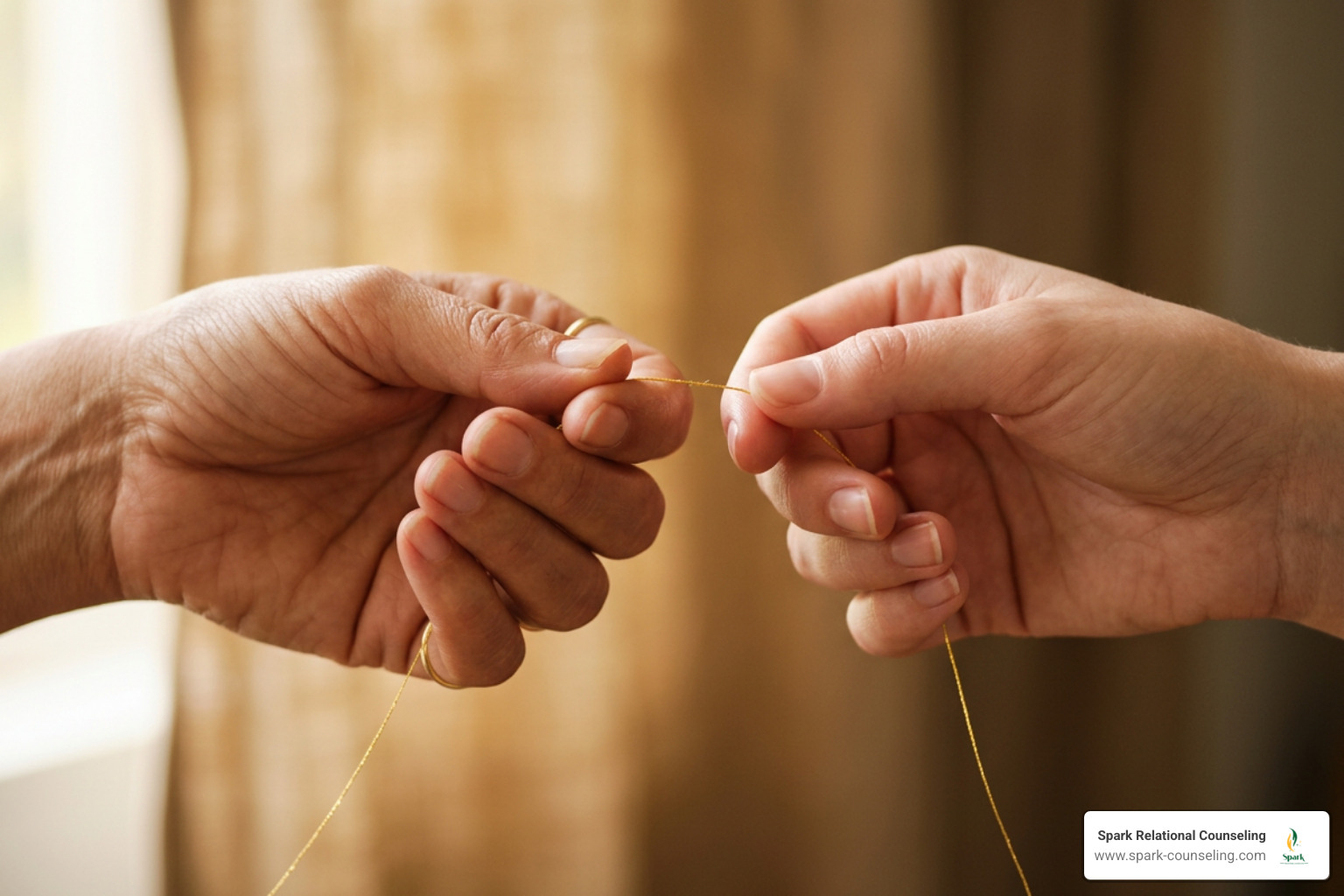
When you choose to engage in Relationship Therapy Portland Oregon or access virtual support through Online Therapy in Oregon, you are choosing prevention over repair. In the first year or two of a relationship, partners are highly adaptable. Your patterns have not yet rigidified into defensive loops. Working with a skilled clinician during this sweet spot allows you to establish healthy baselines for vulnerability, intimacy, and co-regulation. For local couples, utilizing professional counseling offers a structured avenue to build lasting resilience.
Deconstructing the Stigma: Who is Couples Therapy for Dating Really For?
There is a persistent cultural myth that therapy is only for couples on the brink of divorce or those navigating severe relational trauma. This outdated perspective creates a double standard: we celebrate individuals who go to therapy for personal growth, yet we look askance at dating couples who seek joint support, wondering if their relationship is "doomed" if they need help so early.
In reality, more than 50 percent of the couples seen in private practice are not married. Modern couples—especially millennials and Gen Z partners in June 2026—increasingly view relationship therapy as a proactive tool for self-actualization and mutual growth. If you are dating and committed to exploring a future together, investing in Marriage Counseling and Couples Therapy is a profound statement of value.
Through virtual sessions, such as Online Therapy in Washington, couples can unburden themselves of the expectation that love should be effortless. The healthiest relationships are not defined by an absence of conflict, but by the speed and tenderness of their repair.
What to Expect in a Session of Couples Therapy for Dating
If you have never experienced couples therapy, the prospect of sitting on a couch (or in front of a screen) with your partner can feel intimidating. You might worry that the therapist will take sides, referee your arguments, or declare your relationship incompatible.
At Spark Relational Counseling, May Han and our team design our sessions to feel like a warm, luxurious sanctuary. We do not sit back and analyze you from a distance; instead, we actively guide you into deeper, experiential connection. A typical session lasts 50 to 75 minutes and is structured around creating emotional safety.
Rather than rehashing the logistics of your weekly schedule or debating who was right in a recent disagreement, we slow the conversation down. We help you look beneath the surface of the words being spoken to discover the tender emotional needs driving your interactions. When exploring Therapy for Relationship Issues or engaging with Online Therapy in Illinois, you will learn to map your interactive cycle. This process is deeply supported by specialized approaches that emphasize transforming underlying emotional states rather than merely managing surface behaviors.
Shifting from Autopilot to Intention: The Experiential and EFT Approach
When we enter a romantic relationship, we do not arrive alone. We bring our entire history, our family-of-origin dynamics, and our nervous system's deeply ingrained survival strategies. Without conscious awareness, these elements form a relational "autopilot"—a set of automatic responses that dictate how we react when we feel threatened, misunderstood, or disconnected.

At Spark Relational Counseling, May Han and our team champion an experiential, attachment-based approach that helps couples step off autopilot and move into conscious intention. By utilizing Emotionally Focused Therapy (EFT) and Accelerated Experiential Dynamic Psychotherapy (AEDP), we guide you to track your bodily sensations and emotional shifts in real-time. This somatic tracking helps you identify your emotional thresholds before you cross over into defensive reactions. By integrating these experiential methods with Relationship Therapy Portland Oregon, we help you transform intellectual insights into deeply felt somatic changes.
Rewiring Relational Autopilots
Our relational autopilots are primarily shaped by our early attachment styles. When a partner pulls away or becomes quiet, does your nervous system interpret that silence as a cue to pursue them more intensely, or does it signal you to retreat into your own protective shell?
These automatic patterns are intelligent adaptations developed in childhood to preserve connection and safety. However, when brought into adult romantic partnerships, they often create a classic "pursue-withdraw" loop that leaves both partners feeling exhausted and alone.
In couples therapy, we do not try to eliminate these protective parts of you. Instead, through Therapy for Relationship Issues, we help you and your partner understand what these defensive strategies are protecting. By slowing down and using experiential techniques, you can begin to share the vulnerable feelings underneath the defense—the fear of abandonment, the dread of inadequacy—allowing your partner to meet you with comfort rather than defensiveness.
Cultivating Mindfulness and Manageable Boundaries
A vital aspect of our work involves helping you cultivate mindfulness of your own emotional thresholds. Mindfulness in relationships is not about meditating together; it is about developing the capacity to stay present with your own internal experience when your partner is speaking or when conflict begins to rise.
By tracking your bodily cues—such as a tightening in your chest, a flush in your cheeks, or a sudden desire to mentally check out—you learn to recognize when your nervous system is entering a state of hyper-arousal or hypo-arousal.
Once you are aware of these thresholds, you can set manageable, loving boundaries. For instance, instead of letting a late-night disagreement spiral into a multi-hour cycle of distress, you learn to say, "My nervous system is feeling too activated to stay present right now. I love you, and I want to pause this conversation until morning when we are both regulated." Through virtual support options like Online Therapy in Washington, couples learn to implement these embodied pauses, preserving connection even in moments of physical distance.
Navigating Major Milestones and Transitions Together
As dating relationships progress, they naturally encounter major transition points. Moving in together, blending families, aligning financial goals, or discussing long-term commitment can bring up unexpected friction, even in the most harmonious partnerships.
Using couples therapy for dating as a proactive container allows you to explore these milestones with curiosity and deep alignment, rather than waiting for the stress of the transition to force your hand.
| Milestone Transition | Reactive Approach (Without Therapy) | Proactive Experiential Approach (With Therapy) | |
|---|---|---|---|
| Moving in Together | Splitting bills logistically while ignoring underlying anxieties about loss of autonomy or space. | Exploring somatic thresholds around personal space; establishing mindful rituals for shared living. | |
| Financial Alignment | Arguing over spending habits when bank accounts merge, triggered by family-of-origin scarcity fears. | Unpacking the emotional meaning of money; aligning financial choices with shared relational values. | |
| Blending Families | Expecting instant harmony; reacting defensively when parenting styles clash or boundaries blur. | Navigating step-parenting roles with clear, compassionate boundaries; honoring previous family attachments. |
By utilizing Online Therapy in Illinois, couples can transform potentially stressful transitions into profound opportunities for deeper intimacy.
Knowing When to Seek Joint Support vs. Individual Growth
While couples therapy is an incredibly powerful tool for dating partners, it is equally important to recognize when individual therapy is the more appropriate path—or when a combination of both is needed. A healthy relationship requires two differentiated individuals who can stand firmly on their own two feet while remaining deeply connected.

If you find that your relationship struggles are primarily driven by deep-seated personal trauma, chronic depression, or individual anxiety that persists regardless of your partner's behavior, exploring Individual Therapy for Relationship Issues can provide the focused, healing space you need. Conversely, if you are single or navigating the modern dating scene and want to understand your personal blocks before entering a partnership, working with a Therapist for Dating can help you cultivate a secure attachment style from within.
For couples located in the Pacific Northwest, finding local, specialized care is highly accessible. Whether you seek joint support or wish to work with a dedicated therapist, the key is selecting a provider who understands how to balance individual healing with systemic, relational growth.
Frequently Asked Questions about Early Relationship Support
Is it too early to start couples therapy if we have only been dating for a few months?
It is never too early to invest in the health of your connection. In fact, starting early is highly beneficial because you are establishing healthy communication habits before negative patterns have a chance to take root.
If you are experiencing recurring miscommunications or simply want to ensure your relationship has a strong foundation, seeking Dating Therapy in Portland can provide you with the tools and emotional attunement needed to navigate the future with confidence.
How does couples therapy differ from individual relationship therapy?
Individual relationship therapy focuses entirely on you—your personal history, your attachment patterns, and how you show up in your relationships. It is a wonderful space for self-discovery and healing personal wounds.
Couples therapy, on the other hand, treats the relationship as the client. The therapist's role is to help you both understand the dynamic that exists between you, mapping the joint cycles that occur when your individual survival strategies clash. To explore which path is best for your current situation, you can read our guide on How to Choose the Right Therapist.
What if my partner is hesitant to try therapy while we are dating?
It is completely natural for one partner to feel hesitant, especially if they associate therapy with crisis, blame, or failure. If your partner is reluctant, try reframing the invitation. Instead of presenting therapy as a solution to a problem, frame it as a positive investment in your connection and a desire to understand them more deeply.
You might say, "I love our connection, and because you are so important to me, I want to make sure I am loving and supporting you in the best way possible." For practical tips on how to approach this conversation and take the first steps together, explore our resource on How to Start Therapy.
Conclusion
Your relationship does not have to be in distress to deserve the gift of therapeutic support. By choosing couples therapy for dating, you are choosing to step out of reactive survival loops and into a relationship designed with intention, mindfulness, and deep emotional attunement.
At Spark Relational Counseling, May Han and our dedicated team are here to support you at every stage of your relational journey. Through our virtual therapy services in Oregon, Washington, and Illinois, we help you counter negative brain autopilots to foster lasting peace and deeply loving partnerships.
If you and your partner are ready to build a resilient, securely attached future together, we invite you to explore our Marriage Counseling services and reach out to schedule a consultation today. Let us help you write the next beautiful chapter of your story together.