
How Therapy Helps Chronic Burnout When Rest Isn't Enough

When rest no longer helps, therapy helps chronic burnout by making recovery more than a break from work. It can help you protect sleep, spot patterns like overwork or people-pleasing, and set limits you can keep. If exhaustion is affecting your focus or ability to function, start with an assessment. You may also need medical care or changes at work; therapy cannot fix an unmanageable workload on its own.
I'm May Han, a licensed marriage and family therapist at Spark Relational Counseling. My work with high achievers, stress management, and mindfulness-based relational techniques shapes how I explain why therapy helps chronic burnout and what to look for in a recovery plan.
Stress, Burnout, and Stress-Induced Exhaustion Disorder (SED)
You wake up after eight hours in bed feeling as though you never slept. You sit at your desk in Seattle or Chicago, staring at an inbox full of routine requests, but your brain feels submerged in thick fog. When clients reach out to our practice, they often wonder why a weekend away or a two-week vacation failed to restore them. The reality is that chronic depletion changes the nervous system in ways that passive rest alone cannot undo.
Understanding the Spectrum from Acute Stress to SED
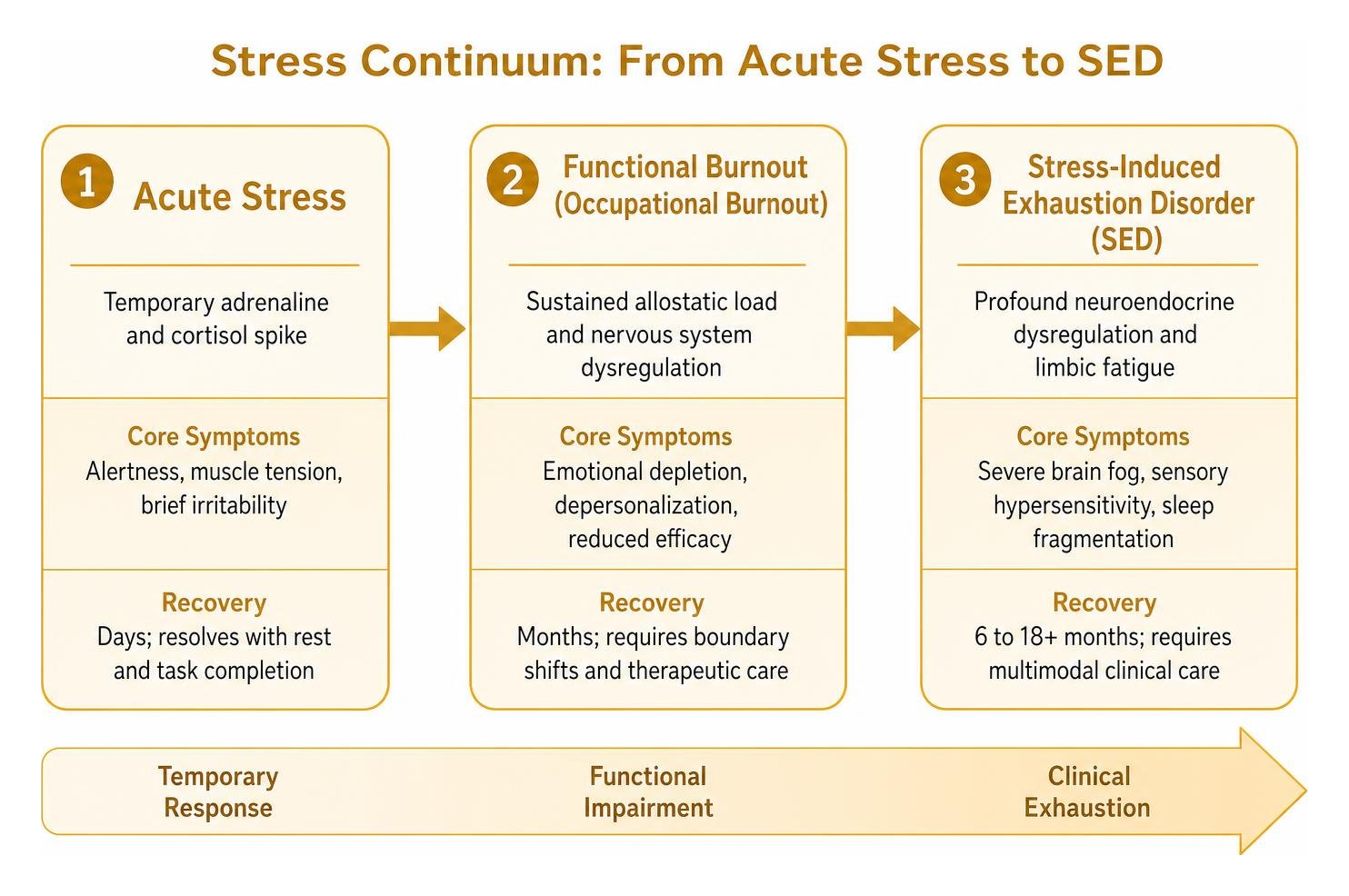
Stress is not a single state; it exists along a continuum. Acute stress is a temporary surge of energy driven by the hypothalamic-pituitary-adrenal (HPA) axis, preparing your body to meet an immediate deadline or challenge. Once the demand passes, your nervous system resets.
When stressors remain unaddressed over months or years, allostatic overload sets in. This wear and tear impairs cognitive flexibility, disrupts sleep architecture, and drains emotional stamina. Understanding the physical and emotional markers by learning how to track burnout symptoms allows you to recognize when everyday pressure has evolved into deeper systemic depletion.
In international clinical frameworks, prolonged depletion is classified under diagnostic categories such as Stress-Induced Exhaustion Disorder (SED; ICD-10 code F43.8A). Recognizing these signs of burnout symptoms helps distinguish normal fatigue from severe nervous system collapse.
| Condition | Primary Biological Driver | Core Symptoms | Typical Recovery Trajectory |
|---|---|---|---|
| Acute Stress | Temporary adrenaline and cortisol spike | Alertness, muscle tension, brief irritability | Days; resolves with rest and task completion |
| Occupational Burnout | Sustained allostatic load and nervous system dysregulation | Emotional depletion, depersonalization, reduced efficacy | Months; requires boundary shifts and therapeutic care |
| Stress-Induced Exhaustion Disorder (SED) | Profound neuroendocrine dysregulation and limbic fatigue | Severe brain fog, sensory hypersensitivity, sleep fragmentation | 6 to 18+ months; requires multimodal clinical care |
Why Accurate Clinical Assessment Matters for Recovery
Distinguishing between functional burnout—where you maintain performance through sheer willpower—and clinical burnout or SED is essential. Research on a Standardized multimodal intervention for stress-induced exhaustion disorder highlights that severe exhaustion requires structured clinical support rather than isolated self-help.
Clinicians use validated tools like the Shirom-Melamed Burnout Questionnaire (SMBQ) to measure physical fatigue, cognitive weariness, and emotional exhaustion. Understanding your clinical baseline provides clarity on how long it takes to recover from burnout, setting realistic milestones for nervous system repair.
How Therapy Helps Chronic Burnout: Evidence-Based Modalities and Approaches
True burnout recovery is experiential and relational. It requires retraining your brain's negative autopilots—the subconscious scripts that urge you to over-function, appease others, or sacrifice your well-being for approval. Evidence synthesized in a comprehensive psychotherapeutic burnout interventions umbrella review demonstrates that targeted therapies help restore autonomic balance and personal agency. Implementing the best therapy for burnout strategies involves a sequenced approach: first calming physiological survival responses, then resolving the underlying emotional wounds that keep you over-extended.
Emotion-Focused and Experiential Modalities: Restructuring Internal Autopilots
Many high-achieving professionals operate under rigid internal mandates: "I must carry this entire project," or "If I rest, I am failing." Experiential and emotion-focused approaches allow you to access the somatic roots of these beliefs. Rather than simply analyzing thoughts, modalities such as Emotion-Focused Therapy (EFT) and Accelerated Experiential Dynamic Psychotherapy (AEDP) help you drop into real-time somatic awareness.
In therapy, you learn to track physiological activation. You notice the tight constriction in your throat when an unrealistic request lands on your desk, or the collapse in your posture when facing conflict. By processing these moments within a safe therapeutic relationship, you dismantle the subconscious need to over-function. Exploring how therapy builds resilience through experiential engagement helps you replace survival-driven perfectionism with genuine self-trust.
Value Alignment and Healing Moral Injury
Burnout frequently stems from moral injury—the profound distress that occurs when systemic constraints force you to act against your core ethics. This is particularly prevalent among educators, tech leaders navigating misaligned corporate priorities, and healthcare staff.
In 2022, 46% of U.S. healthcare workers reported feeling burned out. Compassionate, values-based therapy helps you process the grief and disillusionment of working in fractured systems. Through mindful self-inquiry, you differentiate between organizational dysfunction and your personal worth, realigning your daily choices with authentic values.
Brainspotting and Somatic Processing for Deep Exhaustion
When chronic exhaustion is compounded by secondary traumatic stress or vicarious trauma, talking alone may feel insufficient. In high-intensity fields, research suggests that 20 to 50 percent of ICU nurses meet criteria for clinically significant secondary traumatic stress symptoms at some point in their careers.
Modalities like Brainspotting locate points in your visual field that correlate with unprocessed emotional and somatic activation. By pairing focused eye positions with mindful somatic observation, your deep subcortical brain releases stored survival energy. Integrating neuro-experiential therapy for burnout resets the nervous system, helping you move out of perpetual fight-or-flight and into genuine physiological rest.

Key Change Mechanisms and Multimodal Interventions for Chronic Exhaustion
Restoring a depleted nervous system requires structured support. A comprehensive review titled Psychological Treatment of Exhaustion Due to Persistent Non-Traumatic Stress notes that addressing exhaustion due to persistent non-traumatic stress (ENTS) demands coordinated interventions that target both physiological and behavioral loops. Discovering how to fix job burnout involves interrupting chronic avoidance and rebuilding restorative daily rhythms.
How Multimodal Interventions and Process-Based Therapy Helps Chronic Burnout
Multimodal programs combine psychological processing, nervous system regulation, sleep restoration, and paced occupational coaching. Rather than treating burnout as an isolated flaw, this framework addresses the complete biological and social landscape.
Patients learn to identify early somatic warnings—such as shallow breathing, emotional numbness, or jaw clenching—before crossing their threshold into exhaustion. Building a personalized burnout prevention plan safeguards your energy through structured recuperation practices.
Realistic Clinical Outcomes: Symptom Reduction and Return-to-Work Data
Clinical research offers clear hope for long-term recovery. In a major study of 390 SED patients participating in a standardized Multimodal Intervention, participants achieved significant reductions in exhaustion, anxiety, depression, and sleep disruption, with large within-group effect sizes (d = 0.91 to 1.76) maintained at 12-month follow-up.
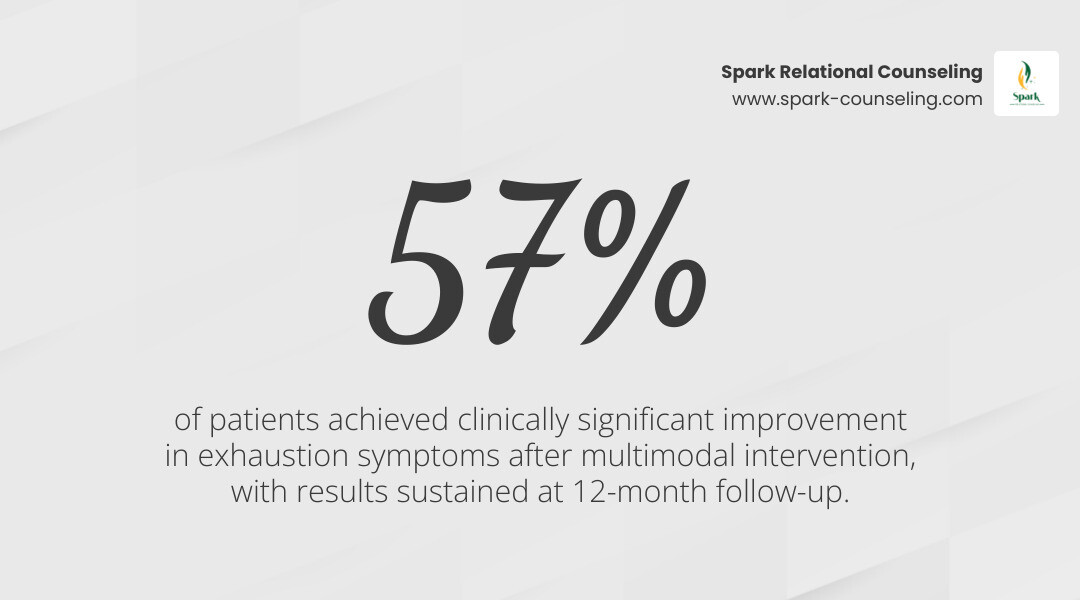
At the conclusion of treatment, 57% of patients fulfilled criteria for clinically significant change on the Shirom-Melamed Burnout Questionnaire, a result sustained at 57% one year later. For employed or studying patients, work capacity improved by an average of 50%, and total sick-leave compensation fell by 49%. Clinical reviews confirm that across 60 studies on persistent non-traumatic exhaustion, 65% reported statistically significant improvements with effect sizes ranging up to 1.80. Real-world burnout recovery success stories demonstrate that consistent, body-centered care creates lasting functional renewal.
Navigating Temporary Stress Spikes in Treatment
Healing is rarely linear. In clinical trials, up to 57% of participants reported temporary increases in stress, anxiety, or emotional vulnerability during initial phases of care. When you slow down and tune into feelings you have suppressed for years, your system may feel temporarily overwhelmed.
A skilled clinician paces this work carefully. Using mindful containment and co-regulation, your therapist helps you process these waves without getting flooded, ensuring that uncovering deep fatigue leads to steady relief rather than added strain.
Overcoming Barriers and Finding the Right Burnout Specialist
The exhaustion of chronic burnout often creates its own barrier to seeking care: the prospect of finding a provider feels like one more overwhelming task on an overflowing to-do list.
Why Specialized Therapy Helps Chronic Burnout Better Than General Counseling
General counseling often relies heavily on open-ended ventilation, which can inadvertently leave an exhausted client feeling more depleted. A specialist in occupational distress, SED, and relational dynamics works differently. They understand how professional identity intersects with somatic health, boundary setting, and family systems.
Chronic workplace depletion rarely stays confined to office hours; it spills into home life. Understanding how burnout impacts couples clarifies why short tempers, emotional withdrawal, and intimacy loss occur when one or both partners are running on empty. Working with a dedicated relational therapist for burnout helps you and your loved ones build a supportive environment for recovery. Practicing mindfulness tools from our mindfulness burnout tips guide allows you to recognize internal thresholds and communicate boundaries with calm clarity.
Navigating Shift Work, Licensing Confidentiality, and Stigma
For healthcare workers, executives, and licensed professionals, systemic barriers often delay care. The mental health crisis among medical professionals is severe; female nurses, for example, face an 85% higher suicide rate compared to the general female population. Yet many avoid therapy due to fears regarding professional licensing boards or employer surveillance.
While utilizing in-network insurance benefits can help offset immediate session costs, working through insurance requires assigning a formal mental health diagnosis that becomes part of your permanent medical record. These documented diagnostic labels can carry unintended long-term constraints, potentially complicating future life choices such as obtaining private disability or life insurance policies, navigating international adoption clearances, or undergoing specialized security and employment screenings. Opting for private-pay care protects your complete clinical privacy, ensuring your recovery remains confidential and unencumbered by mandatory diagnostic reporting. Virtual therapy across Oregon, Washington, and Illinois accommodates demanding shift work and executive schedules, making it easier to discover sustainable pathways for finding balance with chronic workplace stress.
Frequently Asked Questions About Burnout Recovery
How long does therapy for chronic burnout typically take?
Recovery timelines depend on the severity of nervous system depletion. Mild to moderate functional burnout often stabilizes within 12 to 16 focused sessions of experiential and relational therapy. Severe cases involving Stress-Induced Exhaustion Disorder (SED) generally require a 6- to 12-month staged program combining physiological stabilization, emotional processing, and a gradual return-to-work plan.
Can I attend therapy for burnout without risking my professional license?
Yes. In the vast majority of jurisdictions, engaging in voluntary, confidential outpatient psychotherapy does not require disclosure to state licensing boards. State medical and professional boards focus on acute, active impairment that directly endangers public safety. Private-pay therapy adds an extra layer of privacy by keeping your records independent of insurance claims databases.
What is the difference between burnout and clinical depression?
While burnout and Major Depressive Disorder share symptoms like fatigue and low motivation, their etiology differs. Burnout is primarily context-driven, originating from prolonged interpersonal and structural stress. In early to moderate stages, individuals with burnout can still experience joy and engagement in activities outside of work. Clinical depression tends to be pervasive across all life domains, marked by global anhedonia and deep feelings of worthlessness. Left unaddressed, chronic burnout can evolve into depressive states, making early clinical intervention vital.
Conclusion
Chronic burnout is not an individual failing, a lack of willpower, or an inability to handle pressure. It is a physiological and emotional signal that your nervous system has spent too long operating in emergency mode. When rest alone fails to restore you, experiential and relational therapy offers a structured path to calm overactive survival patterns, process moral distress, and build sustainable boundaries.
Founded by May Han, LMFT, Spark Relational Counseling provides specialized virtual individual and couples therapy across Oregon, Washington, and Illinois. Our mindfulness-based, experiential approaches help high achievers deactivate negative brain autopilots and cultivate grounded vitality. If you are ready to move beyond exhaustion, connect with our team for virtual therapy for high-functioning depression and chronic exhaustion to begin your recovery today.
